
Sports photography with AF-S Teleconverter TC-17E II for Nikon
Later this week I’m heading to a conference in Southern California. Along the way I plan to catch my first, ever game at Dodger Stadium and then witness my A’s (for the first time in many years live) at Angel Stadium of Anaheim on my way back. I have pretty good seats, but I thought I still may not be close enough for decent photography so I purchased a 1.7X teleconverter to go with my D7000 and 70-200m lens. It arrived earlier this week so I headed out yesterday to give it a try in a real setting.
Most photographers that buy a teleconverter do so to photograph birds. Bird photography isn’t too interesting to me so I was hoping that it would work OK for sports (outdoor anyway). The teleconverter increases the normal f/2.8 on my lens to f/4.8 which was a concern. In addition, even though photos at f/2.8 are sharp with just my 70-200mm, I had read that photos with the teleconverter don’t get sharp until f/7.1 or f/8.
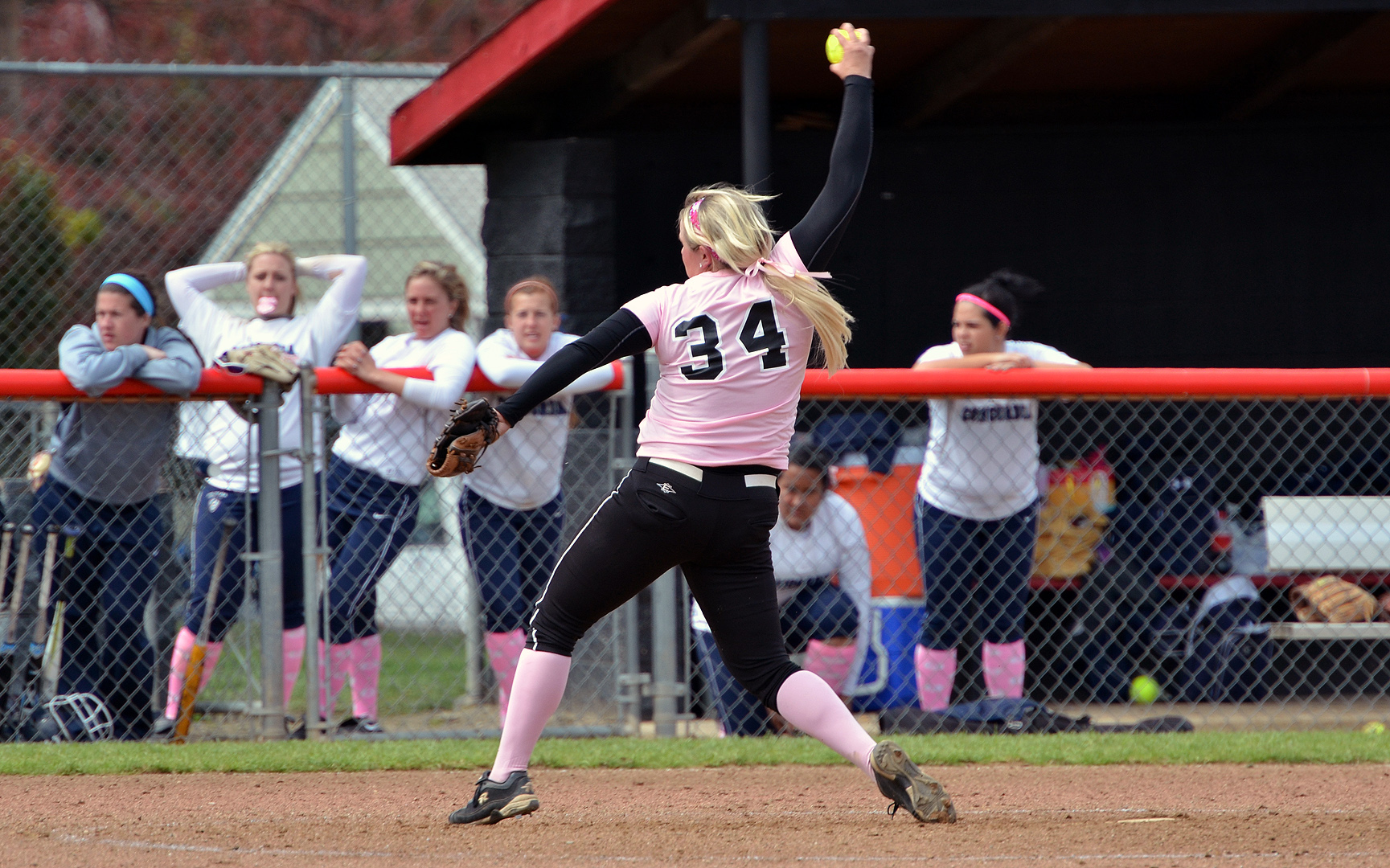
I shot today’s top photo from the right field foul pole (probably 200-250 feet from the subject) at 340mm (200 x 1.7) at f/4.8 and 1/1000 of a second. The photo is pretty sharp, but Karlie Stephens’ right hand is a bit blurry so I should probably go up to 1/1250 or 1/1600. ISO was at only 280 so I can increase ISO some more. Only a very minor crop has been done to the image.
I can’t tell through the display screen how things are looking so I tried some experimenting. This next one was shot at 1/800 at f/8 (ISO 400) from the same location. Again, there is a slight crop on the image.

The ball is fuzzy so my shutter speed wasn’t fast enough.
In conclusion, it looks like the teleconverter works fine for outdoor sports. As far as aperture goes, f/4.8 doesn’t look as unsharp as I was expecting based on the reviews of others. If you want to really freeze the action, keep your shutter speed faster than 1/1000. ISO up to 800 or even 1600 shouldn’t be a problem on the D7000.
Stay tuned for some photos under the lights, which will likely present some additional factors to consider. The photos above were taken with overcast skies.