TravelJapanBlog.com - Japan (07, 09-10, 13), Denmark (08, 11, 16-19, 21, 24), Korea (13), Poland (21), Mexico (14, 15, 19, 26), Iceland (17, 19), Hawaii (14, 17, 22), Czech Republic (16, 17, 19, 21)
The above will search Traveljapanblog.com.
Concerts - Landscapes - Sports


Archive for Other

Facebook News Feed up and running

If you check Facebook more than this blog, you can “Like” this blog’s Facebook page and have all updates posted to your News Feed. There won’t be more than one a day.

If you don’t see the updates it may be because Facebook only shows your first 250 friends and likes on your News Feed. To correct this, click on the “Edit Options” link on the bottom of your News Feed and increase the 250 to a higher number.

The down side of buying a Panasonic

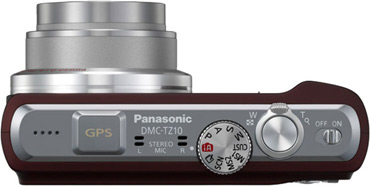
lumix tz10

I had been generally happy with my last three Panasonic cameras. Those days are over. First my TZ10’s zoom knob broke. Maybe broke isn’t the right word. The control became somewhat “sticky” and difficult to move sometimes. Sometimes it worked fine. Other times it was really annoying and caused me to miss shots. But I could live with it.

Last week my photos began to exhibit a smudge of sorts near the center. I cleaned the lens, still no good. Nothing I could do would remove the gray circle a bit off center in my photos; nor could I see anything on the lens to suggest why this was happening. One problem I could live with. Two, and especially when one affects picture quality, I could not. No problem I thought. I have only owned this camera for four months, and the TZ10 came with a one-year, worldwide warranty on both parts and labor.

I contacted Panasonic USA to see what I should do. Initially they said they couldn’t help since I purchased the camera outside of the USA. They said I could get it serviced in Japan, or, for a fee, they may make an exception for me. Hmmmm…. why a fee for a warrantied product? Several emails and two phone calls later I gave up on getting any help from Panasonic USA.

Next I tried to get help from Panasonic Japan, since I purchased the camera while living in Japan and the Japanese are generally better when it comes to service issues. They seemed very helpful if I lived in Japan, but they can do nothing for customers who purchased a product in Japan and then moved out of Japan. So I went back to Panasonic USA and pled my case. They told me that, “The world wide warranty does not include the US. We are sorry for your inconvenience they will not owner the warranty in the US.” So, apparently the USA is no longer part of the world.

They kept telling me that they don’t sell the TZ10 so they can’t service it. Never mind the fact that it is the exact same camera as the ZS7 which they do service.

Their ad for the camera is true. The camera is “for world travelers” because when it breaks you have to travel the world in order to get them to honor their warranty.

Changing yen into dollars

I’ve mentioned before the best ways to convert dollars into yen, but what if you need to go the other way? If you only have a few hundred dollars worth of yen, you may as well change them in Japan at the airport on your way out. The cost will be about 3%.

However, if you have more than about $1,000 worth of yen to convert, or if you need to send your yen overseas and have it magically turn into dollars on the other side, there are a number of options, each with different costs.

1. You can wire the money. You will need to set up a bank account in Japan. The cost will likely be 4,000 yen or 5,000 yen per transaction plus about 1%. Your bank outside of Japan may also charge a fee. There are few situations where this is the easiest or cheapest way to go.
2. You can convert all of your yen at the airport or a bank. While this is easy to do, at about 3%, it isn’t cheap. Nor is it very safe to carry thousands of dollars into the U.S. or many other countries.
3. You can go to a post office in Japan and get the equivalent of an International Postal Money Order. In Japan it is called “International Payment Application and Declaration Form” (国際送金請求書兼告知書). The Japanese postal employees probably won’t speak English so you’ll want to print this out and show them what you want. Fill out the form. The charge is 2,000 yen plus about 1% on the exchange rate, not cheap but better than the other alternatives if you are converting more than 100,000 yen. Also, it is much safer than converting and carrying cash. You can safely mail the money to someone else in another country and in another currency as well with this method.

Get the highest interest rate and $25 by opening an online savings account

Excuse the interruption, but I was just cleaning out my email and thought I’d pass this offer along in case you are interested.

I’ve used Ingdirect for my online banking since 2002 without a single problem. They consistently pay 1% or more higher than anyone else on your savings. Currently the rate is 1.1%, compared to most banks paying .25% or 0%. A few years back I was earning 5.5% from Ingdirect while Wells Fargo was paying me 1%. Needless to say I “swept” all of my extra Wells Fargo money into my Ingdirect account, with just a few clicks each month, to maximize my interest income.

Ingdirect is currently offering a deal where for opening an account with $250 or more you get $25 added to your account. What do I get? $10. So now you know what is in it for you and me.

If you are interested, leave a comment or reply to this blog post, and I’ll send you the link to get your account and $25. I will use your email address for the one email only. No one else will see your email address.

BTW, Ingdirect offers more than just a savings account if need be. You can also buy stock, mutual funds, CDs, IRAs, etc., with small or no fees. For instance, I currently have a 12-month CD with Ingdirect that is paying 2%, a Roth IRA, and several mutual funds, all with no fees. Sending money electronically to and from your regular bank account is free and very easy to do.

Panasonic Lumix TZ10 (DSC-ZS7 compared to ZS3)

I walked into Yodobashi Camera in Shinjuku to try out the new Panasonic Lumix DSC-TZ10 (DSC-ZS7 in the USA). I brought my DSC-TZ7 along for comparison purposes.

The size and weight are the same or nearly so.

パナソニック dsc-tz10

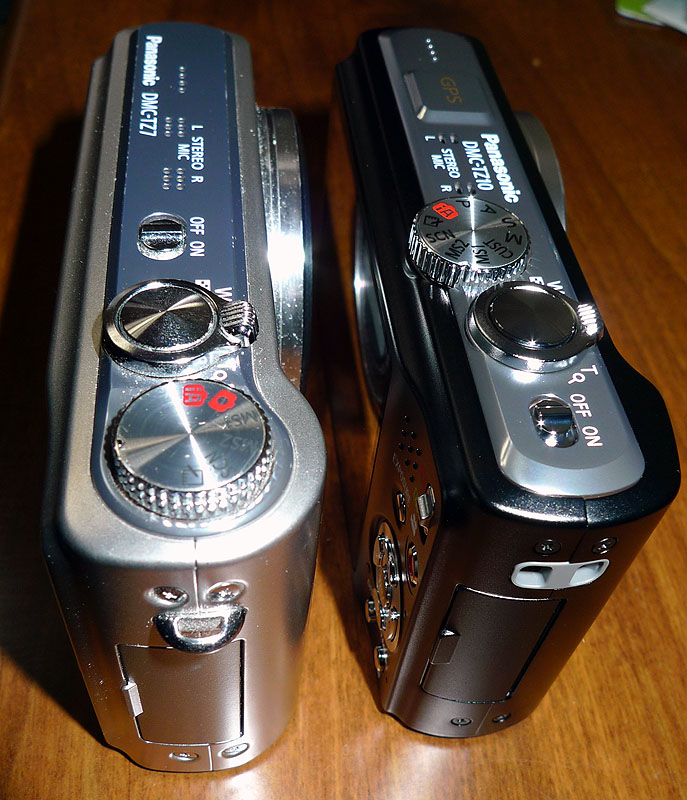
The look is basically the same. Notice the manual controls that were absent on the TZ7. (P A S M on the dial of the TZ10 only.) On the TZ10 you have complete control of exposure length and many other features that were absent on the TZ7.
panasonic zs7

I like how the TZ10 dropped the metal strap holder that protruded off of the TZ7. I felt that little piece of metal more than once in my pocket. It was also an inconvenience when I took night photos if I wanted to place the camera next to pole or on its end for less shake.

tz10 zs7 tz7 zs5

The sales guy was most excited by the 超解像技術 which isn’t on the TZ7. I believe they are calling this “Intelligent Resolution Technology” in English. Basically, images are supposed to be much more crisp, especially when zoomed. Also, the dreaded whited-out-sky look on sunny days should be reduced with this feature.

I was able to compare the zoom of both cameras side by side. The TZ10 has more zoom, frequently a lot more zoom even though they are both advertised as 12x zoom. The TZ7 gets more than that in EZ mode. The TZ10 does even better. Depending on the settings your zoom will vary, but the TZ10 generally will get you about 30% more than the TZ7.

Panasonic has come up with a new, Power O.I.S. instead of just Mega O.I.S. This is supposed to make night photography or photography in low light much better. This is what the website says:

Just about everyone has had the experience of taking a photo at night and hoping to capture all the memories and beauty, only to be disappointed at the poor result. The POWER O.I.S. (Optical Image Stabilizer) nearly doubles the hand-shake correction power of conventional MEGA O.I.S. You get bright photos without blurring even from handheld shooting at slow shutter speeds.

Panasonic’s accumulated optical technologies, the MEGA O.I.S. has been incorporated into LUMIX from the early stage of digital camera development. This helped show all digital camera users the absolute need for hand-shake compensation, and led to its prevalence throughout the industry. And now, Panasonic has worked on the low-frequency vibration hand-shake component, which is physically generated when pressing the shutter button or when shooting at night with a slow shutter speed.

night pictures blurry how to fix
TZ10 ls7

Nice, right? I’ve done a few tests; the hand-held shots, leaving the shutter open for 1/2 second, are better, but don’t expect miracles. If possible, you’ll still want to rest your camera on a surface or tripod for night photography.

The TZ10 offers 20% more megapixels.

The TZ10 also has a GPS. The GPS wasn’t a big selling point for me as I don’t upload my photos to sites like Picasa. However, I think it may come in handy while traveling or hiking if I get lost. I’ve noticed already that it provides the name (in addition to coordinates) of the closest shrine, temple, train station, etc. in Japan. This information is good to know if you happen upon a place and don’t know what it is called in English (because you can’t read the kanji).

There are other improvements in the TZ10 when compared to the TZ7 as well like saving you over a second from the time you turn the camera on to when you can take the first picture, happy mode, adjustable vibrance, and a longer lasting battery.

So I purchased the TZ10 (ZS7). Would I recommend it? If you are on a tight budget, the TZ7 (ZS3) is fine if it is more than $100 cheaper than the TZ10. If you can afford it, and/or the TZ10 isn’t more than $100 more than the TZ7, then I would suggest the TZ10 is worth it for the above features, especially if you need the added zoom or plan to take pictures in low light.

Panasonic Lumix DMC-TZ7 (ZS3 in USA) vs. DMC-TZ10 (ZS7 in USA)

zs7 lumix

One of the strange things about some jobs is rather than pay you, your employer requires you to spend money on something instead. It’s a use it or lose it situation so you are forced to buy something you wouldn’t normally. So I wasn’t planning on upgrading from my TZ7, but maybe I will purchase the TZ10 just because I can for “free.”

Is there any downside to the TZ10 compared to the TZ7? Is the camera bigger, heavier, or does it take lesser quality photos in any certain situation? If you know the answer to any of these questions, or if you have any helpful suggestions (like a camera smaller than the TZ7 that takes better pictures), please comment. Thanks!