TravelJapanBlog.com - Japan (07, 09-10, 13), Denmark (08, 11, 16-19, 21, 24), Korea (13), Poland (21), Mexico (14, 15, 19, 26), Iceland (17, 19), Hawaii (14, 17, 22), Czech Republic (16, 17, 19, 21)
The above will search Traveljapanblog.com.
Concerts - Landscapes - Sports


Archive for Japan

Mitsui Main Building and Tower in Nihonbashi

There are few structures in Tokyo that go back more than 60 years. In fact, many, if not most, of the buildings built after the war wiped Tokyo almost clean have been replaced in the past few decades. Nihonbashi is old. With a history of over 400 years, some of the names haven’t changed, even if the buildings have.

The Mitsui Main Building, in the foreground of the photo, was built in 1929 after the 1923 Great Kanto Earthquake. It was built to last and did make it through the war. More than a decade ago the Mitsui Main Building became the first office building to be designated an important cultural asset in Japan. Just 5 years ago the Mitsui Tower was built behind it. The inside of both buildings are a spectacle. The Mitsui Memorial Museum inside is loaded with amazing works of art.

To the left of this photo is the Mitsukoshi Department Store (pictured on the left in this prior entry).
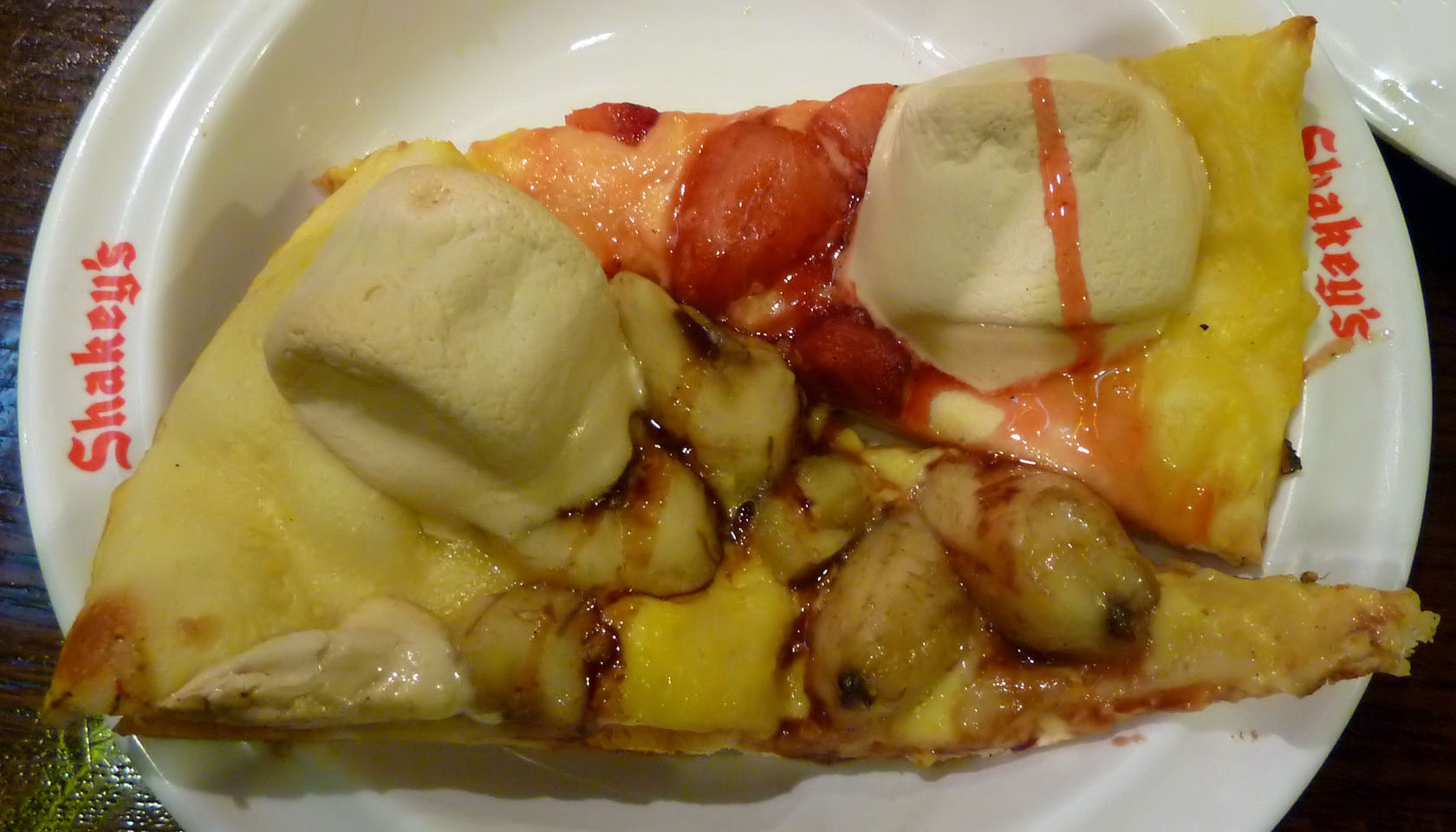
Shakey’s Pizza in Japan (again)

Dessert pizza at Shakey’s in Tokyo anyone?

Year of the Tiger ema

meiji jingu tokyo japan

Here is a closeup of the tiger (寅) ema discussed in yesterday’s entry.

The stamp on the lower right of the ema is the official one of Meiji Jingu. It says Meiji Jingu (from top to bottom and right to left 明治神宮) in funky script.

Meiji Shrine Gate on New Year’s Day

The south gate is the main approach to the Meiji Shrine. Normally you can walk right up to this point, but on New Year’s Day it may take an hour or more to reach this area from the Harajuku Station. If you want to avoid the crowd, there are other entrances (like from Yoyogi Station, past the archery area and through the west gate).

Notice the giant ema (wooden wish plaques or 絵馬) and arrows (hamaya or 破魔矢) on the gate. The shrine does a massive business in selling smaller versions of these items (and other good luck trinkets) for the first week of the year. Some of these amulets are to be brought back to the shrine the next year and burned. People pay to have this service performed as well. How is that for a business model? Sell your customer something and then charge them in a year to destroy the product. When they come back to have last year’s goods burned, you sell them the same product again for the next year and the cycle repeats. Nice.

For 2010 the giant ema featured a tiger since it was the year of the tiger. I’m guessing that for 2011 a similar ema with a rabbit was on the gate since 2011 is the year of the rabbit.

Meiji Jingu on New Year’s Day

I have braved the New Year’s Day crowds at Meiji Jingu twice in my life–1989 and 2010. The place and number of people don’t seem to have changed. The crowd control measures sure have.

Hatsumode (初詣) is the name of this first shrine visit of the new year. Technically, this wasn’t my first shrine visit in 2010 as I was at Zojoji much earlier in the day.

Farewell 2010

suntory beer ad japan

Goodbye 2010. I thoroughly enjoyed your rich taste in relaxing time!