TravelJapanBlog.com - Japan (07, 09-10, 13), Denmark (08, 11, 16-19, 21, 24), Korea (13), Poland (21), Mexico (14, 15, 19, 26), Iceland (17, 19), Hawaii (14, 17, 22), Czech Republic (16, 17, 19, 21)
The above will search Traveljapanblog.com.
Concerts - Landscapes - Sports


Posts tagged japanese language

Nazotte Oboeru Otona no Kanji Renshuu Kanzenhan

This will likely be my last Japanese-related post for a while. Tomorrow we leave for Denmark! So for those of you only interested in Japan stuff on this blog check back in mid-August. From then until the end of time the vast majority of my blog entries will be about Japan, learning Japanese, etc.

Yesterday I passed the fifth level on Nazotte Oboeru Otona no Kanji Renshuu Kanzenhan (なぞっておぼえる大人の漢字練習完全版) for the Nintendo DS. Hurrah! What does this mean you ask? It means I could probably pass any kanji test thrown at a 5th grade Japanese kid (11 year old). That may not seem too impressive, but it was fun getting there, and I learned a lot along the way. I haven’t had the DS game that long and hope to pass all of the levels before this time next year. Stay tuned.

The fifth level brings one up to almost 900 kanji. Tests aside, I can probably read about 1,300 kanji well at this point and write about 800 well. Before buying this game those figures were probably about 900 and 100, respectively, and not as well as now. I’ve forgotten much over the past 20 years, but it is coming back quickly with study.

 Let me show you a few screen shots.

kanji ds

On the above picture you can see that I passed Level 5 by the skin of my teeth. Passing is 80%. Reading I received 100% on, but I have more difficulty writing. Lucky for me, reading is far more important from a practical standpoint. In fact, I really only practice writing because it helps with reading. On the rare occassions when I have to write Japanese I’m usually on a computer. The computer pulls up the possible characters for you so you really only need to be able to read to write Japanese (on a computer) these days.

The tests on this “game” are not so easy, as they aren’t multiple choice or true/false questions. You either know how to read or write it or you don’t. I’m guessing that real Japanese 5th graders have it a bit easier with multiple choice tests.

learn japanese nintendo ds

One of the nice things about this “game” is you can learn from your mistakes and review what you did very easily. After clicking on my “Graduation Certificate for 5th Level” (表彰状LV5卒業) the above screen shows which kanji were correctly answered (with a circle mark) or incorrectly answered (with no mark). You can click on any of these (including the ones marked correct) to review the kanji, including on/kun readings, stroke order, etc. Watch what happens when I click on the kanji I missed.

learn kanji on the nintendo ds

First, I should note that the screen isn’t all grainy like you see on the last two screen shots above. The photos clear up if you click on the images.

You have your on (音) and kun (訓) readings on the top screen along with the number of strokes. On the bottom screen you get walked through the proper stroke order. For more practice you can click on お手本 and practice writing the character as many times as you’d like. Nazotte… will show you how correctly you are writing the kanji.

There are many other features (like daily practice drills, a dictionary that allows you to look up unknown characters, and mini games). I’ll go over some more details and show you some more screen shots once I’ve made it through another level or two.

If you already have intermediate or advanced Japanese skills you can check out the features in Japanese here. You really don’t need to know anything more than hiragana to get much out of this game though. Someone, for instance, studying for JLPT Level 4 could use Level 1 of Nazotte… to study. For JLPT Level 3 one could use Levels 1, 2, and 3 of this game. JLPT Level 2 is through about Level 5 of Nazotte… And if you master through Level 9 of Nazotte… you’ll easily pass JLPT Level 1.

Japanese learning materials for sale or trade

Yesterday I finished the previously mentioned Kochi Kame. I thoroughly enjoyed reading this manga. It turned out to be not so Scooby Doo like after all. Only the first few episodes had similar storylines. The rest showed a wide variety of plots and were unpredictable so that was good.

After finishing I tossed the book into a drawer filled with other Japanese things I’ve finished (since my bookshelves are already overflowing). I realized then that I have too much to read in the next year before returning to Japan so there is no way I will revisit these again. That being the case, I’m willing to part with them for cash or trade.

japanese learning materials for sale mangajin nihongo journal genki benkyo

Here is what I have:
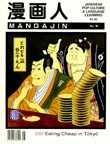
Mangajin cover
Japanese Business Glossary, 220 pages from 1983
Dictionary of Legal Terms, about 550 pages from 1993
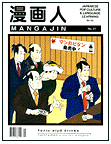
– 5 issues of Mangajin, Nos. 9, 17, 18, 19, and 21 (Note that issues 9 and 19 are very rare and can no longer be purchased from the publisher for the normal $6.50 to $20 an issue plus postage. No. 21 is also rare and available for $20 + shipping from the publisher.)
Nihongo Journal, June 1993 (These are no longer available from the publisher and usually go for $20+ an issue when they show up on eBay.)
Kochi Kame, 190 pages, 158 kan from January of 2008.

All of these items include translations and/or furigana so you don’t have to have intermediate or advanced Japanese skills to benefit.

You can have them all for US$50 delivered in the U.S. If you don’t want everything, if you are outside of the U.S., or if you’d like to trade for these items, email me and we can arrange different terms.

Japanese enigma

As I’ve mentioned elsewhere, for the past year or so I’ve become a bit obsessed with Japan and relearning and improving my Japanese. I haven’t really stopped to wonder why, but last night, as I was reading, the answer came to me. I suppose part of the answer is simply that if you are going to be living somewhere for a significant period of time you become more interested in it. But there is more to it than that.

mangajinI was reading Mangajin, No. 19. The feature story was interviews with translators. Gerry Harcourt was asked (page 19), “What do you like most about the Japanese language?” Her response was a bit of a nirvana moment for me. She said, “It’s so different from English. It jolts my way of thinking. I enjoy the surprises.”

And just like that I realized why the thought of moving back to Japan has caused my mind to think of little else. I’ve been jolted. And I enjoy the daily joltings and surprises that Japan and its language provides. After all, I can already speak, read, and understand Japanese good enough to have a great time in Japan. So I’m not really studying it to get by. I’m doing so because it is such a rewarding and interesting challenge.

Without the challenge and joltings I’m quite sure I wouldn’t be expending the time and effort.

Multifaceted approach to learning and improving Japanese language abilities

I’m a teacher by profession, and one thing I try to get across to my students is that it is difficult to learn something merely by reading about it once or twice. Reading a textbook isn’t all that effective; nor is it enjoyable. To really learn something for the long term, one has to do more than read. Tackling your target from many angles, or in other words, doing, and doing in different ways, seems to be most effective for long-term comprehension and retention. So I encourage my students to read, practice using one method (maybe practice quizzes), practice using another method (maybe doing problems and then checking answers), practice using another method (maybe flashcards), practice using another method (maybe tutoring someone else), etc.
ds game for learning japanese kanji
So why should I do any different in my quest to improve my Japanese language abilities? Unfortunately, I don’t have a Japanese tutor or even anyone that I can speak Japanese to and/or hear Japanese from on a daily basis. I’ll have to save that method for when I’m in Japan next year. I do have a wide variety of ways that I’m studying Japanese though. I’ll list them here in no particular order. On a good day I’ll do at least 15 minutes of each.

Nihongo Journal

1. Practice reading and writing kanji with Nazotte Oboeru Otona no Kanji Renshu (なぞっておぼえる大人の漢字練習) for the Nintendo DS. I look up any unknown phrases or words as I go so I learn new vocabulary in addition to kanji.

2. Read Nihongo Journal (日本語ジャーナル)including taking all practice JLPT tests included. I also listen to the tapes or CDs for the issues in which I own the accompanying audio. I have about 50 issues and that should keep me busy for the next year.

3. Read Mangajin (漫画人). This is easier and more enjoyable than the above two. You can read Mangajin online, but I’ve found the scan quality to be pretty poor so I’ve purchased about 50 issues and prefer to read them in hard copy format.
Mangajin
4. Read other Japanese books in Japanese. I’m currently reading Harry Potter in Japanese–ハリー・ポッターと秘密の部屋 to be more specific. While reading I look up any unknown words in my Canon Wordtank V90 electronic dictionary. The reading is actually pretty easy because furigana are placed next to most kanji.

5. Subscribe to various email lists that send a different kanji, word, or grammar via email each day. These are available through the links in yesterday’s post–specifically the kanji-a-day and yokooso sites.

Learning (and relearning) Japanese

First of all, I should give you a bit of background. In 1987 I found out I was going to be living in Japan for almost two years. At that point I knew nothing about Japan or the Japanese language. On my own I learned hiragana, katakana, and a few dozen words. Then I had two months of intensive language training before going to Japan. While in Japan I studied and spoke everyday. I learned 3 kanji a day while there as well. By the end of 1989 I had pretty decent Japanese and knew about 2,000 kanji (although I probably only knew about 1,000 of them well).

After returning to the states I minored in Japanese and worked off and on as a tour guide for Japanese tourists for a total of about 9 or 10 months. From 1992 until 2007 I did nothing with respect to my Japanese language skills–no oral practice, no studying, no reading in Japanese, nothing.

I was a bit surprised then when on my first return to Japan in 2007 I could still get by pretty well. I could still read many things, and understanding and saying things wasn’t really a problem. Sure, I wasn’t as fluent as I once was, but I wasn’t back to square one either.

Now here I am in 2008 with plans to go back and live in Japan for a year. I want to get my Japanese back to where it was and then continue to improve. So for the past couple of months I’ve been using a multifaceted approach to achieving this goal.

First, I’ll share with you some of the sites that I’ve found useful. Tomorrow I’ll discuss the various simultaneous methods I’m using to try to improve my Japanese.

http://www.kanji-a-day.com/ Four Kanji to learn a day–one at each of the JLPT levels. This site also includes a decent dictionary.

http://www.thespectrum.net/features/mangajin/ Mangajin online. Not all issues are here. I found them too difficult to read online so I purchased them in hardcopy instead.

http://naruhodojapan.blogspot.com/ There is some good stuff here. Too bad they don’t update it more often.

http://homepage3.nifty.com/funahashi/game/ Online games for Japanese kids. Very little Japanese knowledge is required to do the easier ones.

http://www.kanjiclinic.com/preart.htm I learned Kanji very differently than this site suggests, but there is some useful and interesting items here.

http://www.learn-hiragana-katakana.com/review-play-hiragana-game/ There are lots of sites out there for learning hiragana and katakana. My kids haven’t found any of them to be that interesting. They are learning hiragana and katakana via the DS; more on that in tomorrow’s post.

http://www.yookoso.com/ Another site with some good study tools.

http://www.declan-software.com/japanese/index.htm I use the free Gadget for Vista (not available on this link so far as I could see) from Declan Software that produces a different Japanese word in a Gadget box on my desktop each day. The word of the day also includes audio and furigana.

Japan in Motion Blogs

Top Sites – Japan

What links am I missing? Let me know by posting a comment.