TravelJapanBlog.com - Japan (07, 09-10, 13), Denmark (08, 11, 16-19, 21, 24), Korea (13), Poland (21), Mexico (14, 15, 19, 26), Iceland (17, 19), Hawaii (14, 17, 22), Czech Republic (16, 17, 19, 21)
The above will search Traveljapanblog.com.
Concerts - Landscapes - Sports


Posts tagged museums

Musée d’Orsay

After the Louvre, we walked through the Jardin des Tuilertes Park where a carnival of sorts was taking place. Compared to the Louvre, or anywhere else for that matter, this place was deserted. There were about 20 rides for the 10 or so people there. At several Euro a ride, no one was biting. We didn’t either.

We crossed a very cool bridge, called the Passerelle Solferino, to check out another first-Sunday-of-the-month, free museum, the Orsay. The queue was as bad as it was for the Louvre, but this line moved very slowly. It probably took us almost an hour to get in.

The Orsay previously was a train station and you could certainly tell from the interior. For a museum that has only been around for a little over twenty years the collection is amazing.

This sculpture, although not famous as far as I know, was my favorite. For a piece of rock, it sure can make the viewer curious as to what is being said.

The Orsay is loaded with works by Monet, Cezanne, Van Gogh, Degas, Pissarro, Sisley, and other Impressionist artists. My daughter enjoyed the audio guide while learning about Monet.

Van Gogh is my favorite Impressionist painter, but it was difficult getting very close to many of his works with the crowds.

On the top of the museum you can exit to wonderful views of the city. The green-roofed building on the left is the Opera Garnier, and the white church is Sacre Coeur which we visited on the following night. Stay tuned for more on that experience.

The restaurant and cafeteria on the upper level of the Orsay were absolute madhouses. For the restaurant you had to wait in an hour-long line. For the cafeteria you had to wait in a half-hour long line (and then eat standing up). The only good thing was that you had the above view through the mostly translucent clock. The clock may look as if it is backwards. It is from the interior. The clock is meant for those on the outside of the building.

After the Orsay, my daughter and I were spent. We collapsed in front of this statue in front of the exterior of the Orsay to plot our next moves. Can you see how tired we are in our faces?

The Louvre

We happened to be in Paris on the first Sunday of the month which also happens to be the only day of the month in which several museums are free. So we headed off early to get to the Louvre before it opened. It turned out that we weren’t the only ones to do so.

There are three entrances to the Louvre. Two of them are rather hidden and the lines are shorter than the ground level entrance at the pyramid. We opted for the Metro entrance below which, while having less people queued than above, still had over a thousand people in it. The other, less used, entrance is Porte des Lions, at the south wing of the Museum near the river. I don’t know how many people were lined up there, but it would have probably been less.

The good news is that with nobody having to purchase tickets the lines moved pretty quickly. The bad news is that once you got in, even though the museum had only been open for about 15 minutes, it was already packed.

Everyone was heading for the Mona Lisa so we went in another direction and took a look at some friezes that were originally on the Parthenon in Greece. We continued on to the Venus de Milo while nearly everyone else was at the Mona Lisa.

venus de milo

From the backside we noticed that we weren’t the only ones in the vicinity of this famous statue as a spider had taken up residence on her shoulder. Actually, there were loads of tourists at the Venus de Milo, but not as many as there would be later in the day.

spider web on venus de milo

We browsed our way to the Mona Lisa.

I thought it was really bizarre that people were beside themselves to get to the Mona Lisa while completely ignoring the other works along the way. There was a wall with several Leonardo da Vinci paintings on it that no one was even looking at while hundreds of people were packing in to take a picture of the Mona Lisa. It made no sense. Is this how people really want to take pleasure in art?

It was as if the tourists wanted to be able to say (or prove with a picture) that they had seen the Mona Lisa, but they really had no intention of enjoying their experience at the Louvre. We tried to avoid the crowds as much as possible, but it wasn’t easy.

The above is a statue of one of the first baseball players. 😉 It looks like he may have been on steroids.

To avoid the claustrophobia I felt in the Louvre, I looked out nearly every window I could find. In doing so, I found that much of the “art” of the Louvre is not housed on the inside, surrounded by pushy tourists elbowing their neighbors out of the way for a picture to show their friends back home, but through the windows. Some of the windows offer unique vantage points to interior places in the Louvre and others have dramatic exterior views.

The one above (and it looks much better once you enlarge it by clicking on it) includes the Eiffel Tower to the right.

Louisiana Museum of Modern Art

Purchasing tickets for Denmark’s train system is one of the more unusual things about Denmark. There are so many different ticket options and prices to go from Point A to Point B that it leaves your head spinning. You never know if a given trip on the train will be cheap or expensive. Copenhagen Business School was paying for our trip to Louisiana so I didn’t have to worry, but before I found out they were paying I did a little research.

We could buy an all-day pass for 115 DKK each (about US$25). We could purchase one-way zone passes for 80 DKK each way. Or we could purchase tickets along with an entrance to the museum for 160 DKK round trip. I’m sure there were a dozen other options using other passes or klip variations or . . . The bottom line is that you never know how much a trip will cost, if you may get lucky and get a special that is going on that day, or if you go to a different ticket agent they may know of another less expensive way to get to your destination. It’s a crap shoot.

I prefer the Japanese system in which you always know the price and the price is much cheaper than in Denmark. For instance, to travel the distance we traveled to Louisiana from Copenhagen we’d pay no more than about US$5 in Japan. Here the price, again depending on the ticket agent of the day, ranges from about $12 to about $20.

sculpture with oresund straight

Louisiana Modern Art Museum (Moderne Kunst in Danish) is in a beautiful setting in the town of Humlebaek (also spelled Humelbaek). I’m not a big fan of modern art; in fact, much of it does absolutely nothing for me. However, the settings for some of the pieces here really do make the works far more interesting than they would be on their own.

sculpture by giacometti down hall

bell to the head in louisiana museum of modern art

My kids pushed a button near the above work. Nothing happened. Then, about 10 seconds later, the bell started slamming the metal man in the head over and over again causing a huge noise that seemed totally out of place in this quiet museum. My kids freaked out. They thought security would be all over them. I’m not sure how this is art, but it did make things interesting.

Mao Zedong Andy Warhol Louisiana museum modern art

You never know which of the museum’s Andy Warhol collections will be out on display. They have three. One is the “Marilyn” collection (which we’ve seen examples of in a museum at BYU). Another is “Flowers” (which we have seen examples of at the Smithsonian in DC). The third is what we saw at Louisiana, “Mao.”

modern kunst denmark

eyes or are they?

I thought this last one was going to have a different title than it did. This work is called “Eyes” and is by Louise Bourgeois. There is also a very cool Bourgeois spider sculpture at Louisiana.

When my kids could take no more (actually they had a great time on the very long slide here and there is a workshop with lots of stuff for kids to do) we headed to the adjacent beach. More on that in tomorrow’s entry . . .

Frilandsmuseet photographs (part 2 of 2)

frilandsmuseet lyngby

open air museum copenhagen denmark

17th century denmark

old mill and thatched roof danish cottage

open air museum copenhagen denmark

fairy tale cottage

I didn’t feel great about entering this last one. From the exterior it looked like it could come down at any minute. It reminded me of the nursery rhyme,
“There was a crooked man and he walked a crooked mile,
He found a crooked sixpence upon a crooked stile.
He bought a crooked cat, which caught a crooked mouse.
And they all lived together in a little crooked house.”

The whole Danish country side reminds me of nursery rhymes and fairy tales.

Open Air Museum (part 1 of 2)

Frilandsmuseet (or the Open-Air Museum in English) was not even mentioned in our guidebooks (and we have three different ones). Therefore, we weren’t expecting much. I loved the place though. It should not only be mentioned, in my opinion, it should be a recommendation for those with more than a few days in Copenhagen.

You can ride a bike there from downtown Copenhagen as it is under 10 miles away. Alternatively, you can take the train or bus to the Kongens Lyngby area. We took the train to Lyngby Station and then caught a bus (184 or 194) that dropped us off right in front of the place. To avoid missing the stop, like we did at Frederiksborg, we asked the bus driver how we would know to get off. He told use that he would say, “NOW!” and sure enough he did.

open-air museum near copenhagen rural

This museum is quite different from any that I’ve been to before. It is well over 100 years old and features buildings that are as much as 400 years old. Instead of wandering around rooms in a building looking at things you wander around outside and look at how people lived hundreds of years ago in Denmark’s past.

If your imagination isn’t so good you can go to about four different houses where they have live actors playing the parts of peasants or other roles in old Danish society. The actors were a lot of fun. They interact with the visitors as well (and in English if you let them know you don’t speak Danish).

frilandsmuseet role players copenhagen lyngby

The character players also put on a non-spoken play that was very well done. The skit was quite humorous, and it really did take you back. I felt, at numerous times during the day, that I was hundreds of years in the Danish, rural past.

You can walk through the buildings as well. We only had time to explore about half of the 60+ buildings. I don’t think you can do it all in one day. Some of the buildings were from nearby islands and Sweden as well. Most were from the 1600s and 1700s, and I believe all of them had thatched roofs.

interior at frilandsmuseet denmark

The interiors were decorated to look like various eras. Perhaps most were from the 1800s. They were all authentic, rather than mere reproductions. Apparently when you are ready to rip down an ancient building in Denmark you can call this place, and they will take it for you.

The price is right too. It costs nothing.

badfarten denmark

Afterwards we decided to walk back to the train station instead of take the bus. This was a good idea and highly recommended if you are physically able to walk a few miles. Head west for some marvelous lakes. Head south for some nice parks (completely empty compared to those closer to Copenhagen). We ended up at a place called “Badfarten” which provided much fodder for 10-year old jokes and photo opportunities.

badfarten lynby copenhagen

There is a pretty canal at Badfarten. You can hop in a boat there and tour the canal and connected lakes if you can stand the smell. Sorry, I couldn’t resist.

Actually, Badfarten smells just fine. We didn’t have time to do the boat ride (and didn’t want to part with more of our Danish Kroners), but I wouldn’t mind doing so on a subsequent visit.

fart jokes badfarten kongens lyngby

If you want a quick trip to somewhere more rural than downtown Copenhagen or if you’d like to travel through Danish time, this is the place to do so.

I’ll post some more photographs of the old structures in tomorrow’s blog entry.

Rundetaarn (The Round Tower)

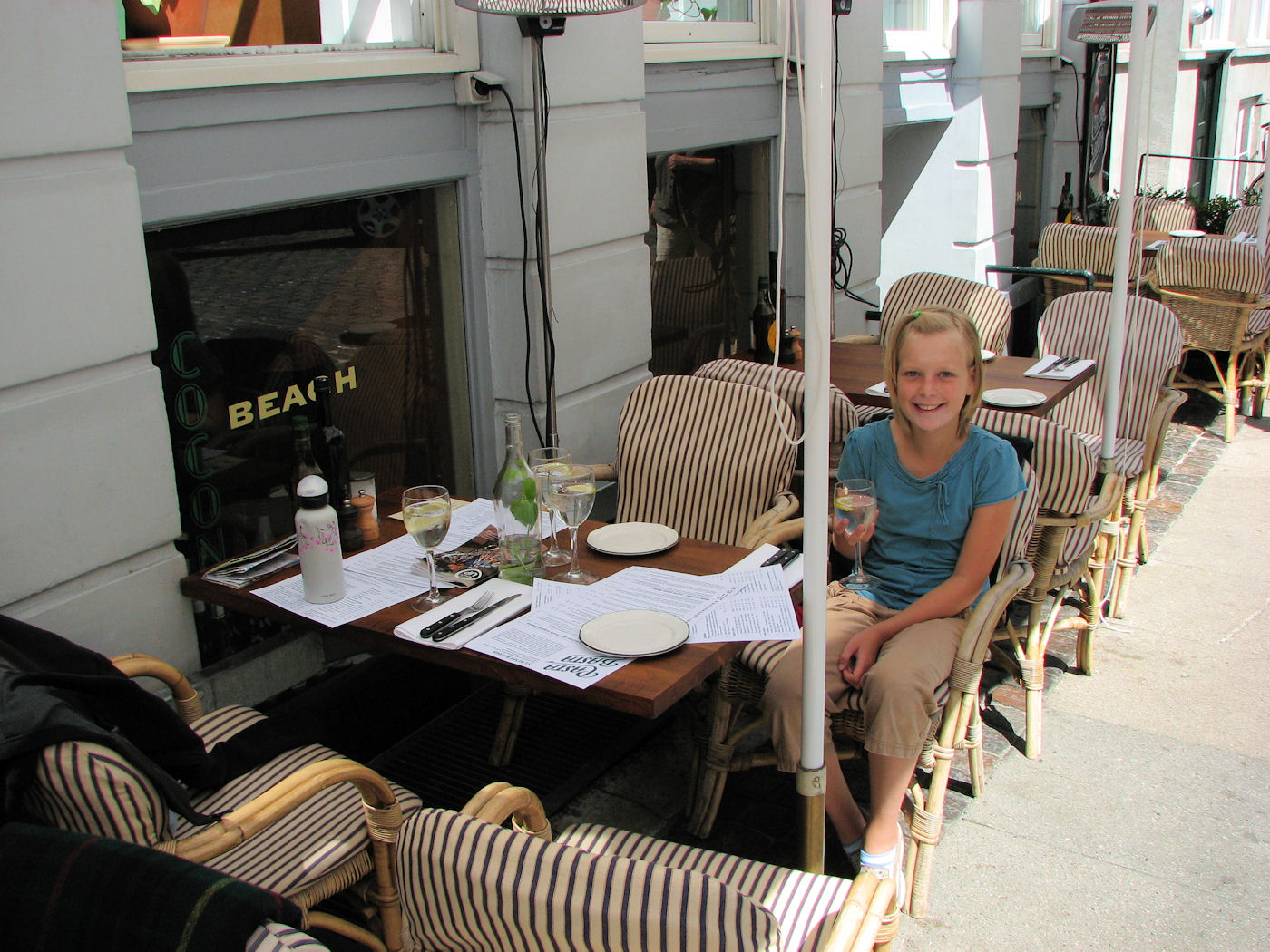
lunch in Copenhagen Denmark

Between our visits to Glyptotek and Vor Frue Kirke, mentioned in yesterday’s entry, we had a nice lunch at Pasta Basta. It was relatively inexpensive by Danish standards but still set us back at least 4X more than what we usually pay for lunch at a restaurant in the states. After lunch we headed for The Round Tower, a place I had read about many years ago in a wonderful book called, Blind Watchers of the Sky. At least I think it was in that book. If not, I’m sure it was discussed in Music & Silence.

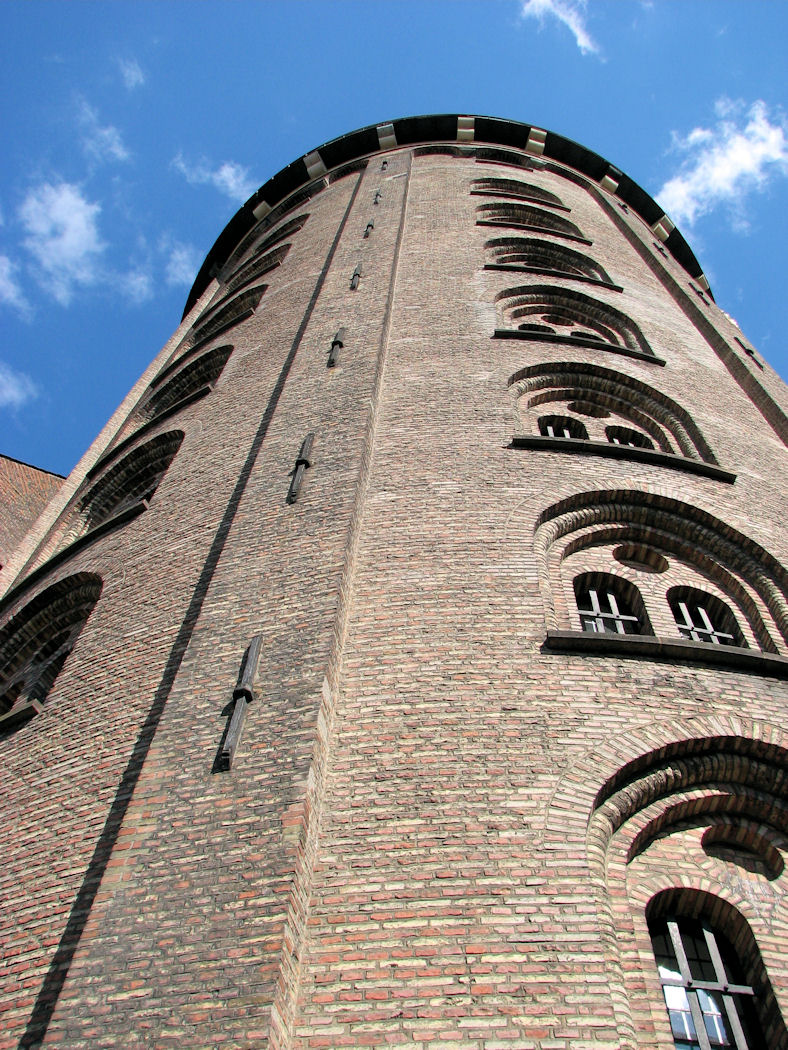
the round tower copenhagen denmark

The Round Tower (or Rundetaarn) is a most interesting building. You gain access to the top by going up a long, spiral, brick ramp.


brick ramp in the round tower copenhagen denmark

From the top there are outstanding views of the city. And on the very top there is a functioning observatory. We were even able to use the telescope at the top! I believe it’s the oldest functioning observatory in the world at nearly 400 years. There can’t be many older since the telescope has only been around for 400 years.

telescope on the round tower in copenhagen denmark

There wasn’t much to see on a Sunday afternoon with no sunspots. If you really want to see something impressive out of this telescope you’ll want to visit in the winter. It doesn’t get that dark in the summer in Copenhagen.


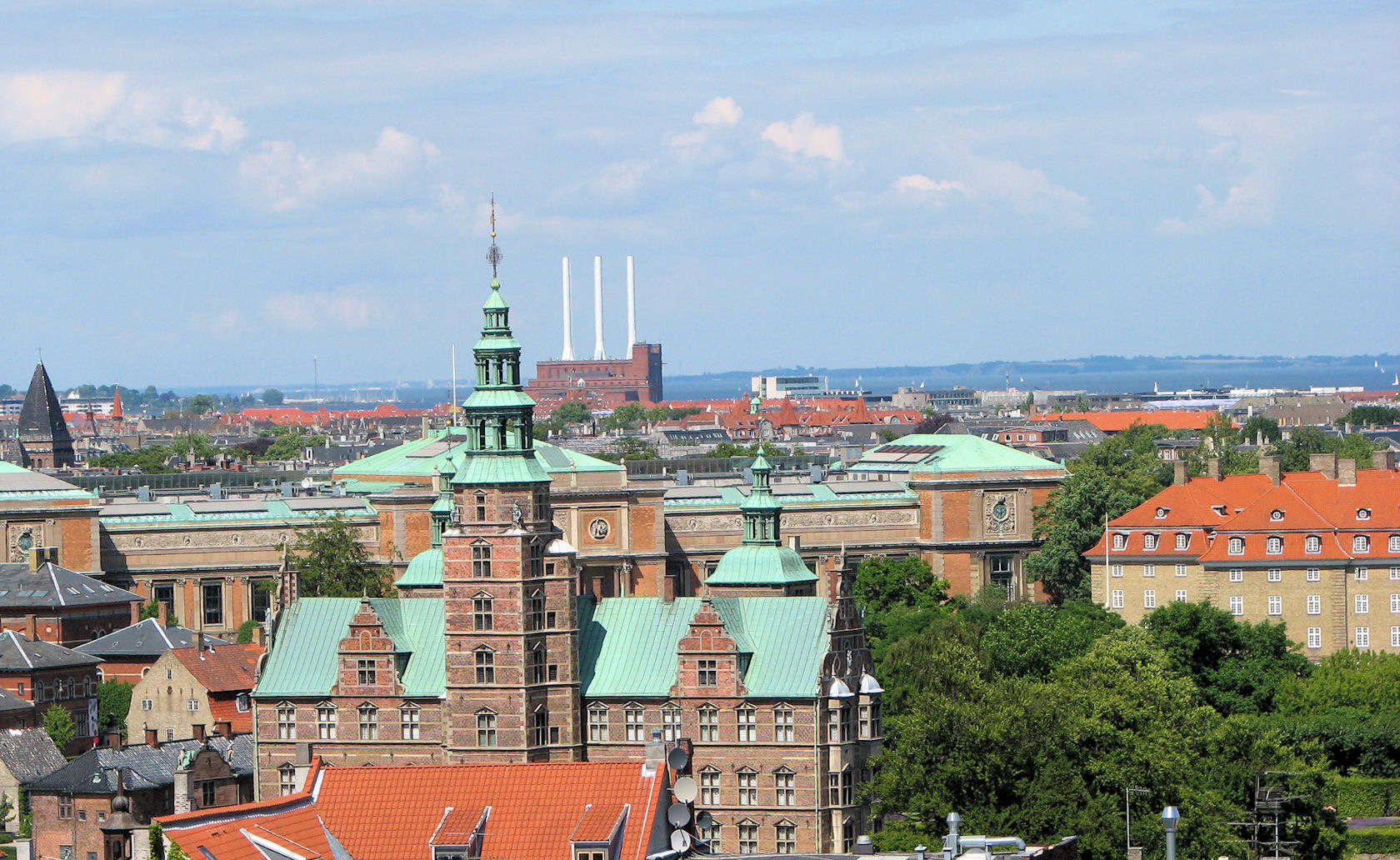
Copenhagen Denmark from the Round Tower

From the top of the tower you have a great view of Rosenborg and the Statens Museum for Kunst.


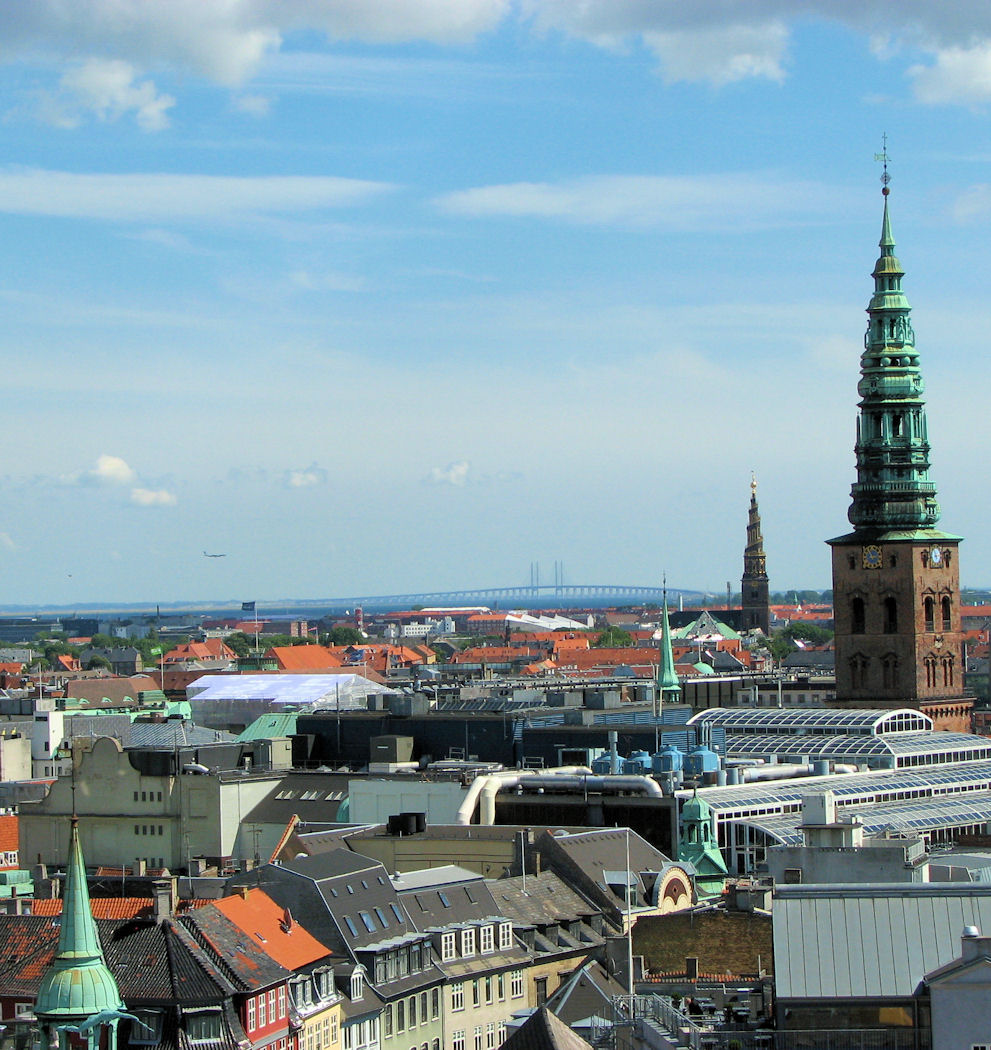
Copenhagen from the sky

In the distance you can see the bridge linking Denmark and Sweden. You can also see an airplane coming into Kastrup, Copenhagen’s airport. The far away, spiral, church steeple is part of Vor Frelsers Kirke on Christianshavn.


copenhagen city hall and tivoli from round tower

As previously mentioned, the Star Flyer ride at Tivoli offers incredible views of the city. These people are in swing seats way, way up in the air. The large tower obscuring the rest of the riders is the Copenhagen City Hall tower.