Mossy stone lantern and pine tree in Kamakura

|
The above will search Traveljapanblog.com. Concerts - Landscapes - Sports |
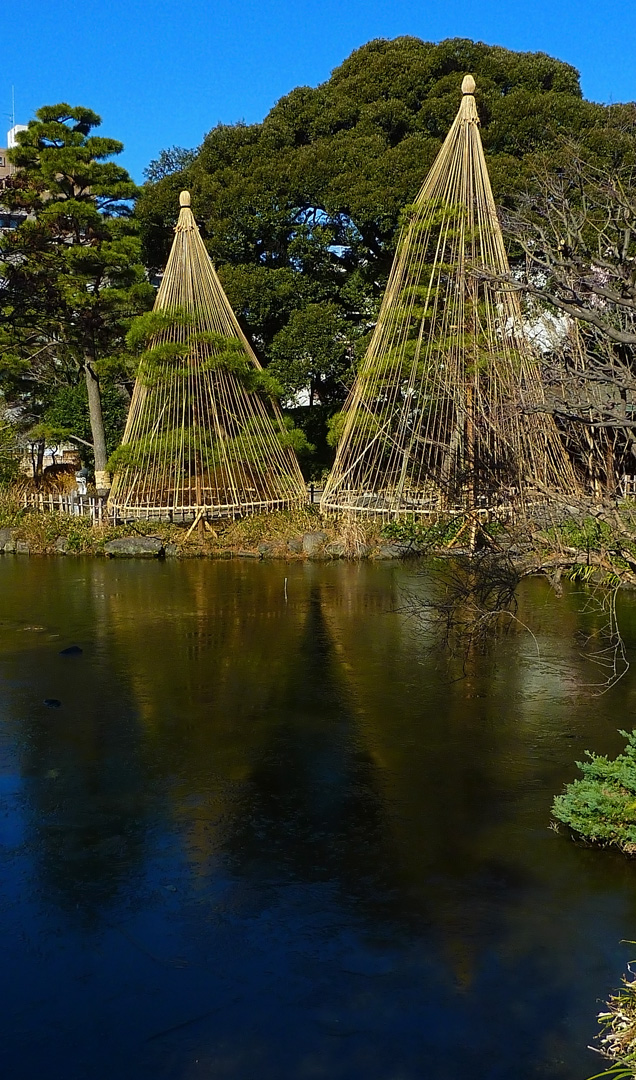
Yukitsuri are common throughout Japan, even in areas that get little or no snow (like Tokyo). These “tree tents” are supposed to save the branches from accumulating heavy snowfall.

tea room at Ikegamibaien (池上梅園)
During the winter in Japan trees are frequently covered in straw rope or wires formed to make a teepee of sorts which supposedly protects the tree’s branches from accumulating large amounts of snow and breaking. The devices are called yukitsuri (雪吊 or snow hangers), and you can read more about them here.

Kamakura's famous Hasedera front gate with pine tree

Japan has some amazing pine trees, and this is one of the better ones. The seed for this Karasaki Matsu (Pine Tree) is said to have come from the famous pine tree depicted in the ukiyo-e pictured below (Night Rain at Karasaki) by Hiroshige. The statue to the left is Yamato Takeru and is the oldest bronze statue in Japan, dating back to 1880.

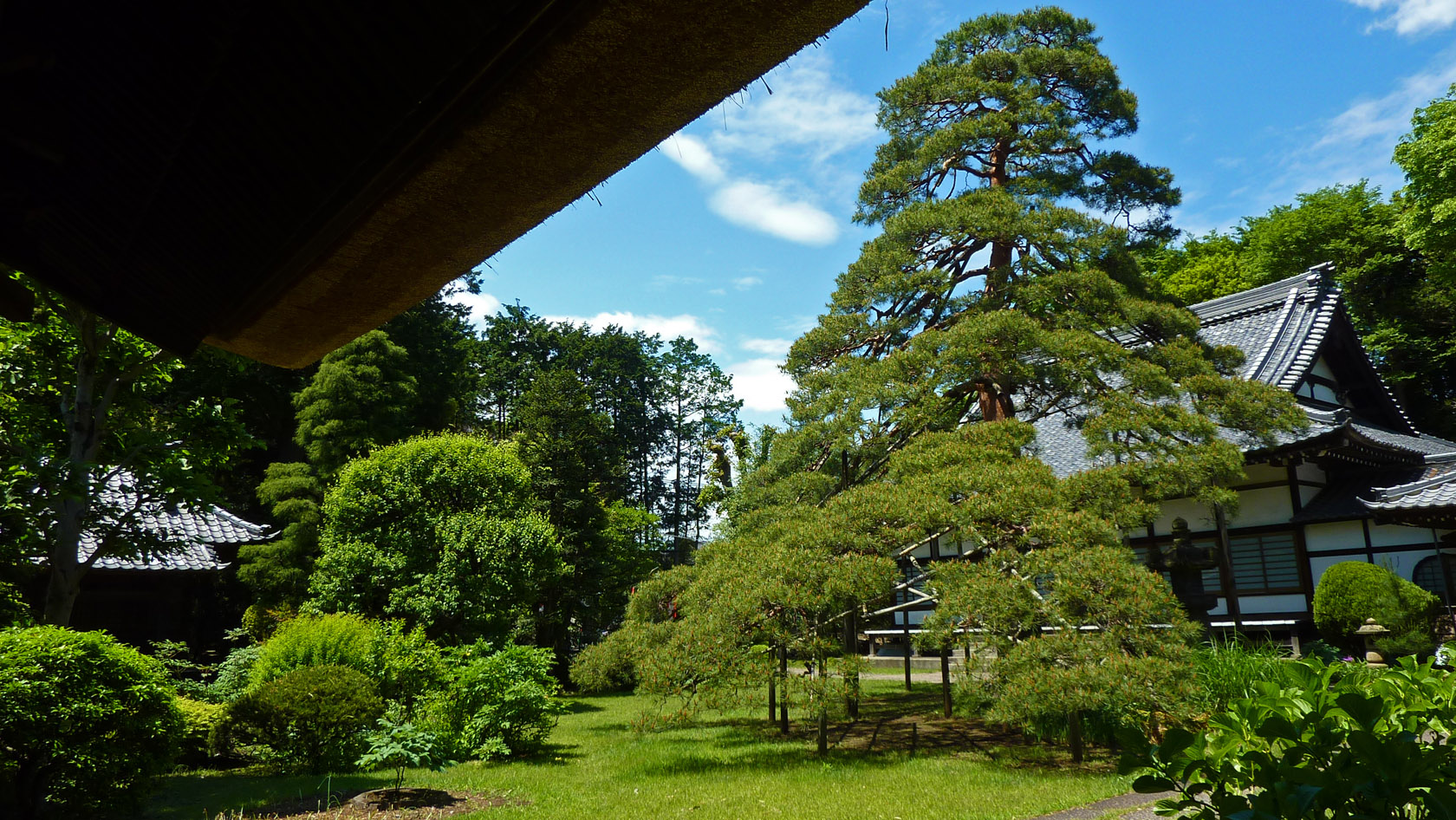
I’m a sucker for thatched roofs. While on water walk #8 I stumbled across this deserted temple. This view from under the old thatched-roof gate was breathtaking. I wandered the grounds for a long while without encountering another soul. Clearly the place was well maintained though. The loving care that went into this pine tree alone was remarkable. There was a lotus pond (photos coming someday). I lingered so long at Kaiganji that by the time I got to the Edo-Tokyo Open Air Architectural Museum in nearby Koganei Park I was starving. I opted to eat instead of go to the museum, something I now regret. Someday I will have to go back to make up for this blunder!