TravelJapanBlog.com - Japan (07, 09-10, 13), Denmark (08, 11, 16-19, 21, 24), Korea (13), Poland (21), Mexico (14, 15, 19, 26), Iceland (17, 19), Hawaii (14, 17, 22), Czech Republic (16, 17, 19, 21)
The above will search Traveljapanblog.com.
Concerts - Landscapes - Sports


Archive for Japan

Field of dreams for a lefty

dream field for a left handed power hitter

AT&T Park in San Francisco has nothing on this place. There you have to hit the ball about 400 feet and clear a wall and rows of fans before you “splash down” in McCovey Cove.

At this baseball field, on the Arakawa River (荒川) in Tokyo, water is less than 250 feet away for a left-handed hitter. There are no walls or seats to clear. There were a couple of guys fishing in right field though.

Foot-loose in Tokyo

foot-loose in tokyo jean pearce I recently picked up Foot-loose in Tokyo, not because I thought it would be useful (due to when it was written) but because I thought it would be fun to see what things were like along the Yamanote Line in the 1970s. The funny thing is many of the things the author, Jean Pearce, thought would quickly disappear are still here and many that were thought to be permanent fixtures are long gone.

The book is very interesting to read even though the contents are so dated. Perhaps the fact they are so dated makes it an even more enjoyable read. I read the whole book on the train (the Chuo Line, not the Yamanote Line) one day. The contents changed the way I think about many of the Yamanote Line stops.

The entry for Takadanobaba shows surprisingly few differences from the book’s era until today. Big Box, Omokage-bashi, Mizu Inari Jinja, Waseda University, Kansenen–all are the same today, decades later. One entry caught my eye, dealing with an ancient tree on a street I walk down nearly every day. I had no memory of seeing this ancient tree so I figured, as did the author, that the tree’s location had turned into a parking lot or apartment building in the ensuing years.

“You may see the tired remains of what was once a majestic old shiinoki (sweet acorn) tree which in other days was encircled by a Shinto rope to commemorate its venerable age, said to be more than 500 years…

Years ago there was a five-story pagoda here. It was destroyed during the wartime bombings; only the trees remain. The property is presently a parking lot, but once it belonged to a daimyo family.” (p. 114)

So I looked for the majestic old shiinoki and, in so doing, discovered that what was always there I had never before seen. Sure enough, it still fills the corner of a parking lot and probably goes completely unnoticed by the vast majority of people who pass. There is no sign (as there frequently is in Japan) commemorating its age or history. The Shinto rope (shimenawa) is back up and around its trunk however. A sake offering rests at its base.

椎の木 シイノキ

Horikiri Shobuen (堀切菖蒲園)

Horikiri Shobuen 堀切菖蒲園

As mentioned last time, June is iris (hanashobu) blooming month at Horikiri Shobuen. We arrived early on a Sunday morning but not nearly early enough to avoid the crowd.

iris 花菖蒲 hanashobu

The number of people with gigantic, expensive cameras taking pictures was ridiculous. I don’t understand why these cameras are so popular given the price, size, and weight. I’m pretty sure the pictures don’t come out 10 or 20 times better even though the cameras cost that much more than mine.

I can understand wanting a dSLR at a sporting event, but in most settings, they make no sense. One guy I was standing next to was firing off about 30 shots in a row each time he pointed his camera at a flower. He wasn’t changing the settings or his vantage point between photos. Why would someone want 30 digital pics of the exact same scene? There was no wind so it wasn’t like the flower was moving or somehow changing.

The same goes for tripods. There were loads and loads of tripods people were using to take pictures of flowers. Why? Tripods have their purpose. They can be useful for group photos when you don’t have an extra person with you who isn’t part of the group or for night photography, but you don’t need one to take a picture of a flower in the bright sunshine people!

Sorry for the mini rant.

hanashobu horikiri shobuen

Hiroshige’s take on the same scene a couple hundred years before in one of his “100 Famous Views of Edo” required no DSLR or tripod as far as I know.

Kanto Yamato Taiko (関東やまと太鼓)

japanese boy taiko drummer face

My first visit to Katsushika-Ku (葛飾区) was not to 亀有公園前派出所, home of my favorite manga, but to the 葛飾菖蒲まつり on the Arakawa side of the district. In June the locals celebrate the blooming irises in Horikiri Shobuen (堀切菖蒲園) as they have been for hundreds of years, but more on the flowers in tomorrow’s entry.

Today’s photo and video are from the taiko performance that we witnessed.

Quintessential old-style Tokyo house

war time japan housing

This kind of Tokyo home is becoming harder and harder to find. I suppose Tokyo was loaded with these kinds of structures after the war. Most are now long gone, although some neighborhoods still have some clusters. The one pictured above was all by its lonesome, wedged between a gasoline service station/car wash and a bar. The location isn’t down some back alley in a shitamachi as you may expect. This home is right on Meiji Dori between Ebisu and Hiroo Stations.

Best view of Mt. Fuji from Tokyo area

Today’s title is a bit misleading as I wasn’t actually able to partake of the best view of Mt. Fuji from the east. But I did get to imagine it while standing in the correct location.

Let me back up a bit and explain. There are some great views of Mt. Fuji from Shizuoka and Yamanashi. Unfortunately, getting there from the Tokyo area can take hours and cost thousands of yen. The best views of Mt. Fuji from Tokyo, Kanagawa, Saitama, and even most parts of Shizuoka and Yamanashi are usually obstructed, if not by buildings then by wires or most often by a mountain range that only allows for a partial, cap view.

I have found, however, a nearly complete view of Mt. Fuji a mere 90 minutes and 940 yen from Shinjuku (80 minutes and 850 yen from Yokohama). There are also some added bonuses of this location like rice paddies,

kanagawa yaga japan

mountain-side tea fields,

onoyama hiking course

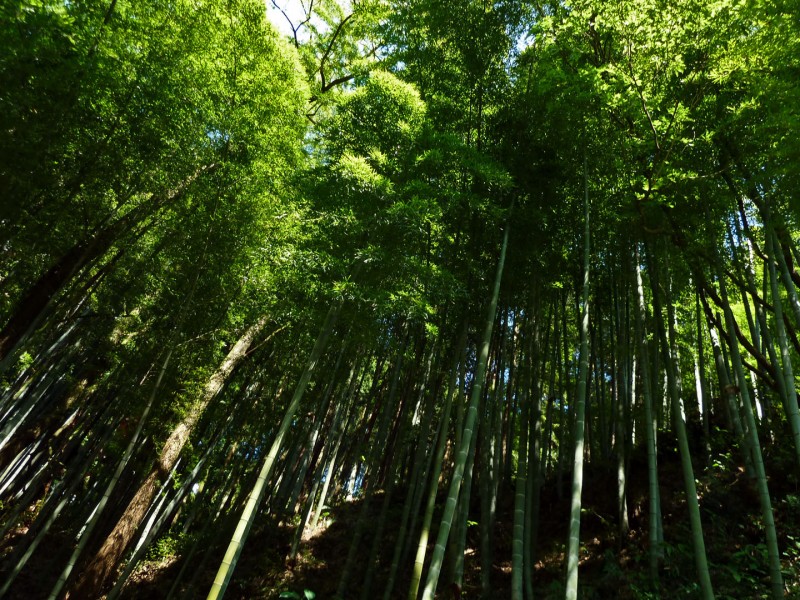
bamboo,

takebatake

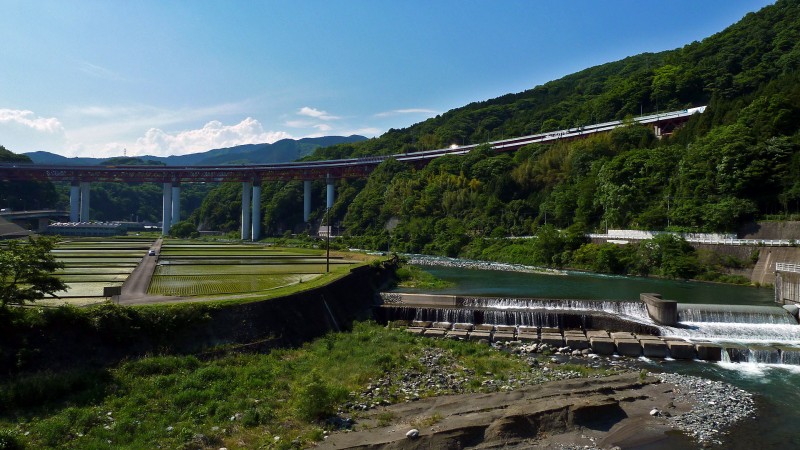
a river,

yaga station

the ocean, a lake, and even cows at the top of the mountain!
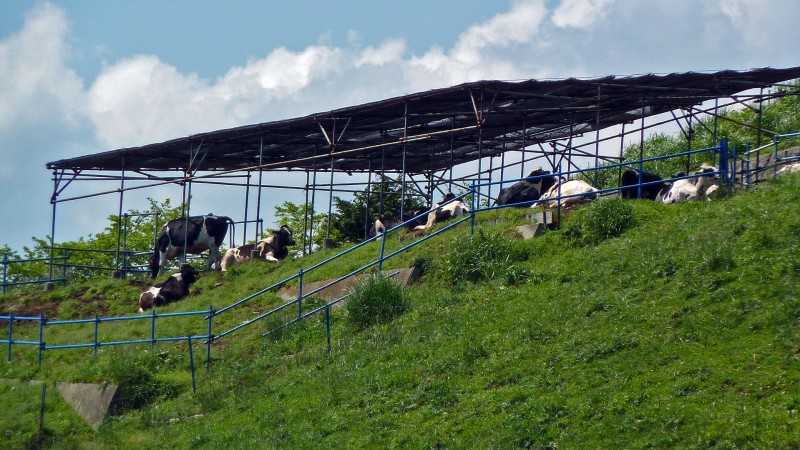
cows with a view of mt. fuji

So where is this place? Mt. Ono or Onoyama (大野山). To get there, follow the signs from Yaga Station (谷峨駅). For best results, check this site first. If the forecast is for 晴れのち曇 (as it frequently is) then you want to be sure to be on the first Express out of Shinjuku in the morning. The view of Mt. Fuji is best in the morning, the earlier the better for photography purposes. The hike from the station to the top of the mountain takes between 1.5 and 2 hours. Don’t stop for pictures on the way up. Hightail it up the mountain and try to get to the views of Mt. Fuji before 9 a.m. You can take pictures of the rice paddies, tea fields, bamboo, river, etc. on your way down.

This is a great hike with the above forecast if you are jet lagged in Tokyo and waking up before 5 a.m. anyway. I chuckle when I go through Shinjuku in the morning and see foreign tourists waiting hours for the stores to open at 10 a.m. Don’t be one of them. If you did Tsukiji to pass your wide-awake, early-morning hours on day one of your trip (or if you simply want to do something in the morning and don’t want to be part of a tourist crowd) then, weather permitting, this could be on your agenda for morning two (Odakyu Line train out of Shinjuku leaves at 5:31 a.m.).

If the forecast is for 曇りのち晴れ then time your arrival at the top to be an hour or so before sunset. Don’t forget to bring a headlamp for the way down. The trail is well marked so there is little worry about getting lost. Follow signs pointing to 大野山 on the way up and to 谷峨駅 on the way down. Here are some examples:

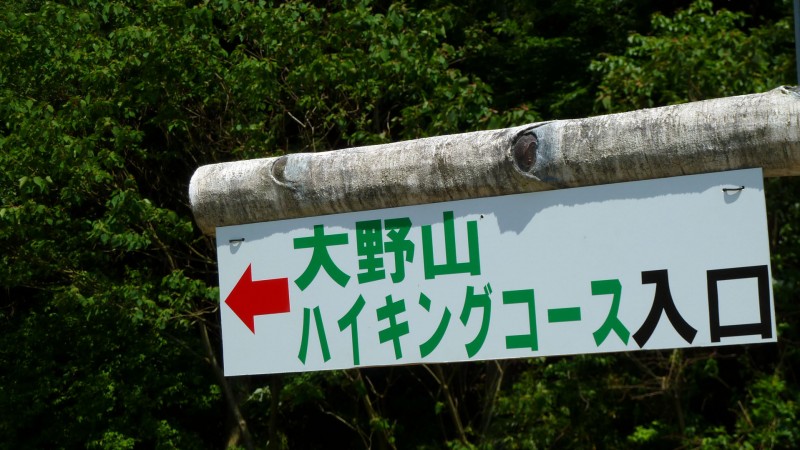
onoyama mt. ono hiking course mt. fuji best viewonoyama

大野山ハイキングコース入口 = Onoyama Hiking Course Entrance

onoyama fujisan view

Above is a very poorly reconstructed scene of what it would look like were Mt. Fuji not covered in clouds. My camera was on wide angle and the sun was high overhead. A little zoom, a lower sun, and fewer clouds and this has to be one fantastic scene to behold. The entire left outline of Fuji San is visible and the right side reveals more from here than most Fuji views from the east. The scene in front of Mt. Fuji is also very nice, although the above photo doesn’t do it justice. Onoyama is covered not in trees but in grass. The name 大野山 literally means the mountain with a giant field on top, and that is what you will find. Hence the cows enjoying the view in the most unlikely of places.

shinmatsuda eki fujisan

I actually did see Mt. Fuji on this day. When I arrived at Shinmatsuda Station, I took the above pic from the station.