TravelJapanBlog.com - Japan (07, 09-10, 13), Denmark (08, 11, 16-19, 21, 24), Korea (13), Poland (21), Mexico (14, 15, 19, 26), Iceland (17, 19), Hawaii (14, 17, 22), Czech Republic (16, 17, 19, 21)
The above will search Traveljapanblog.com.
Concerts - Landscapes - Sports


Posts tagged book review

Keio Mogusaen Walk (京王百草園)

tokyo walks hiking

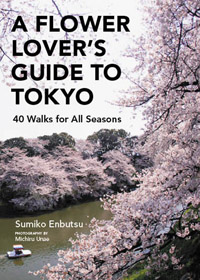
As previously mentioned February and early March in Tokyo is the Japanese Plum Blossom season. We decided to try our first recommendation from A Flower Lover’s Guide to Tokyo by Sumiko Enbutsu, a book I’ll review in more detail in a future entry. So far, I have to say, I like this book.

We went on Walk #37, Keio Mogusa-en Garden. We arrived soon after opening on a sunny, warm, February morning. The train station was decked out in fake plum blossoms to advertise the ume matsuri (梅祭り) that happens from early February until mid-March. During this time period, Mogusaen is open every day, which is good since we were there on the day it is normally closed. The crowds weren’t bad, but things looked to be getting more crowded by the time we left.

Pretty much everyone had a camera. Mine was the smallest and lightest by far. Giant, crazy-expensive cameras are the norm at places like this in Japan. Retired couples (some in their 80s) seemed to be competing to see who could take the better picture with their enormous lenses and tripods both aimed at the same flower.

The ume tree above (寿昌梅) was planted in the early part of the 18th Century by a Buddhist nun called Jushoin (寿昌院). Little, bonsai (盆栽) ume trees surround the bamboo fence around it. Very cute.

Below you can see the thatched roof of the Shorenan (松連庵) farmhouse from the hill behind it. Things actually looked much better in person. It was such a bright day that the sun washed out my photos from this angle. I should have taken them with a quicker shutter speed. Even so, the sky wasn’t blue from this vantage point, even though it wasn’t cloudy. At a different time of day, with the sun not bleaching everything, this same photo may be spectacular.

松連庵

This last picture may seem like your standard, point-your-camera-straight-up tree photo, but it isn’t. These trees were growing out of the mountain side horizontally.

I’ll have more from Keio Mogusaen, and our subsequent hike (on the same day) and adventures around the City of Hino (日野市), in a future entry.

“The Edo Inheritance” by Tokugawa Tsunenari

A few days before our trip to Nikko I picked up The Edo Inheritance with the hopes of gaining a greater appreciation for, and understanding of, the Edo Period (since the Tokugawa Shogunate and Nikko go hand in hand). The author is Tokugawa Tsunenari (徳川恆孝), who would be the current Shogun had the Edo Period never ended. Needless to say, he is a bit biased.

The Edo Inheritance is not a scholarly work or work of history in the academic sense. I suppose you could call it a personal reflection or interpretation with some history thrown in. The author doesn’t even try to sound objective or well researched. That’s not to say that he is always wrong; instead, I’m just saying The Edo Inheritance could have been much better with a good editor.

Tokugawa frequently tosses single anecdotes out there and draws wide-sweeping conclusions from them. The stories do make for entertaining reading, but don’t expect this work to be extensively relied upon in academic circles.

In a nutshell, Tokugawa believes the Edo Period has taken too many knocks from historians and the Japanese themselves. Perhaps he is correct.

If you are looking for a well-researched, introductory history of Japan look elsewhere. If the Edo Period fascinates you (like it does me) and you are already familiar with the basics then this may be a worthwhile, quick read. The book features more than 30 full pages of pictures of Edo drawn during the Edo Period.

スプートニクの恋人 (Sputnik Sweetheart) by 村上春樹 (Haruki Murakami)

The Sputnik Sweetheart was the third Murakami book I have read and second in the original Japanese. I almost gave up on it in the early going as it seemed rather boring. Things got far more interesting soon thereafter so I’m glad I stuck with it.

Published in Japanese just three years before Kafka on the Shore, there are many similar themes and items touched upon in these two works. I really enjoyed some of the messages near the end of the book and found them to ring very true.

Being a work of fiction, I don’t want to give much away in my assessment. However, I will say that I’m glad to have read スプートニクの恋人, and the Japanese is not very difficult if you can read at least a few hundred kanji. Also, I now want to visit Greece.

神の子どもたちはみな踊る

神の子どもたちはみな踊る (“after the quake” is the title given to the English translation) was the second Haruki Murakami book I read and the first in Japanese. The Japanese title (“All of God’s Children Dance” in English) refers to one of the short stories in this collection. The English title to the compilation refers to the common thread in each of the stories, the Kobe earthquake.

The stories are completely different from each other. The earthquake barely surfaces in some. In others, the Kobe quake of 1995 is symbolic of a major change that happens to one or more of the characters.

Ironically, (and I didn’t pick the book for this purpose; I just grabbed a random Murakami book off the shelf of the library to read on our trip to Thailand; I didn’t even realize this was a collection of short stories until I was several pages into the second story, which I initially assumed was Chapter 2 of the first story) I began the short story called タイランド (Thailand) on the plane from Tokyo to Bangkok which was the same setting as that for the character in the story who was making the same journey. The story felt more real by experiencing Bangkok right along with Murakami’s character.

Murakami is surprisingly easy to understand in Japanese. If you can read 1,000 or more kanji then I would recommend skipping his translated works and going for the original instead. Even if you are at, say, 500+ kanji you should give Murakami a chance in Japanese.

アドルフに告ぐ

adolf osamu tezuka japanese manga

Before this time in Japan I read every issue of Mangajin as well as several of the serialized volumes of Kochi Kame. I thought I’d be enjoying manga by now. Unfortunately, after reading a few issues of the most popular weekly manga, Shonen Jump (週刊少年ジャンプ), I realized that most manga do not appeal to me in the least. Outside of Kochi Kame (こちら葛飾区亀有公園前派出所), only about two of the 22 manga in Shonen Jump are even mildly interesting to me.

However, since we live near Osamu Tezuka‘s stomping grounds, the libraries in the area carry some of his works. I recently picked up the first installment of his Adolf series (in Japanese) and had a hard time putting it down. A month later and I have consumed all 5 volumes (or over 1,100 pages).

I don’t think I would have found the Adolf series nearly as interesting in English, but an English translation is available and the reviews are good. Unfortunately, the first issue in English is hard to find at a decent price.

Other sites provide detailed summaries and character descriptions so I won’t go into that here. Even though the contents are fictitious you can learn a bit of history and get a flavor of Japan before, during, and immediately after World War 2. The series isn’t just about history though. The character development is fantastic, the illustrations superb, and the dialog engaging. It is a manga though so there are some jokes and Tezuka does get a bit carried away with “chance meetings.”

In Japanese the books are simply called アドルフに告ぐ (or Tell Adolf) and numbered 1 to 5. The reader doesn’t find out the meaning for the アドルフに告ぐ line until the last few pages of the 5th book. In English the names are:
Adolf: A Tale of the Twentieth Century
Adolf: An Exile in Japan
Adolf: The Half-Aryan
Adolf: Days of Infamy
Adolf: 1945 and All That Remains

Kafka on the Shore

kafka on the shore haruki murakami

We found a few books in our apartment when we arrived in Tokyo. Kafka on the Shore by Haruki Murakami was one of them. I really enjoyed the first half. The second half wasn’t nearly as interesting to me, but it was still good–especially in parts. If you are well read, you will notice some borrowings and inspiration from other authors. Murakami doesn’t hide that fact. Instead, he alludes to his lifted items by referencing those other authors, like Soseki Natsume, within the work itself. It all works out to a very clever book.

Even if you aren’t familiar with the things going on in the subplots, you should find this novel to be enjoyable. I’m currently reading one of Murakami’s other works now, 神の子どもたちはみな踊る (All God’s Children Can Dance), in Japanese. For some reason it is funner to read the work of a Waseda University grad right on the Waseda University campus.

Here is a quote from Kafka on the Shore:

“‘Are the Japanese God and the foreign God relatives, or maybe enemies?’

‘How Should I know?’

‘Listen — God only exists in people’s minds. Especially in Japan, God’s always been a flexible concept. Look at what happened after the war. Douglas MacArthur ordered the divine emperor to quit being God, and he did, making a speech saying that he was just an ordinary person. So after 1946 he wasn’t God anymore. That’s what Japanese gods are like—they can be tweaked and adjusted. Some American chomping on a cheap pipe gives the order and presto change-o—God’s no longer God. A very postmodern kind of thing. If you think God’s there, He is. If you don’t, He isn’t. And if that’s what God’s like, I wouldn’t worry about it.” (p. 375)