TravelJapanBlog.com - Japan (07, 09-10, 13), Denmark (08, 11, 16-19, 21, 24), Korea (13), Poland (21), Mexico (14, 15, 19, 26), Iceland (17, 19), Hawaii (14, 17, 22), Czech Republic (16, 17, 19, 21)
The above will search Traveljapanblog.com.
Concerts - Landscapes - Sports


Posts tagged book review

Mt. Mitake (御岳山) – Part 1, getting there

tama river kori station bridge

Last Saturday (November 21), upon recommendation from a friend who had been there the prior weekend and upon seeing it is a featured fall “walk” in a guidebook we own, we headed west of Tokyo to Chichibu-Tama-Kai National Park.

The above photo is of the Tama River (多摩川), from a bridge just a minute or two away from Kori Station (古里駅). This is were we began our walk. The fall colors were still nice, but they probably hit their peak at this location a week or two before.

bridge near 御岳山 mt. mitake station

This next picture is from inside the train near the Mitake Station. The train was actually packed on a Saturday morning, and most people got off at this station. We followed Day Walks Near Tokyo‘s advice and kept going to Kori Station. Some of the information in our book was dated and/or inaccurate. For instance, there no longer is a jiyukippu. Nor is it cheapest or fastest to go from Shinjuku and pay the 1992 price of 890 yen each way. Instead we went from Takadanobaba and paid 770 yen on the way there and just 600 yen on the way back (from Hinatawada), using a Seibu line instead of JR for much of the journey.

mt. fuji 富士山 from haijima station 拝島駅

When we transferred trains at Haijima Station, we had a good view of Mt. Fuji. The above pic didn’t come out so great through the lined glass and with the power lines grabbing the focus, but you get the idea.

Be careful when relying on the information in Day Walks Near Tokyo. “Walking time” in the book seems to mean “running time,” and even though we gave ourselves 7 hours of daylight to do the 4 hour and 45 minute walk with breaks, we ended up in darkness for the last hour. For instance, the first part of the walk says it takes a total of 1 hour and 30 minutes. However, even before we finished it 2 and a half hours later, we saw a sign on the trail pointing in the downward direction saying it was 1 hour and 30 minutes to the start of the walk.

The book really doesn’t prepare you for the amount of climbing. Only once does it mention the trail being steep, even though you will encounter steep trails both up and down all day long. The last 2 hours and 10 minutes (from Mt. Hinode to Hinatawada Station) is described as “quite easy going.” While it is mostly downhill, you will be descending hundreds of steep steps at times and generally navigating a trail loaded with tree roots, ditches, and other obstacles. As we were nearly out of daylight, we almost jogged this part of the trail, without any rests, and it still took longer than the 2 hours and 10 minutes the book estimated. If you plan to follow this trail after the days grow shorter in fall, be sure to bring a headlamp and get to Kori Station by 9 a.m. Another complaint about Day Walks Near Tokyo by Gary Walters is that after the fact I found out, by looking on other websites, that the highlights of a trip to Mt. Mitake are the Rock Garden and water falls (two sets). The book didn’t mention water falls or the Rock Garden so we didn’t know to see either.

We did see and experience some really cool stuff, though, and the fall colors were beautiful. I’ll show you some more pictures in future entries.

“Kids’ Trips in Tokyo” and “Japan for Kids”

japan for kidskids trips in tokyo

Kids’ Trips in Tokyo: A Family Guide to One-Day Outings and Japan for Kids: The Ultimate Guide for Parents and Their Children are two books we reference frequently while living in Tokyo. Both can be useful, but both are far from perfect.

Neither one is very good at telling you what you can do in a certain area. For instance, let’s say that you will be in Shibuya for the day. Without going through each book from cover to cover, you can’t figure out what the books offer on just the Shibuya area. The index in Kids’ Trips is a mere three and a half pages in length and is not organized by area. Japan for Kids has an index of seven pages, but it, too, is not organized by area AND it covers all of Japan so seven pages means the index is nearly worthless. If you look up a place like Takadanobaba (where we live) or Roppongi (a popular hang out in Tokyo) in the index of either book you will find absolutely nothing. Of the two, Kids’ Trips is more useful when trying to look up a place since you can use the map inside the front cover to sort of see if there is any coverage of the target area.

Both books are dated. Kids’ Trips has a copyright of 1998, meaning the information is at least 10 years old and usually more like 15 years old. The second edition of Japan for Kids was copyrighted in 2000, but much of the content goes back to the first edition which was written before 1992.

OK, so the books aren’t great, but they are sometimes still useful. For instance, we wouldn’t have known about NHK Studio Park without Kids’ Trips. A video from NHK Studio Park can be found at the end of this post. However, we followed Kids’ Trips‘ advice too much and went to Maisen, a tonkatsu restaurant, on the top of Tokyu’s Department Store. We had a great time there, thanks to the lively conversation we enjoyed with the couple next to us who were celebrating her 60th birthday. However, the food wasn’t that great, and certainly not Tokyo’s best tonkatsu as the guide suggests. I’ve had better tonkatsu at other places in Tokyo for less than half the price.

The maps in Kids’ Trips are pretty good, and the directions are generally easy to follow.

Both books are useful references and fairly essential if you are going to be in Tokyo for an extended period of time with kids. If you only choose one, I would make it Kids’ Trips. Even if you are only going to be in Tokyo with kids for a couple of weeks I recommend bringing Kids’ Trips along.

I Am A Cat (吾輩は猫である)

i am a cat soseki natsume

Before I completely forget the contents of this book, I figured I better write a little something about I Am A Cat by Soseki Natsume. (Soseki Natsume was born just a few minutes to the east of where we currently live in Nishi-Waseda and his grave is just a few minutes to the north.) This was the last book I’m planning on reading in English while in Japan. I finished it more than a month ago so the details are a bit foggy at this point.

This is one of those books that you constantly hear about and see referenced in other works so you feel a little behind the times not having read it. Now I’ll at least know what people are talking about. The version I read was only the first of three volumes. The setting is the Japan of a little more than a hundred years ago (as that is when it was written). The author takes the role of a cat, sort of a “fly on the wall” who no one is afraid to talk in front of and who can creep into any conversation without being detected.

The book is occasionally hilarious, frequently witty, always observant of Japan then (and now as things don’t seem to have changed much), but sometimes dull. Even though I laughed out loud at times, I was bored at others and did not feel as inspired by the end to want to read the next two volumes.

The introduction by the translators was too long and overdone if I remember correctly. I’ll leave you with one of my favorite passages. Maybe I only find it funny because I know so many teachers.

“My master seldom comes face to face with me. I hear he is a schoolteacher. As soon as he comes home from school, he shuts himself up in the study for the rest of the day; and he seldom emerges. The others in the house think that he is terribly hard-working. He himself pretends to be hard-working. But actually he works less hard than any of them think. Sometimes I tiptoe to his study for a peep and find him taking a snooze. Occasionally his mouth is drooling onto some book he has begun to read…

There are times when even I, I a mere cat, can put two thoughts together. ‘Teachers have it easy. If you were born a human, it’s best to become a teacher. For if it’s possible to sleep this much and still to be a teacher, why, even a cat could teach.’ However, according to the master, there’s nothing harder than a teacher’s life and every time his friends come round to see him, he grumbles on and on.”

The Sound of Waves (潮騒)

sound of waves yukio mishima We arrived in Japan without books. Within a day or two we were searching for our local library. The closest one we tried was the Tsurumaki Branch in the Shinjuku Library system. While the branch was very cute, and it had a great Japanese children’s section, there were no books in English. The librarian recommended the Chuo Library which was much larger and even had “Children’s Library” in the name. The Chuo Branch was several times bigger, the Japanese Children’s Library was fantastic, but still there were no books in English (although I did pick up a few issues of “Hiragana Times” which is half in English). This seemed rather bizarre to me, that in a country where learning English is mandatory (although very, very few actually speak it) the libraries don’t carry ANY books in English. You’d think Japanese people would want to improve their English skills by reading books in English. Apparently not.

We were told at Chuo Library that all of the English books are kept at the Okubo Library. So off we trotted on our third library excursion. The Okubo Branch did have books in English. However, the selection is not what we were expecting. There are no more than a few dozen books in English. Many, if not most, are popular novels for which I don’t have any interest. There are a few cookbooks (my wife checked out Harumi’s Japanese Cooking), and then there are a few Japanese classics in English. Needless to say I will consume these without any trouble in the next year.

The Sound of Waves by Yukio Mishima was the first one I checked out. I read it from cover to cover on two, round-trip train trips from Shinjuku to Ebina. This was the fourth Mishima novel I have read.

The ending of this book was a surprise to me. I have come to expect certain things from Mishima, and this one twisted differently than I expected. I won’t give it away here.

As much as, if not more than, his other novels, a reader can really learn a lot about Japanese culture and Japanese thought through Mishima’s words. I suppose one could just enjoy The Sound of Waves as a well told, very descriptive, love story, but there is so much more here than just that.

The details are not only beautifully written and symbolic, but they make it hard to believe the author isn’t actually there, carefully observing every movement. I offer one example from page 119.

“…there were now more houses that were empty during the daytime, doors unlocked, windows open. Bees entered these empty houses freely, flew about in them lonesomely, and were often startled upon running headlong into a mirror.”

In the end, I realized that I would have appreciated the book even more had I read it in the original Japanese. Perhaps it is a good thing that the libraries offer so few choices in English. I won’t be able to finish works of this length in two days if reading in Japanese, but at the same time I won’t be wondering what Meredith Weatherby, the translator, was translating when she writes things like “get-up-and-go.”

Tokyo Observer

tokyo observer Leighton Willgerodt Tokyo Observer by Leighton Willgerodt is a 20-year old book with timeless information about Japan. The writing style is very conversational and you may end up reading the whole thing in one sitting. The “chapters” are reprints from newspaper articles Willgerodt wrote in the late 1980s about Japanese culture, customs, and language. He had lived in Japan for more than a decade at the time.

The last third or fourth of the book is about other parts of Asia. I didn’t find it as interesting, probably because I haven’t lived in those areas. The first hundred pages or so are fantastic though. I highly recommend this to someone going to spend an extended period of time in Japan. Tokyo Observer is a fun, quick read that will keep you entertained as it prevents you from making some common gaijin mistakes. You’ll pick up more than a few Japanese words along the way too.

If your library doesn’t have it you can pick it up through the above link for about a dollar.

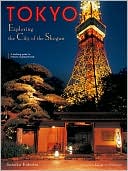
Tokyo: Exploring the City of the Shogun

tokyo exploring the city of the shogun

This beautiful book is actually many books in one. Tokyo: Exploring the City of the Shogun is a coffee table book, large with marvelous photography on every page. It’s also a guidebook, with maps and suggested routes for exploring historic neighborhoods in Tokyo. Finally, it is a work on the history of Japan–the Kanto (Tokyo, Edo) region in particular.

Each of the “chapters” includes a “Then” and “Now” section which explain what the area was like hundreds of years ago, how it has changed, and what you can expect to see and what to look for now.

I read a very similar book, Kyoto: Seven Paths to The Heart of The City, before we went to Kyoto two years ago. The maps appear much better in this one, but I haven’t actually tried them out yet. I will let you know how they are in a few months after following a few. This Tokyo version seems to be an improvement on the Kyoto version in every way.

Like the Kyoto book, the Tokyo edition includes seven tours of areas to explore on foot. They are:

Nihonbashi & Ningyocho: The heart of the old city
Ryogoku & Asakusa-bashi: The sumo quarters and environs
Fukagawa: In the footsteps of the haiku poet Basho
Tsukiji & Higashi Ginza: Fish, kabuki, and more fish
Atagoyama & Shiba: Samurai feats and traces of shoguns past
Asakusa: A classic temple district, with shops and festivities
Yanaka & Nezu: Strolling through a traditional Tokyo neighborhood

There is also one on the Imperial Palace and the surrounding grounds so I suppose there are eight in all rather than just seven.

Both the Kyoto and Tokyo books are problematic in one way however. They both do too much. What I mean by that is who wants to take a large picture book on a walk with them? My suggestion is to read this book before and after your walk. Make a photocopy of the map and directions for the walk itself though and bring only your photocopy along.

Should the publisher update these books in the future my suggestion would be to turn the publication into two books sold together–a large picture book with the history and background provided and then include a little, 7-page, pull-out book with the maps and directions to bring along on the walks.