TravelJapanBlog.com - Japan (07, 09-10, 13), Denmark (08, 11, 16-19, 21, 24), Korea (13), Poland (21), Mexico (14, 15, 19, 26), Iceland (17, 19), Hawaii (14, 17, 22), Czech Republic (16, 17, 19, 21)
The above will search Traveljapanblog.com.
Concerts - Landscapes - Sports


Posts tagged book review

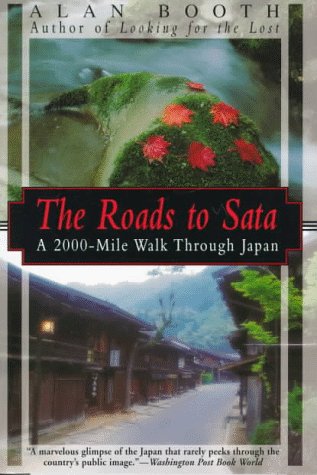
The Roads to Sata by Alan Booth

roads-to-sata In case you couldn’t tell from the quotes I’ve provided from this book, I loved The Roads to Sata. Alan Booth’s books are like really, really well done blogs long before the blog was invented. Of his two books, this one is the better. The other is certainly well worth reading though. I’m disappointed that we only have these two to read from.

If you have never been to Japan you will at the very least like this book. If you have been to, or lived in, Japan then getting a hold of this book should be next on your list of things to do today. You will laugh, smile, nod your head, and cry. The Roads to Sata is a work of art from beginning to end.

Civilization and Enlightenment: The Early Thought of Fukuzawa Yukichi

I wrote a book review of Civilization and Enlightenment: The Early Thought of Fukuzawa Yukichi on my other site today. Rather than repost it here, I’ll just link you to it here.

If you’ve ever been to Japan you will recognize Fukuzawa as his picture is below:

Looking for the Lost

Mangajin frequently does a book review or two in each of their issues. Usually the reviewers are very critical, even of works they generally like. These are the kinds of reviews I like the best. However, the critical reviewer could find nothing not to like about this book. I knew then, based on Mangajin‘s reputation, that I had to read it.

Alan Booth’s Looking for the Lost is one of the more enjoyable books I have read in a long time. I look forward to reading his other book in the near future.

Booth walks around Japan. He refuses all other forms of transportation, sometimes at the annoyance of those trying to help him. I’m guessing he only does this when he is writing a book, but who knows? In any event, it makes for some very entertaining reading. Thanks, in part, to the mode of transportation Booth has numerous curious adventures. The pictures he paints of his interactions with the Japanese people he encounters brought back so many memories and had me laughing out load at times.

One thing that any reader is sure to notice is that Booth drank a lot of beer. Most walkers drink a lot of water. I don’t believe Booth drank any water during the countless miles he covers in this book. Every time he takes a break he drinks beer–and not just one. He preferred to drink two or four at a time. Perhaps this is why he died so young of cancer. I’ll share one of these examples before wrapping up this review.

“Late that afternoon I walked into Shirotori behind four small boys who raced ahead of me screaming and looking back and daring each other to wait until I had caught up, which none of them had the courage to do… I trudged up and down in search of a place to stay and at length slumped into a ryokan where a plump, friendly woman with bold red lipstick, an unsuitably bright emerald green blouse, three strings of cultured pearls, and a head of hair so solid with lacquer that you could have stood a clock on it, asked me if I would prefer coffee to tea as an offering of welcome.

‘I would prefer beer,’ I told her.

‘All right,’ she beamed, and brought me a can of Asahi Super Dry. ‘And since this is beer instead of tea, we won’t charge you anything for it.’

I liked the ryokan at once.” p. 337

If you’ve been to Japan, or lived there, this book is a must read. Even if you haven’t experienced Japan you should enjoy this book.

For some additional quotes from this book, click on the Alan Booth link below.

2009 Japan Pro Baseball Fan Handbook and Media Guide

My copy of the 2009 Japan Pro Baseball Fan Handbook and Media Guide arrived this past week. I’m pleasantly surprised by the contents. I was expecting a cheaply produced collection of facts that may help make my visits to games in Japan later this year a bit more enjoyable. However, this is really high quality and much more useful than I bargained for. The paper quality is top notch. Every page is in full color. And the items covered are more comprehensive and interesting than I hoped. Let’s take a look at some of the sections:

Each Japanese baseball team has a two page spread as shown above with overview material. This is pretty much all I was expecting, but there is much more.

Detailed stats, and even salaries, are shown for every player, including names in both Japanese kanji and English. If nothing else it’s a good source for practicing kanji name readings. 😉

All foreign born players have additional career details provided. How many Americans, other than Tuffy Rhodes, are there with over 400 home runs who are virtually unknown to U.S. baseball fans?

Not shown here are a bunch of other sections in the book. One I particularly like is the schedules by date. So let’s say you are in Tokyo on September 26th and want to catch a game. Instead of having to flip to each team’s page to see where they are playing, you can turn to the schedules-by-date page and quickly see that you have four options: Rakuten at Seibu in Tokorozawa, Orix at Lotte in Chiba, Hiroshima at Tokyo in the dome, or Yokohama at Yakult in Jingu. Times are also listed and since two of these games start at 2 and the other two start at 6 you could actually make it a doubleheader with four different teams in one day if you want. Try doing that in a major city in the U.S.A.

Published by Wayne Graczyk and JapanBall.com, ordering information can be found here.

ギャル探偵、翔る

ギャル探偵、翔る While browsing ebay one day I came upon a lot of 10 or so Japanese books which I subsequently purchased so that I’d have something to read once I finished Harry Potter in Japanese. I knew nothing about the books (except for Don Quixote in Japanese which I have previously read in English).

I merely picked the one on the top up and began reading. That one was called “ギャル探偵、翔る” or “Soar Girl Detective.” The title sounded corny and the contents weren’t much better. I just finished all 250+ pages last night. This was only about the third or fourth Japanese novel I have read that didn’t include furigana. It wasn’t too difficult to get through and I learned lots of interesting new vocabulary.

In what way was the vocab interesting you ask? Well, this novel is rather racy. It’s about a former prostitute, turned detective, named Mayumi. Her side kick, and detective-in-training is the virgin Ruriko. Mayumi’s boyfriend is a cop who also helps out in their detective agency set in the Roppongi district of Tokyo.

There are about 12 stories in this novel. All are pretty similar, featuring beautiful people (models, actresses, etc.), naked people in one way or another, and usually some sort of sexual escapades–either in the crime itself, between Mayumi and her boyfriend, or both.

Mayumi usually comes up with some sort of brilliant plan, solving every case, and nets the agency ridiculously high commissions that seem to grow from one episode to the next. Amazingly enough, the author, 胡桃沢 耕史, wrote tons of these books–three in this series alone.

If this sounds like your cup of tea, I’ll gladly sell my copy to you for $5 plus shipping.

Still Life and Other Stories by Junzo Shono
In an issue of Mangajin there was an interview with Wayne P. Lammers who translated this book. Wayne was one of the main translators for Mangajin. Anyway the interview was very good, and what he said about this book was intriguing enough for me to go out and get a copy. I was not disappointed.

The stories are ordinary enough, without any major action or typical plot line to speak of. However, there is an underlying tension to many of them that will keep many a reader on their toes. These creepy shadows under the surface reminded me a bit of Audition. I’m certainly not saying that if you enjoy this book you will like Audition (or vice versa). There is merely something similar between the two that I can’t quite put my finger on.

The ordinariness of it all (especially after the first couple stories–A Dance and Evenings at the Pool) may bore some readers. If so, I think those readers are missing the brilliance of Shono’s attention to detail, some of the underlying symbolism, and the Japanese mind. I suppose it probably helps, in appreciating this work, to have lived with the Japanese for an extended period of time.

The stories sound autobiographical. Given their content, I would guess that it would be rather awkward to have such stories published while you are still alive, especially in a country like Japan. Your neighbors could just read your books to find out intimate details of your life and marriage. It’s sort of like having your personal, unedited journals, that you wouldn’t even show a spouse (perhaps especially wouldn’t show a spouse), published for the general public’s eyes to see. 

Shono seems like he has many regrets or things he feels guilty about. He doesn’t usually say this, but they come through in the writing, especially the symbolic aspects. At the same time, he seems to do the things he implies he doesn’t do enough (spend time with his kids, pay attention to his wife, think about why he does things rather than just go along with the crowd with a salaryman mindset) much more than the average Japanese male.

We all can learn a lot from Junzo Shono. He teaches us about life, about examining life and what is really important, in a way that is completely non-preachy. His method is subtle, but the messages are clear. Thanks be to Wayne Lammers for bringing Shono’s writings to the English speaking world.