TravelJapanBlog.com - Japan (07, 09-10, 13), Denmark (08, 11, 16-19, 21, 24), Korea (13), Poland (21), Mexico (14, 15, 19, 26), Iceland (17, 19), Hawaii (14, 17, 22), Czech Republic (16, 17, 19, 21)
The above will search Traveljapanblog.com.
Concerts - Landscapes - Sports


Posts tagged book review

3 new books on Japan

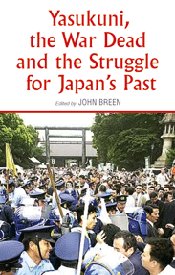
yasukuniThree books on Japan just arrived in my mailbox from Columbia University Press. They are: Yasukuni, the War Dead and the Struggle for Japan’s Past by John Breen, Troubled Apologies Among Japan, Korea, and the United States by Alexis Dudden, and Chronicles of My Life: An American in the Heart of Japan by Donald Keene.

Since we will be in the air on our way to Denmark a week from now these will have to wait until our return in August. I hope to have reviews posted here on each in August and/or September.

japan us koreaFor the trip I plan to take Philip K. Dick: Five Novels of the 1960s & 70s. Why? Because last summer I read Four Novels of the 1960s on my trip to Chicago, and I have fond memories of the readings coupled with my time in Chicago. Plus, Five Novels is much longer than the three titles on Japan so it should keep me busy longer. I don’t really want to carry around multiple books.

heart of japanDo you have any books that you have read that are forever linked in your brain with a trip or vacation?

I certainly do. For instance, I can’t think of Neil Young’s biography without thinking of my trip to Canada last fall or vice versa. Ditto with a trip to Hawaii and Origins Reconsidered: In Search of What Makes Us Human and probably a dozen or more other trips/books read on the trip.

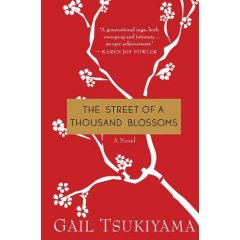
The Street of a Thousand Blossoms

The Street of a Thousand BlossomsLess than a week after starting The Street of a Thousand Blossoms by Gail Tsukiyama I have finished reading it. The book isn’t short at over 400 pages, but I found it hard to put down. That, coupled with having to wait for breakfast in bed on father’s day for three hours 😉 , allowed me to finish The Street of a Thousand Blossoms in little time.

As mentioned in my prior blog entry on the subject, I really enjoyed the Yanaka setting. I felt like I could connect with more than just Yanaka though. For instance, I spent a day in the late 80s watching Sumo at Ryogoku Kokugikan. The highlight of the day was witnessing the great Chiyonofuji’s bout in person. So all of the Sumo dialogue in this book brought back pleasant memories. I’ve always been fascinated with Japanese masks (check out this blog daily for some outstanding photography and discussion) so Kenji’s story held my interest. And, of course, there is the trip to Hakone which I have also made. Basically everything felt familiar and resonated well.

The story is compelling, drawing on the themes of renewal and hope. I don’t want to give away too many details for those of you who haven’t yet read The Street of a Thousand Blossoms.

The occasional errors in Japanese are my main criticism. Although Tsukiyama has a Japanese name, she doesn’t understand Japanese. This won’t be noticed by readers who are in her same shoes, but those who can speak the language will cringe at times. One example is her use of hai. She uses it far more frequently and in situations in which Japanese would not. Another is her use of the unconjugated verb hairu (to enter) as a command. She should have said something like haitte kudasai or o hairi kudasai instead of just hairu. A final one (there are others) that I’ll offer as an example is the Hakone Lake which she calls Ashino. In English it should be called Lake Ashi. In Japanese it is called ashinoko (芦ノ湖). The “no” indicates it is the Lake (ko) called (no–shows possession like ‘s in English) Ashi. Put another way, one could translate Lake Tahoe as “tahoe no ko” in Japanese but you would never call it “tahoeno” in English or Japanese.

She gets Japanese culture and customs wrong on some counts as well. For example, she has the school year starting in September like it does in the U.S. In Japan, though, school years, company fiscal years, etc. start in April–not September.

These minor critiques aside, this book is very enjoyable even if you haven’t been to Yanaka, Sumo, Hakone, Nara, or even Japan.

Here are a couple more pictures I took last year from areas mentioned in The Street of a Thousand Blossoms.

ashinoko Lake Ashi hakone japan mt. fuji

This is Lake Ashi with Mt. Fuji, mostly shrouded in clouds, in the background. The place on the right may be where Tsukiyama envisions Hiroshi and Aki staying.

hakone jinja 箱根神社

This is another picture from the ferry on Lake Ashi. The kanji say 箱根神社 or Hakone Jinja. “Jinja” means Shinto Shrine or Temple.

Yanaka 谷中 Tokyo

The Street of a Thousand BlossomsI just started reading a book called The Street of a Thousand Blossoms by Gail Tsukiyama. I say “just started,” but I’m actually more than half done with it in just two days. It is conjuring up all sorts of memories of my time in Japan.

Even though we only spent a few nights in Yanaka last year, it became a magical place in my head. This probably has more to do with the fact that it was the first place I’d been to in Japan in 20 years than anything else. But maybe, just maybe, Yanaka is a magical place.

Tsukiyama’s book is set mostly in Yanaka (for the first half of the book anyway), and I really feel like I’m there again as I read it. When she speaks of the temple bell (or gong) being stuck 108 times on the New Year (joya no kane) I think back to visiting Zenshoan (全生庵寺院‎) in the Yanaka neighborhood with its gold Buddha and beautiful Zen Buddhist bell pictured below.

Yanaka Zenshoan Bell

The title of the book refers to the path through Yanaka Cemetery (谷中霊園) between Tennoji and Jomyoin (loads of jizo here and all over the streets and temples in the Yanaka area).

I’ll post more once I finish the book in a few days.

Yanaka Zenshoan Jizo

The above photo shows some Yanaka jizo.

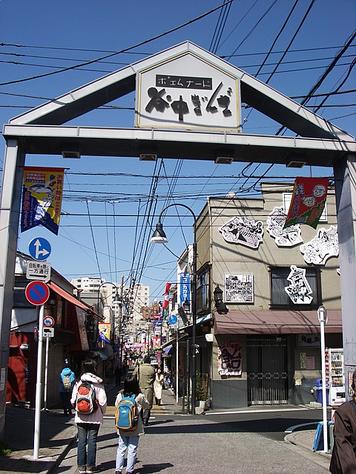
Yanaka Ginza

The above picture is of the Yanaka Ginza (谷中銀座) frequently mentioned in the book.

Tennoji Yanaka Buddah Statue

We got lost one time coming out of the wrong exit at Nippori Station and ended up at the large Buddah statue in Tennoji pictured above. We then walked through the Yanaka Cemetery, the “street of a thousand blossoms,” purchased and ate yakiimo (baked sweet potato) from an old man selling them out of the cart he cooked them in, and chatted with some people who were enjoying the evening hanami (the cherry blossom viewing parties; there weren’t yet really many blossoms in Tokyo though).

That experience was, by far, the best time I’ve ever had getting lost.

Kochi-Kame (こち亀 or こちかめ)

kanji game for the nintendo dsAbout a month ago, I decided to upgrade my previously mentioned なぞっておぼえる大人の漢字練習 for the Nintendo DS to the new version called Nazotte Oboeru Otona no Kanji Renshuu Kanzenhan (なぞっておぼえる大人の漢字練習完全版). The new version has about 300 more kanji and some other nice new features. For only a few dollars more than what I could sell my old version for on ebay, I figured it was worth it (and have been very happy with that decision since the arrival of the “game”).

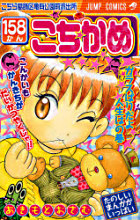
kochi kameAnyway, since YesAsia offers free shipping I decided to grab a manga while I was at their site since the only manga I can obtain locally are all in English, and that’s no fun. So I rather randomly selected this Kochi Kame one. (The full title is a mouthful, Kochira Katsushika-ku Kameari Kōen Mae Hashutsujo or こちら葛飾区亀有公園前派出所.) My selection wasn’t totally random as I figured my kids would like it given the cover (which turns out to be quite different from all of the other Kochi Kame covers).

For under $10 I wasn’t expecting much. To my surprise, it’s almost 200 pages in length. I started reading it this past weekend, and the content has exceeded my expectations as well. I laughed out loud several times. Apparently this series has been running for decades. I didn’t encounter it when I lived in Japan in the 80s, but I didn’t actively read, seek out, or purchase manga then either.

About the only manga I read in the 80s were a few books given to me. One was What’s Michael? (ホワッツ マイケル?). Another was Osamu Tezuka’s (手塚治虫) Buddha (ブッダ). And then I also had one or two Doraemon (ドラえもん) books that I think I found. Kochi Kame is actually the first one I ever purchased.

kochikame ryotsuI was happy to find furigana next to every kanji which made for easy reading. I only had to look up, on average, the meaning for about one word a page. Kochi Kame stars Ryotsu (両津) who, although sometimes in his police uniform, has yet to do anything police related in the four episodes I read this past weekend. Instead, he has some money-making scheme in each that always ends in disaster and/or failure. Although the first few installments began to seem somewhat Scooby Dooish in their predictable outcomes, I can’t imagine becoming bored by them anytime soon, and the fifth episode (that I read today) had a completely different storyline that wasn’t formulaic.

My son finished learning hiragana this past weekend so he was very proud to be able to read real manga in real Japanese for the first time too. Now I just have to help him understand what the sounds coming out of his mouth mean. 😉

Shogun 将軍

A few months ago my 12-year old son brought home a book called The Children’s Story by James Clavell. I’d never heard of it or Clavell. (I know you must be thinking that I’ve been living under a rock or something not to have heard of either.) Anyway, he tells me that it is really weird and that he thinks I’d like it. I read it in about 10 minutes and agree with his analysis. It’s sort of like Ayn Rand for kids. Or maybe it’s anti-Ayn Rand for kids. It is certainly not your typical children’s book even with that title. But it does leave your head spinning for a few minutes.

I then hopped online to read more about Clavell. Everything seemed to have to do with Shogun, something I vaguely remember hearing about when I was a kid. Needless to say, after reading a bit about how popular Shogun was in 70s, I had to find out why. The book is huge at something like 1,200 pages. After reading just a few, I was hooked and realized it wasn’t going to take me months to finish. Shogun was very painful to put down. That’s not to say it isn’t flawless. It has several problems, but I couldn’t wait to find out how things would turn out. Plus, there are many tension-filled scenes that one can’t just stop reading in the middle of.

So what are the problems? The first is the Japanese. If you don’t understand Japanese then you have nothing to worry about. If you do understand Japanese, or are trying to learn Japanese, then Clavell’s errors will make you cringe on just about every page.

The second problem is that even though this is historical fiction, much of the history is off. I guess that’s OK if you are reading this just for fun, but if you are trying to learn factual Japanese history, don’t believe everything, or even much, of what Clavell says.

The final problem, in my book anyway, is that after a few hundred pages of close calls, fantastic happenings, and coincidences, things become less believable. Again, that may not bother some, but I like my fiction to still be something plausible.

Shogun starring Richard ChamberlinCritiques aside, I still loved this book and have no regrets about spending as much time as I did to go through all 1,200+ pages.

Immediately after finishing it I had to see the miniseries from the 1970s staring Richard Chamberlain and Yoko Shimada on DVD. My family (who hadn’t read the book) loved it. I also enjoyed it, but the book is always better.

Music & Silence

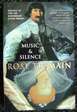
When I found out late last year that I’d be living in Denmark this summer I determined to learn a thing or two about a country I knew little about. Music & Silence by Rose TremainI’m not sure quite how I came upon this book; perhaps it was a Google search of something like “best Denmark books.” In any event, Music & Silence was available at my local library. Now that I think of it, I probably just typed “Denmark” into the keyword search of my library’s database.

Anyway, this book, being “historical fiction,” probably isn’t the best source to learn about Denmark, but it was entertaining. For me, Music & Silence went through three phases.

The first was confusion as I tried to figure out who the characters were. The descriptions are rich, but there are so many characters, and the author bounces back and forth between them; she also doesn’t go with a linear time line. This made for somewhat difficult reading, but it was exciting at the same time as the reader has to stay alert and try to piece things together.

The second phase was non-stop pleasure as you finally get your mind wrapped around the characters and become deeply involved in the plot. While this portion of the book is certainly the best, I don’t recommend entering this phase if you have other things you are supposed to be doing. You will find it hard to put the book down as you have to see what will happen with the next twists and turns of the story.

The final phase, for me anyway (I think my wife and other readers may disagree), was disappointment. For all the subtleties, complications, and richly woven plot lines of the bulk of the book the endings were all too clean, predictable, and perfect for my taste.

At least that’s my memory. It’s been five or six months since I finished this book so things are foggy at this point. Rose Tremain certainly painted some pictures in my head, though, of Copenhagen, the Denmark countryside, Rosenborg, and Frederiksborg. I’m anxious to see the real things.