Toshogu Cedars

If the Japanese Cedars (杉) aren’t mighty enough for you in and around Toshogu in Nikko then toss in some impressive structures and stone lanterns for some serious solidness.
|
The above will search Traveljapanblog.com. Concerts - Landscapes - Sports |
If the Japanese Cedars (杉) aren’t mighty enough for you in and around Toshogu in Nikko then toss in some impressive structures and stone lanterns for some serious solidness.

Here lies Tokugawa Ieyasu (徳川家康), the first shogun of the Tokugawa Shogunate in Japan. He began the Edo Period, which lasted for over 260 years, and moved the capital of Japan to Tokyo (Edo) where it has remained ever since.
My first trip to Toshogu in Nikko didn’t include a visit to his grave as it isn’t in the “regular” part of the shrine. My Toshogu pass on my second visit did include admission to his tomb. The stairs leading to Ieyasu’s grave includes this fantastic view.

Nikko, Japan is about halfway between Tokyo and Fukushima (home of the now infamous nuclear power plant). I’ve already mentioned how radiation levels in Tokyo haven’t changed much since March’s earthquake and tsunami off the coast of Sendai. But what about Nikko?
Nikko is in Tochigi Prefecture which borders Fukushima Prefecture. Tochigi Prefecture has seven Geiger counters set up with frequent updates of radiation counts. You can find them here. As of April 26, 2011, the top reading is .19 microsievert per hour and the average of the seven readings around the prefecture is .08 microsievert per hour. So is that good news or bad news? I guess that depends on who you are. If you are the media trying to scare people, it is very bad news indeed. Perhaps that’s why the media isn’t mentioning actual radiation readings in Japan.
You’ll get more radiation in most places in the USA (especially if you live at a high altitude, which is still quite a safe thing to do) than you will traveling in Japan right now, even to places fairly close to Fukushima. (In the USA, the average for Americans is more than 3X this number. Due to large amounts of thorium in the soil, places in Brazil and India can average more than 3 microsieverts an hour.)
Today’s photo is Toshogu in Nikko. If it wasn’t for all the radiation I would get by flying on a jet to Japan, I’d go back to Nikko for spring break. Just kidding. It wouldn’t be the radiation from flying (which would be far more than the radiation I would get on the ground in Japan) that would keep me from visiting Japan. I actually checked flight prices and they weren’t good. The foreigners “escaping” Japan are keeping round-trip ticket prices high right now. Ironically, people leaving Japan are taking on more radiation on those flights out of Japan than they would be by staying.
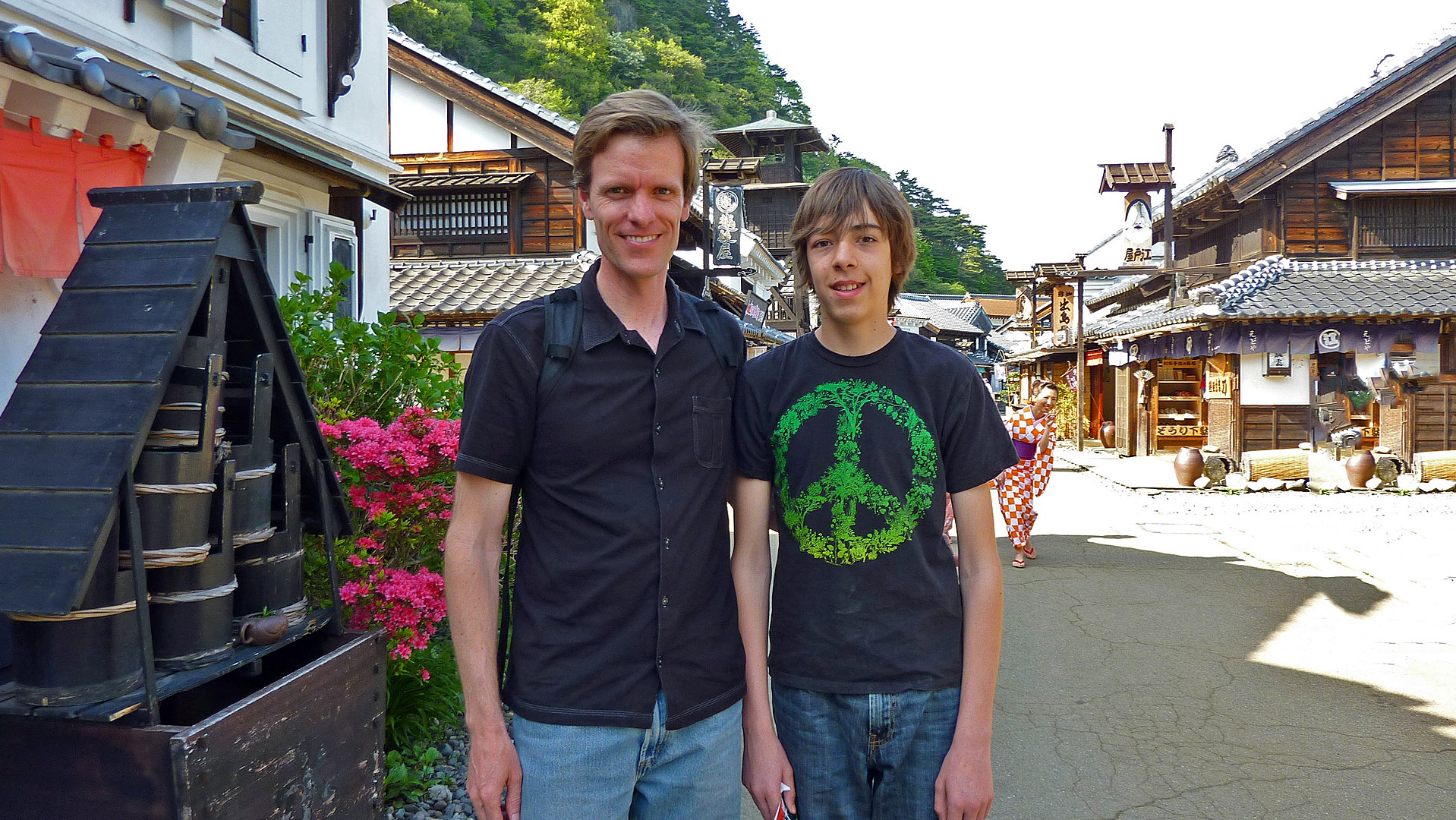
The best part of this photo is not that my son and I were able to time travel back to get an authentic photo in the Edo (Tokugawa) Period of Japan’s history. No, it’s the fact that if you look really closely you’ll see how friendly the ladies were back before the Meiji Restoration.
Actually, I think it was the female in the orange and white outfit’s friend who was taking our picture. This was taken at Edo Wonderland in Nikko, Japan on one of the funnest days I’ve ever experienced. The peace-sign flashing photo sneaker was a pleasant surprise when I downloaded the pictures off my SD card later.
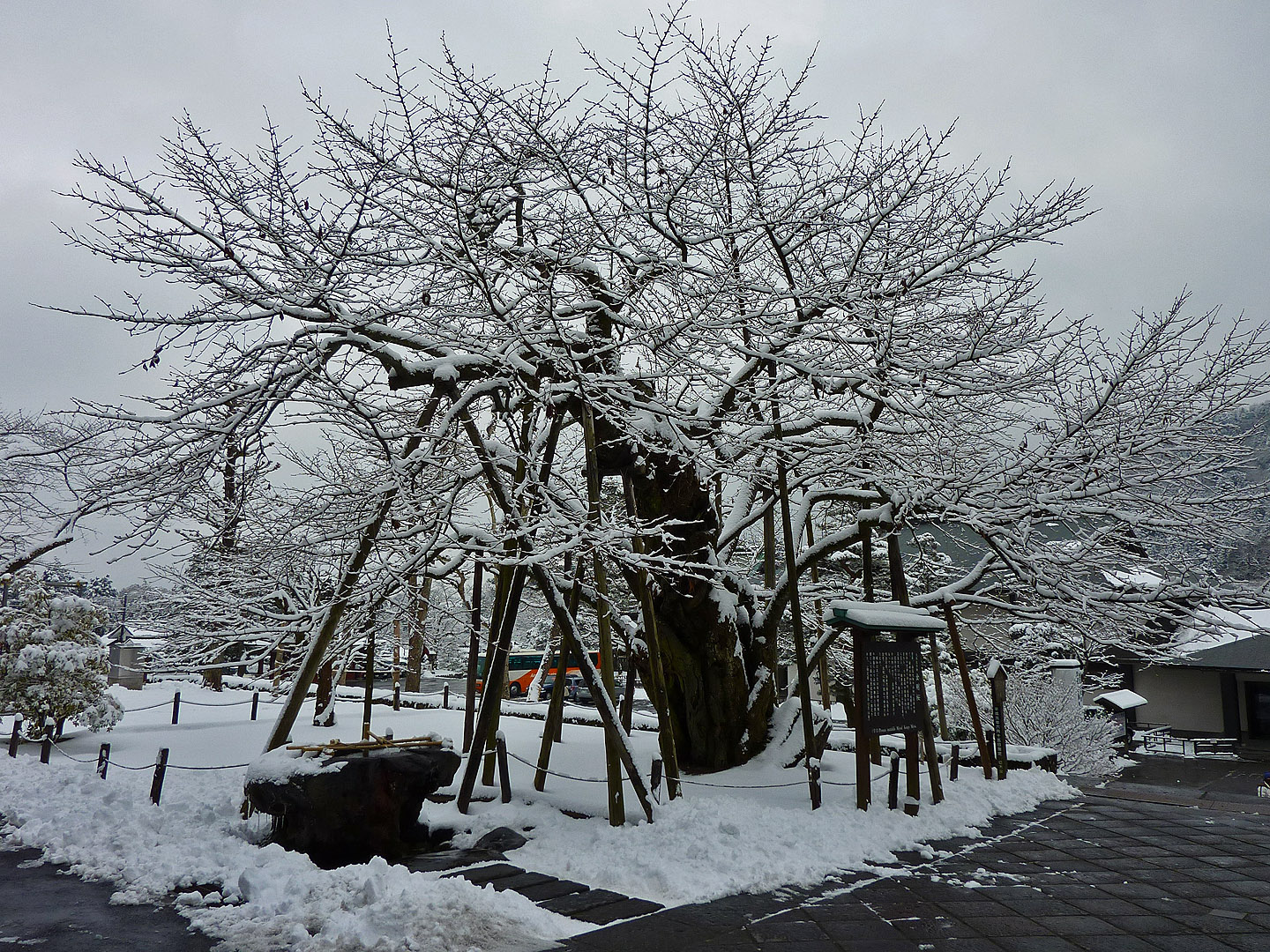
It is not uncommon to see trees propped up like this in Japan. Many old and famous trees are kept from collapsing under their own weight, or that of snow, in this manner. This tree is in Nikko at Rinnoji (輪王寺). A month from now (April) it will be covered in cherry blossoms instead of snow. The name of this tree is kongozakura (金剛桜), and it is a designated national treasure or monument or something.
Things will look much better in Japan next month when the cherry blossoms will bring renewal and a fresh start to a country and people who will really be needing it.

This lantern-trimmed, old-style Japanese pleasure boat (spotted at Nikko Edo Wonderland) is named the Big Fortune Boat (大福丸). Once those tatami mats are laid out, you get on board, the sake begins to flow, and the food is served, you will consider yourself quite fortunate I’m sure.
By the way, yakata (fune–or bune after another word–means boat) doesn’t mean pleasure. It means the boat has a roof overhead to protect the pleasure seekers from any sun or rain that tries to ruin the event. You can see the larger, more modern style of these boats off of Odaiba on most summer nights.