TravelJapanBlog.com - Japan (07, 09-10, 13), Denmark (08, 11, 16-19, 21, 24), Korea (13), Poland (21), Mexico (14, 15, 19, 26), Iceland (17, 19), Hawaii (14, 17, 22), Czech Republic (16, 17, 19, 21)
The above will search Traveljapanblog.com.
Concerts - Landscapes - Sports


Posts tagged people

Takadanobaba’s Chindonya (チンドン屋)

Chindonya (Japanese marching band) are sometimes outside of the Takadanobaba Station in Tokyo. I haven’t seen them do much marching, but they do make a lot of music. They advertise the opening of new Pachinko Parlors. They may look a little bored in the photo above, but when they are noticed (and I’m sure they are with great regularity), they can be as happy as the people who do the noticing.

The video below is not one I took, but it will give you an idea of what they sound like.

Modern Japan

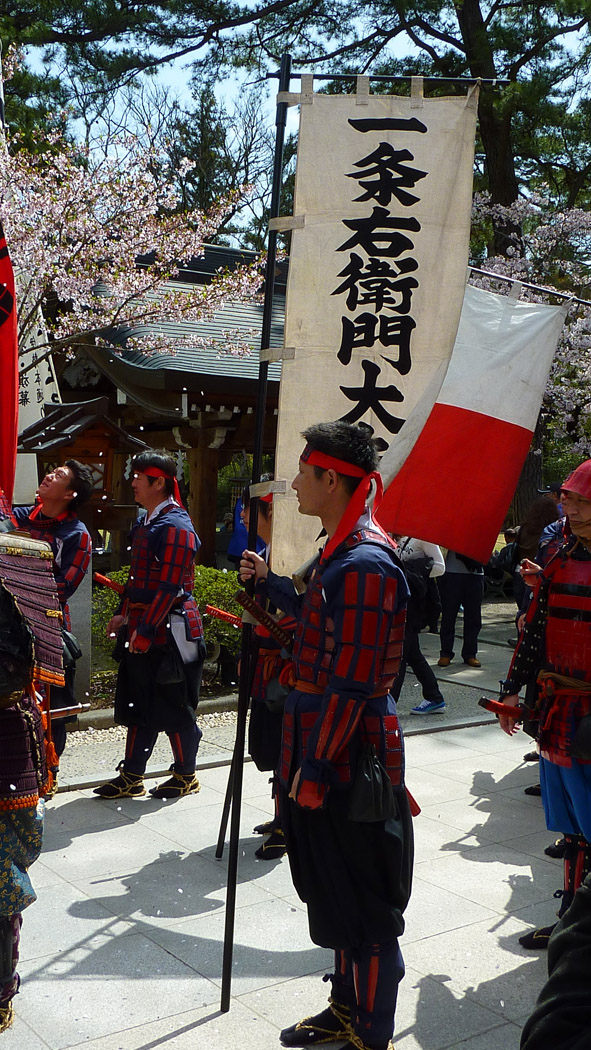
Just your average scene in modern Japan–shrines, cherry blossoms, and samurai. Believe it or not, turning around from where I took this picture (武田神社) resulted in a view of Mt. Fuji as well. Ho hum.

Yakiimo Man 石焼き芋屋さん

When the nights are cold in Japan you can sometimes hear the call “ya ki i mo” (やきいも) after dark. Heading out into the cold darkness you will discover someone like this man selling baked sweet potatoes out of a cart or the back of a mini-truck. I spotted this guy next to the Kanda River.

It appears from his license plate that he came all the way in from Hachioji to sell them two for 500 yen.

Japanese tourist doing Norway in a Nutshell

norway in a nutshell japan

Japanese lady gazes at Kjosfossen Falls from inside a Flåm Railway car

After checking out Kjosfossen waterfall and the huldra from yesterday’s post we got back in our Flåm Railway car to continue down to the fjord. This Japanese woman couldn’t resist a final glance at the falls.

That day, way back in July, was the last chance I had to speak Japanese. I don’t think I’ve spoken to any Japanese people since. I didn’t speak with this lady either actually. Rather, I helped a couple from Japan who were on their honeymoon back in Myrdal get some photos with both of them in the image.

Carrying the body of god (御神体)

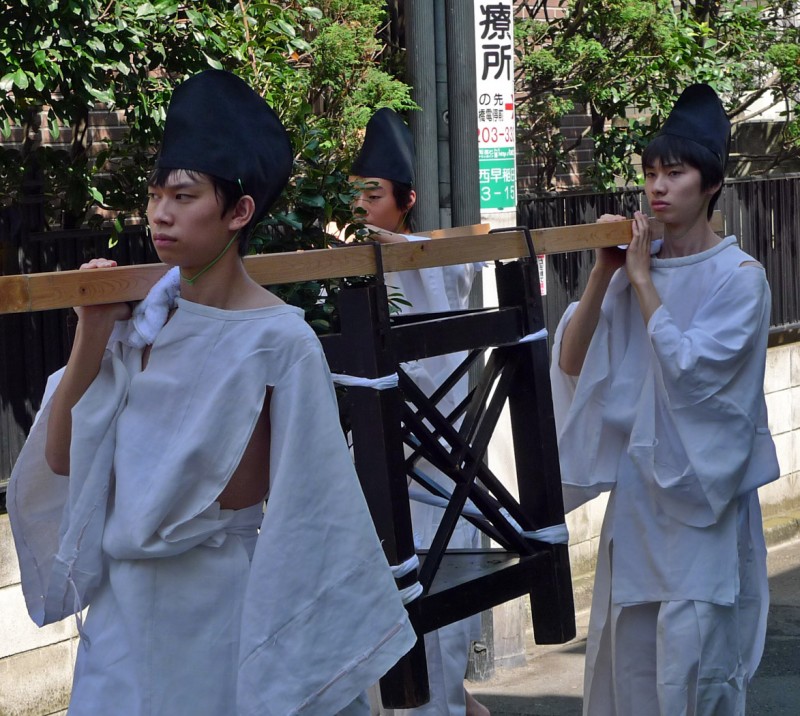
At a Shinto festival near our apartment in Tokyo, these Japanese boys carried what appears to be a palanquin or litter or kago (駕籠). Palanquin are used for carrying people, though, so I’m not sure if the Japanese actually call this a kago or if there is a different word for it. I believe this one is holding a plant, maybe a young tree. The item being carried in this manner in Shinto parades is referred to as a goshintai or “god body.” Similar to the omikoshi, the goshintai is carried around town on rare occasions (sometimes once a year, sometimes once every few years) before being returned to its place in the Shinto shrine.

On a different topic, notice the address sign on the telephone pole. It says 西早稲田 (NishiWaseda) 3-15 below an advertisement for the company “sponsoring” the pole (a doctor’s office or clinic of some kind down the street). I lived in the 3 Chome of NishiWaseda. It’s easy to get lost in Japanese neighborhoods since there are few street names, the addresses don’t run consecutively, and there is a complete lack of a grid pattern in most neighborhood layouts, but it’s much easier to find out where you are lost in Japan due to the high number of these address displays telling you exactly where you are. The problem is in figuring out how to get from your currently lost Point A to your target location Point B.

Meiji Jingu on New Year’s Day

I have braved the New Year’s Day crowds at Meiji Jingu twice in my life–1989 and 2010. The place and number of people don’t seem to have changed. The crowd control measures sure have.

Hatsumode (初詣) is the name of this first shrine visit of the new year. Technically, this wasn’t my first shrine visit in 2010 as I was at Zojoji much earlier in the day.