Nichiren temple gate
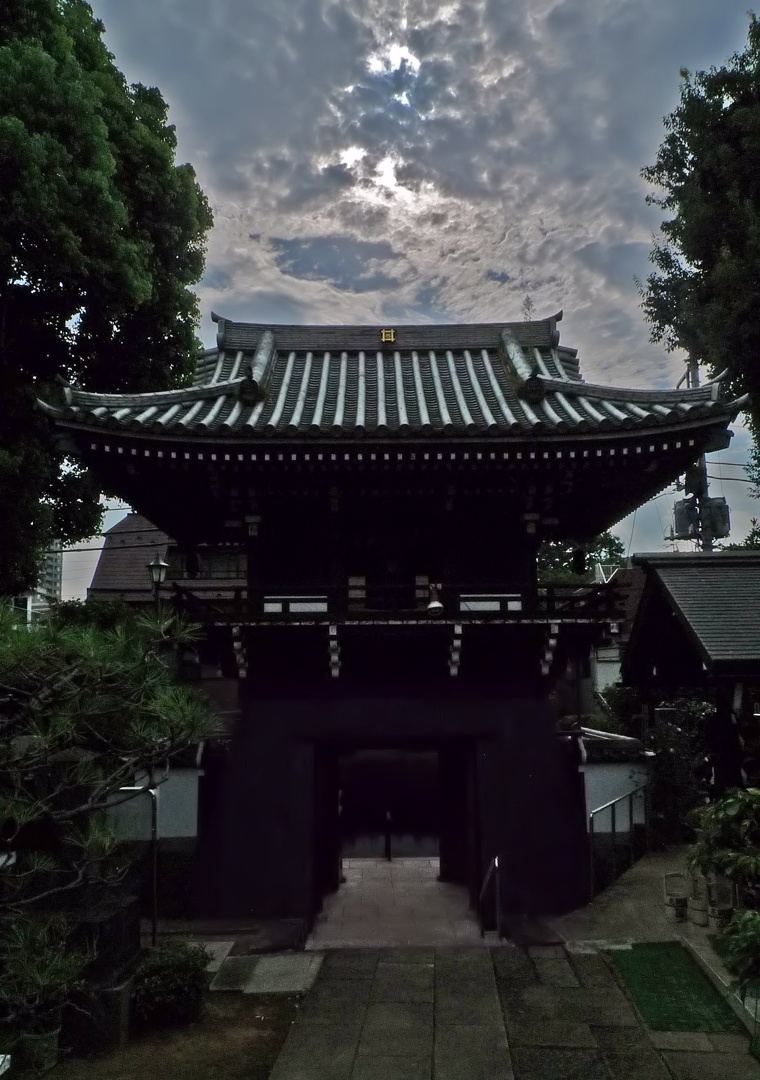
亮朝院門
I walked by this Ryochoin (亮朝院) Buddhist Temple gate on the way from my apartment to Waseda University on many occasions.
The full name of the place is 如意山 亮朝院 栄亮寺 and the address is 新宿区西早稲田3-16-24.
|
The above will search Traveljapanblog.com. Concerts - Landscapes - Sports |
亮朝院門
I walked by this Ryochoin (亮朝院) Buddhist Temple gate on the way from my apartment to Waseda University on many occasions.
The full name of the place is 如意山 亮朝院 栄亮寺 and the address is 新宿区西早稲田3-16-24.

Sensoji's five-story pagoda
One strange thing about the Japanese language is that characters (kanji) usually have multiple readings. Take the kanji for Senso-Ji for example. This famous temple is located in Asakusa (浅草) so when you see the kanji 浅草寺 you think this place must be called Asakusa Tera or Asakusa Dera (tera, 寺, means temple). Actually, it is read Sensoji so not a single character retains its “normal” reading.

Kamakura's famous Hasedera front gate with pine tree

I know. It’s the wrong season for a picture like this, but my random desktop generator came up with this today, and you can’t argue with it. This is a scene from Kencho-Ji in Kamakura in late November.
In 1498 a giant tsunami washed away much of Kamakura, including the building that housed the giant Buddha. Since then the Daibutsu has remained in the open.
Having never visited Natori, or the other cities and towns completely wiped out by the recent tsunami, I imagined Kamakura, where I have been several times, when I saw the photos from the results of the Sendai quake and tsunami. The thought of a place like Kamakura getting hit by a tsunami large enough to reach the Daibutsu is chilling to my core.
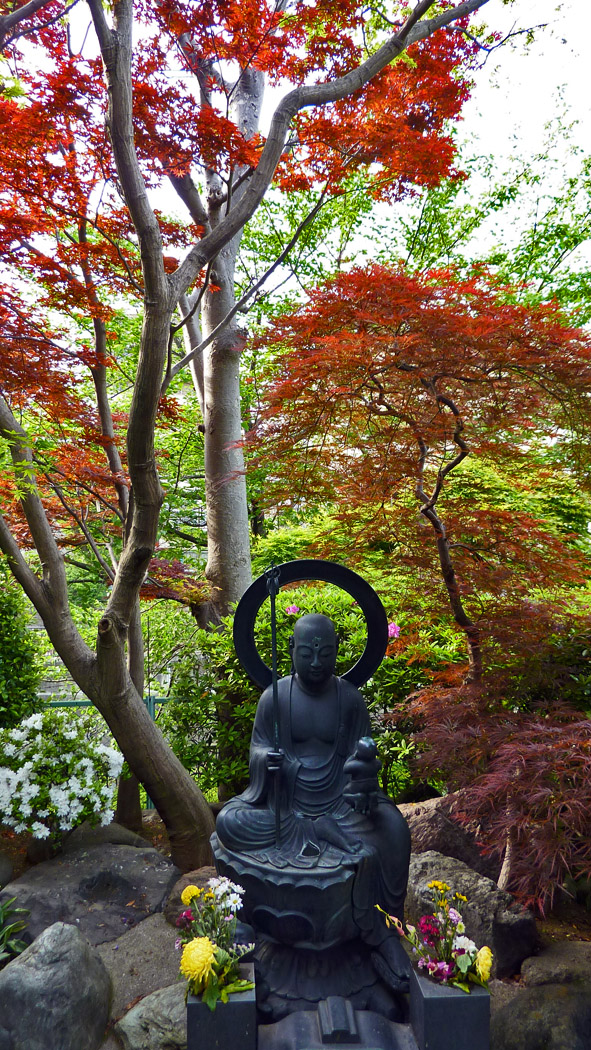
A fall photo? Actually, no. I took this picture in May. As part of the bike ride, mentioned previously, in which I somewhat followed the street car line from Waseda to Oji (Ouji or Ooji) in Kita Ku, I parked my bike for a while in Oji (王子) and followed a walk in a guide book. The book led me to a temple called Kongouji (金剛寺). The nickname for the temple is Momijidera or Japanese Maple Temple and you can see why.
The trees were amazing. Some looked to be in their fall splendor even in May, but I think that is how they look all late-spring and summer long.
An old man who lived in the neighborhood stopped me and we chatted for a while. He told me a lot about the temple and the neighborhood. I wish I had written it down then as I forget most of it now. I do remember feeling like it was a wonderful conversation at the time.
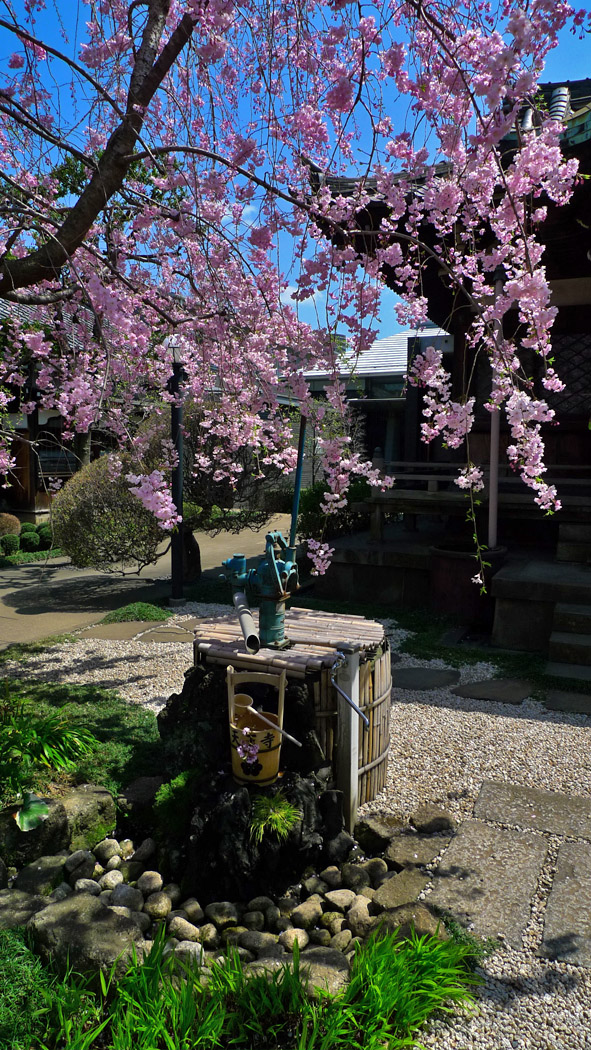
Occasionally in Tokyo, and in several places in Yanaka, you can spot these old water wells. I’m not sure the era in which they no longer became the main source of water, certainly pre-WW2 but how much earlier I don’t know. This one is at Tennoji (天王寺), near the Nippori Station in Yanaka. Few things are better in life than a blue sky day, at the peak of the cherry blossom season, in Yanaka. To top it off, this was a weekday so there were no crowds, and the temple was giving away free tea and snacks.