TravelJapanBlog.com - Japan (07, 09-10, 13), Denmark (08, 11, 16-19, 21, 24), Korea (13), Poland (21), Mexico (14, 15, 19, 26), Iceland (17, 19), Hawaii (14, 17, 22), Czech Republic (16, 17, 19, 21)
The above will search Traveljapanblog.com.
Concerts - Landscapes - Sports


Posts tagged water walks in the suburbs of tokyo

Northern Tokyo view from Kita-Topia (北とぴあ)

One of the walks in the Water Walks in the Suburbs of Tokyo book was called Oji (王子). This is a great little part of Tokyo. I could have taken the Toden Arakawa Line, which ran right next to my apartment, but chose to ride my bike to Oji along the street car line instead.

Near the end of the walk I went up the only tall building in the area, Kitatopia. Today’s photo is of the view looking north from the observation deck on the 17th floor. The school you see in the picture is fairly typical of Japan, four stories with a courtyard for physical activities in the center. This is actually two schools, Ojisakura Elementary School and Ojisakura Middle School. (王子桜小学校と王子桜中学校)

Momijidera (紅葉寺)

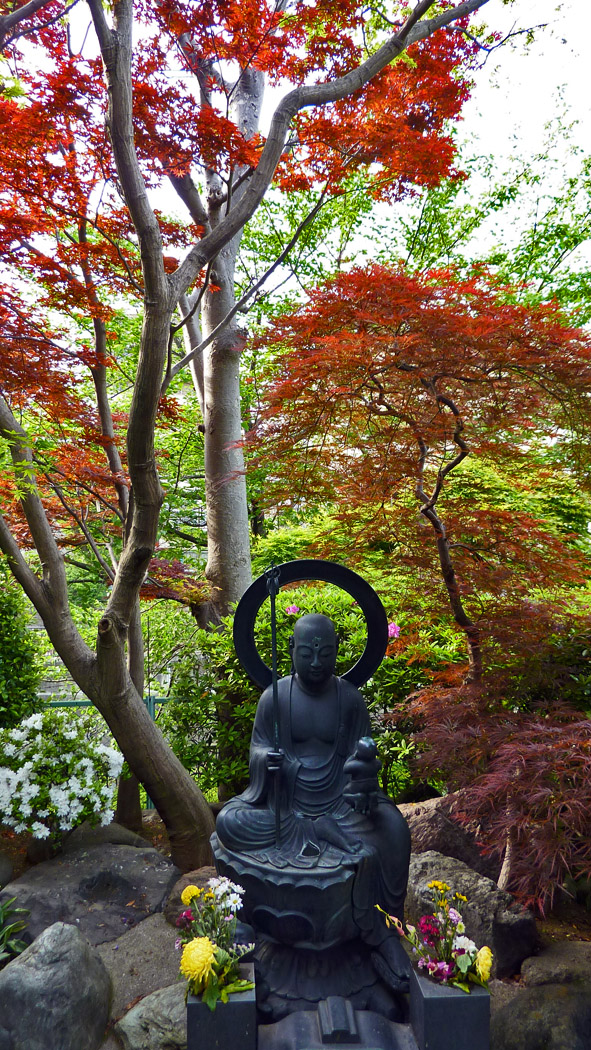
A fall photo? Actually, no. I took this picture in May. As part of the bike ride, mentioned previously, in which I somewhat followed the street car line from Waseda to Oji (Ouji or Ooji) in Kita Ku, I parked my bike for a while in Oji (王子) and followed a walk in a guide book. The book led me to a temple called Kongouji (金剛寺). The nickname for the temple is Momijidera or Japanese Maple Temple and you can see why.

The trees were amazing. Some looked to be in their fall splendor even in May, but I think that is how they look all late-spring and summer long.

An old man who lived in the neighborhood stopped me and we chatted for a while. He told me a lot about the temple and the neighborhood. I wish I had written it down then as I forget most of it now. I do remember feeling like it was a wonderful conversation at the time.

360 year old torii

One early summer day, we grabbed a guide book and headed to Komae City (狛江市), in the southwest part of Tokyo near the Tama River. As part of the walk, the guidebook had us go through Izumi Shrine (伊豆美神社) to check out the 350+ year old stone torii (鳥居). We were looking for something really impressive so it took us a while to actually find what we came to see.

While the stone torii gate looks impressive from the angle you see above, I was on the ground to take this photo. I’ll have to post a photo of what it looks like from any other vantage point to show you its less than ordinariness in a future entry.

Below is the description, for those who can read Japanese, of this torii gate. I looked at the torii, read the sign, looked at the torii again, and then wondered what all the fuss was about.

The sign basically says that the torii is 2.65 meters (under 9 feet) in height. It was built out of stone in the Edo Period, 1651, and is the oldest one left in the city (no surprise there). There is also a brief bio on the person who donated it, Ishigaya Sadakiyo (石谷貞清), who was apparently a famous warrior/governor.

The most interesting thing, in my opinion, about this torii is the rope (shimenawa) across the front. There are several variations, but typically shimenawa looks something like what you see in the bottom photo in this post. This one had a rare, rigid, straight style (with none of the usual white paper-gohei–hanging off of it) which I haven’t seen before or since.

Niiza (新座市)

saitama ken view of mt. fuji

The weather forecast for last Friday was outstanding. We woke up to blue skies. The future forecast didn’t look so great, and with rainy season just around the corner, it looked like this may be the last day of blue skies we may see for quite a while. So we grabbed Water Walks in the Suburbs of Tokyo and jumped on the train. Our purpose was to do “Walk 13: Nobidome 野火止.”

Along the way we could see Mt. Fuji from the train. It was that kind of day.

working the fields

Our destination was Niiza in Saitama. The train station platform had to be the ugliest I have ever seen in Japan, but the direction we took from the station had a nice country feel to it.

Note that if you are following the same guidebook, the old, rustic sign before the first stop light is no longer there. Another stop light has been put in, so you want to follow the Astro Boy sign in the sidewalk before the second stop light.

If you’ve been in Tokyo for too long and need to see a farm (or a few dozen of them) again then this is a good place to visit. Flowers are everywhere in Tokyo and this place appears to be a supplier.

middle of field

Family grave sites in the middle of farms are a common sight in Japan.

Shoshika (少子化)

child bike seats japan

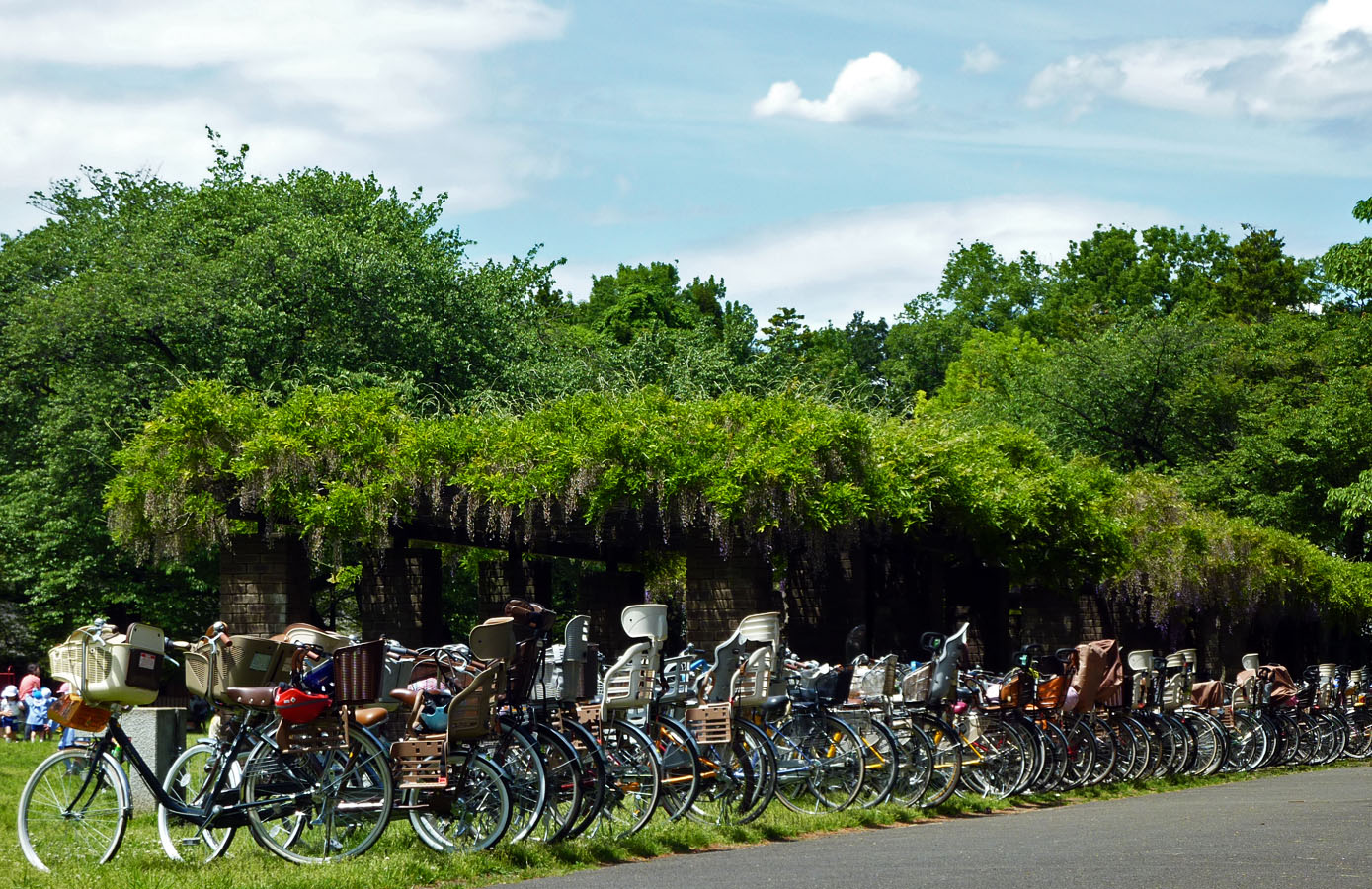
While walking through Koganei Park (小金井公園) on Walk #8, I happened upon hundreds of small children and their moms having a massive picnic. Mom bikes went on forever under the wisteria (fuji or 藤) that was a bit past its prime.

I could find no evidence of Shoshika (Japan’s society with few kids) in this scene. Japan’s fertility rate is actually quite a bit lower than China’s, with its supposed one child per female rule. I saw a lot of people in China with more than one child. It turns out that China’s one-child policy isn’t very effective as it is based on where you live. Have one child and live in a big city but get pregnant? No problem. Just move out of the city for a year.

children play behind the iris flowers in japan

Focus, focus…

hanashobu ハナショウブ 花菖蒲

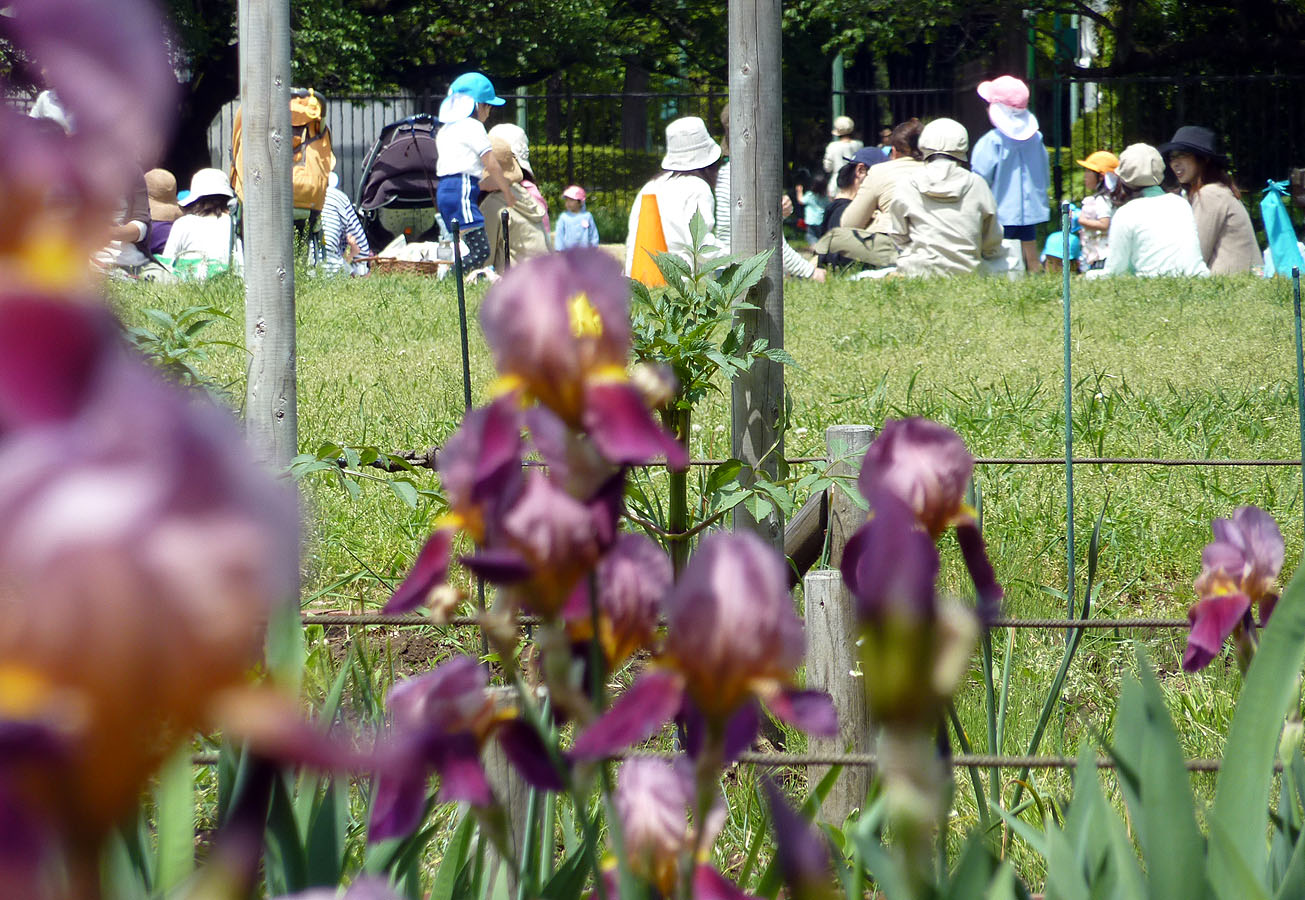
Here we go. It was a warm and sunny day so many of the iris (hanashobu or ハナショウブ or 花菖蒲) looked a little wilted, but this one wasn’t too bad.

The Edo-Tokyo Open Air Architectural Museum (江戸東京たてもの園) is in this same park.

The danchi (団地) has evolved

blue building near takadanobaba shinmejiro dori

I have seen this curious building, above, several times (on Shinmejiro Dori, just west of Takadanobaba Station). On this day it finally looked ready for a picture with the blue sky and white fluffy clouds passing by.

shakujii apartment complex on shakujiigawa river tsutsuji azalea

This second photo is from the beginning of Walk #2. The Shakujii River was at my back and the Azaleas were in bloom.

I’m sometimes asked what has changed in Japan from when I lived here in the late 1980s. One of the biggest changes is the aesthetics of the apartment housing. I’m not sure exactly when this change came about, but once upon a time nearly all apartments in Japan (danchi or 団地) were made of white concrete. These still exist, as you can see in the above photo, but they are no longer made to look this way. Most, in Tokyo anyway, have been rebuilt with a more modern design (or at least the facade covering the buildings make them look more modern than the white cement which doesn’t age very well).

Not all go for the blue of today’s top photo, but they still look more pleasing than the endless, dirty-white housings of Japan’s past.