TravelJapanBlog.com - Japan (07, 09-10, 13), Denmark (08, 11, 16-19, 21, 24), Korea (13), Poland (21), Mexico (14, 15, 19, 26), Iceland (17, 19), Hawaii (14, 17, 22), Czech Republic (16, 17, 19, 21)
The above will search Traveljapanblog.com.
Concerts - Landscapes - Sports


Archive for Japan

Nihongo Journal – final post on the topic

nihongo journal final issue cd audio

I have finished reading my Nihongo Journal issues. Let me know if you’d like to purchase any of these before August arrives and I disappear.

The issue pictured on the lower right is the final issue ever made and includes an audio CD.

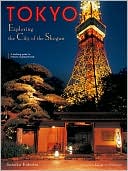
Tokyo: Exploring the City of the Shogun

tokyo exploring the city of the shogun

This beautiful book is actually many books in one. Tokyo: Exploring the City of the Shogun is a coffee table book, large with marvelous photography on every page. It’s also a guidebook, with maps and suggested routes for exploring historic neighborhoods in Tokyo. Finally, it is a work on the history of Japan–the Kanto (Tokyo, Edo) region in particular.

Each of the “chapters” includes a “Then” and “Now” section which explain what the area was like hundreds of years ago, how it has changed, and what you can expect to see and what to look for now.

I read a very similar book, Kyoto: Seven Paths to The Heart of The City, before we went to Kyoto two years ago. The maps appear much better in this one, but I haven’t actually tried them out yet. I will let you know how they are in a few months after following a few. This Tokyo version seems to be an improvement on the Kyoto version in every way.

Like the Kyoto book, the Tokyo edition includes seven tours of areas to explore on foot. They are:

Nihonbashi & Ningyocho: The heart of the old city
Ryogoku & Asakusa-bashi: The sumo quarters and environs
Fukagawa: In the footsteps of the haiku poet Basho
Tsukiji & Higashi Ginza: Fish, kabuki, and more fish
Atagoyama & Shiba: Samurai feats and traces of shoguns past
Asakusa: A classic temple district, with shops and festivities
Yanaka & Nezu: Strolling through a traditional Tokyo neighborhood

There is also one on the Imperial Palace and the surrounding grounds so I suppose there are eight in all rather than just seven.

Both the Kyoto and Tokyo books are problematic in one way however. They both do too much. What I mean by that is who wants to take a large picture book on a walk with them? My suggestion is to read this book before and after your walk. Make a photocopy of the map and directions for the walk itself though and bring only your photocopy along.

Should the publisher update these books in the future my suggestion would be to turn the publication into two books sold together–a large picture book with the history and background provided and then include a little, 7-page, pull-out book with the maps and directions to bring along on the walks.

Nihongo Journal – second to last installment

nihongo journal learn japanese magazine

I have nearly finished reading my Nihongo Journal issues. If you are interested in purchasing any, with or without audio, let me know soon. These will no longer be available after August 1, 2009 or when someone else purchases them–whichever comes first.

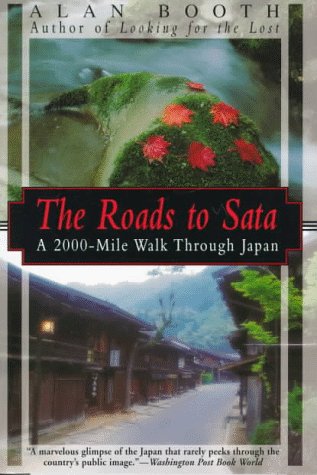
The Roads to Sata by Alan Booth

roads-to-sata In case you couldn’t tell from the quotes I’ve provided from this book, I loved The Roads to Sata. Alan Booth’s books are like really, really well done blogs long before the blog was invented. Of his two books, this one is the better. The other is certainly well worth reading though. I’m disappointed that we only have these two to read from.

If you have never been to Japan you will at the very least like this book. If you have been to, or lived in, Japan then getting a hold of this book should be next on your list of things to do today. You will laugh, smile, nod your head, and cry. The Roads to Sata is a work of art from beginning to end.

How to get free sake

sake

“There is an ancient dispute among the men of Tohoku as to which of the six prefectures produces the best sake. The keenest rivalry is between Akita in the west and its larger Pacific-coast neighbor, Iwate. The men of Iwate state flatly that their sake is better because their rice is better. The men of Akita counter that their sake is better because their water is better. I have studiously avoided taking sides in this dispute because I have found that, by maintaining a noncommittal silence, I have cup after cup of free sake urged upon me in an effort to elicit the judgment I shall never give. Solomon in all his glory lacked this simple wisdom, or perhaps wasn’t thirsty.”

(Alan Booth in The Roads to Sata p. 90-91)

Another Kamakura scene

Today I present another photo my friend took while he was in Kamakura earlier this week. To see his full gallery click here and then click the Slideshow button.