TravelJapanBlog.com - Japan (07, 09-10, 13), Denmark (08, 11, 16-19, 21, 24), Korea (13), Poland (21), Mexico (14, 15, 19, 26), Iceland (17, 19), Hawaii (14, 17, 22), Czech Republic (16, 17, 19, 21)
The above will search Traveljapanblog.com.
Concerts - Landscapes - Sports


Posts tagged nishi-waseda

Waseda University – Part 2

night view of shinjuku from waseda university

My last post on Waseda University was so popular, and one person who responded wanted more, that today I will offer a part two.

This first photo, above, is the view from my Friday night class in Building 11. Waseda University is in Shinjuku-Ku but is far enough away from downtown Shinjuku that you can see the high-rise buildings rather nicely.

view of ivy out waseda university office window tokyo japan

The second picture is the view out my office window in Building 6. Even though this part of the building is covered in ivy, Waseda University is not part of the Ivy League. 😉

waseda university bell tower

Finally, for today anyway, here is a shot of the university on the approach from Waseda Station on the Tozai Subway Metro Line. The Okuma Bell Tower can be seen in the background. Some sort of festival is going on pretty much non-stop. On Friday, November 6, the Athletic Festival will be held. Later this month, it appears there is going to be a Photo Journalism Festival.

Red Bike at Shinto Shrine

red bike japanese man tenso jinja nishiwaseda tokyo japan

One morning, after a brief rain storm, the sky got partially blue so I went out to take some pictures. I stopped and sat at the nearby Tenso Jinja. No one was around so things were quite peaceful. I heard a bike come pedaling up. A little, old Japanese man was the rider of a bright red bike. He pulled up, parked his bike, walked in front of the shrine, bowed, rang the bell, clapped his hands, bowed again, and then jumped on his bike to head out again.

He saw me at this point and came on over. We chatted for a while about the weather, Tokyo being denied its bid to host the 2016 summer Olympics (which was announced earlier on the same morning), and Hawaii (where one of his children live). Then he hopped on his bike and away went the streak of red that had left a smile on my face.

Fugu ふぐ or 鰒

fugu ふぐ restaurant tokyo japan

On my way to and from Waseda University I pass the above restaurant which serves a variety of fugu (pufferfish) dishes. Fugu can kill you. Of course, if you are a fan of the Simpsons, you already know that. Hence, there aren’t many places that serve fugu. In fact, this is the only restaurant with fugu on the menu that I have ever seen. To serve fugu a chef must pass a test after learning, in a process that requires several years, how to correctly cut the fish so it won’t kill someone. Even then most fail the test.

ふぐ menu fugu pufferfish blowfish deadly restaurant waseda tokyo japan

If you can read Japanese, click on the above photo to see the menu in more detail. Fugu dishes start at just 600 yen (less than $10) for 煮こごり (fugu soup I think), but most are much more. Raw fugu (sashimi), for instance, costs 3,500 yen. I believe that is a fugu (or its skin anyway) wearing the hat in the picture.

I’ll have to try some fugu, and live to tell you about it, at this place one of these days.

Scene from a Japanese restaurant

soba shop restaurant tokyo japan bunkyo-ku

Waseda University has the largest number of international students in Japan at almost 3,000. Although the vast majority are from Asia, and hence don’t stick out in a crowd, it isn’t as uncommon to see Caucasians walking between Waseda University and Takadanobaba Station as it is in most other parts of Japan. There aren’t nearly as many gaijin faces as you’ll see in Harajuku, Shinjuku, Shibuya, Hiroo, or Roppongi though. That said, shops on Waseda Doori, linking Waseda University and Takadanobaba Station, aren’t very surprised to see us. However, if we stray off the beaten path a bit, things change rather dramatically.

We live on the border of Shinjuku-Ku and Bunkyo-Ku. A three-minute walk to the north puts us in Bunkyo-Ku. Outside of Ikebukuro, there don’t seem to be many Caucasians in Bunkyo-Ku. So when we walked into the above restaurant in Bunkyo-Ku it felt like we were the first foreigners to have ever entered their doors.

The couple that ran the place seemed slightly worried until they realized I could communicate with them just fine. The lady was so sweet. She kept bringing more and more side dishes over even though we hadn’t ordered them. We received the “special” treatment.

sukiyakidon japanese food

I ordered sukiyakidon (thinly-sliced beef with raw egg, onions, and a sweet sauce over rice). Everything else you see in the above photo was a free “gaijin” bonus.

ebi soba shrimp noodles soup japanese food

My wife ordered ebitenpura soba (battered and fried shrimp in a soup of thin noodles) and had a few freebies tossed in as well.

Scenes from the neighborhood – Part 1

nishiwaseda neighborhood typical japanese house futon hang airing

We’ve been in Japan for two months now. I remember on those first couple of days thinking that I should immediately take lots of pictures of interesting things in our neighborhood as they would soon become so common in my head that I would forget how curious they are to someone not living here. For whatever reason, I didn’t take those photos and now I can’t remember what those things were. As I originally thought, my immediate surroundings have become too familiar and are no longer strange.

On my walk to Waseda University I pass the above home. It is just around the corner from our apartment. While you may think that Tokyo is all high-rise apartment buildings, there are actually many neighborhoods with few such buildings. Ours is one of them.

The lady who lives in the above home is frequently out watering her plants or chatting with her neighbors. On this morning she is airing her futons, which is a common sight when the weather is nice.
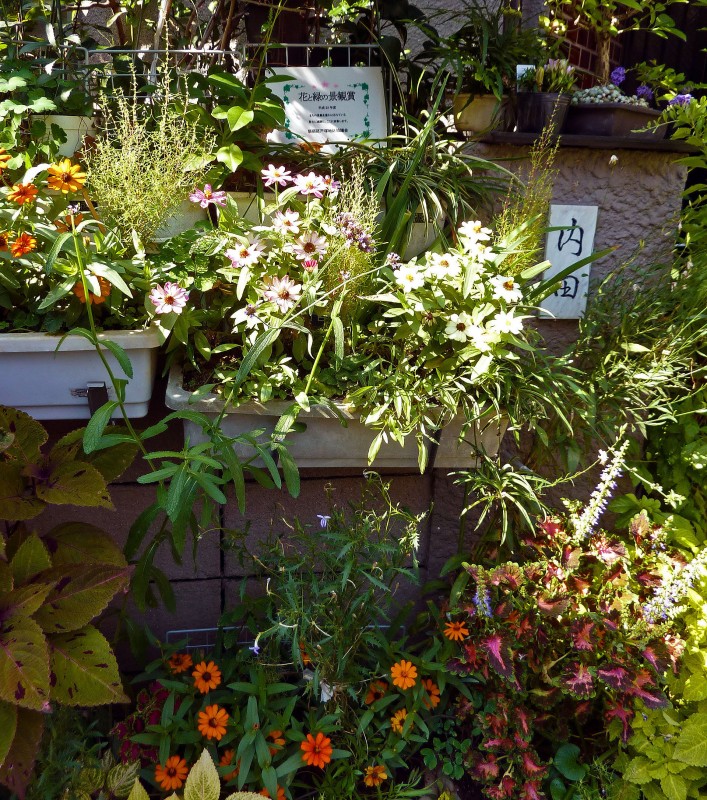
award winning flowers tokyo house japan

A close up of some of her plants and flowers revels that Mrs. Uchida has won an award. If you can read Japanese click on the above photo to see her award for flowers and greenery.

home in tokyo japan lantern

When a matsuri is going to happen in the neighborhood these lanterns and gohei line the streets.

The streets of Japan, even a big city like Tokyo, are usually spotless and would be very aesthetically pleasing were it not for the power lines that obstruct and foul the view. Maybe one of these days they will be put underground.
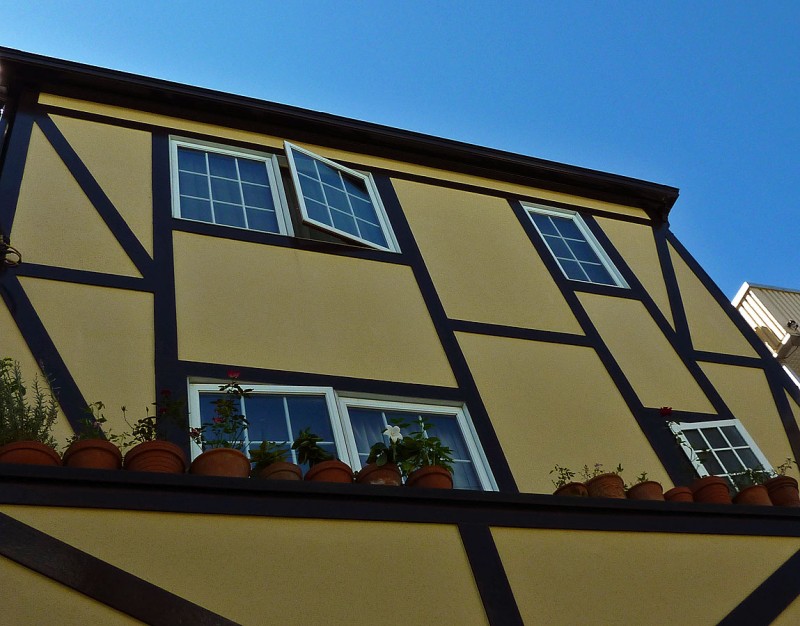
house in tokyo japan that looks like it could be in denmark or europe

Here is a rare camera angle that actually was able to capture a bit of Tokyo without any wires. This home doesn’t look very Tokyoish. It looks more like one you could find in Denmark or other parts of Europe. Our neighborhood has many such “different” homes. I’ll show you some more in later posts.

I Am A Cat (吾輩は猫である)

i am a cat soseki natsume

Before I completely forget the contents of this book, I figured I better write a little something about I Am A Cat by Soseki Natsume. (Soseki Natsume was born just a few minutes to the east of where we currently live in Nishi-Waseda and his grave is just a few minutes to the north.) This was the last book I’m planning on reading in English while in Japan. I finished it more than a month ago so the details are a bit foggy at this point.

This is one of those books that you constantly hear about and see referenced in other works so you feel a little behind the times not having read it. Now I’ll at least know what people are talking about. The version I read was only the first of three volumes. The setting is the Japan of a little more than a hundred years ago (as that is when it was written). The author takes the role of a cat, sort of a “fly on the wall” who no one is afraid to talk in front of and who can creep into any conversation without being detected.

The book is occasionally hilarious, frequently witty, always observant of Japan then (and now as things don’t seem to have changed much), but sometimes dull. Even though I laughed out loud at times, I was bored at others and did not feel as inspired by the end to want to read the next two volumes.

The introduction by the translators was too long and overdone if I remember correctly. I’ll leave you with one of my favorite passages. Maybe I only find it funny because I know so many teachers.

“My master seldom comes face to face with me. I hear he is a schoolteacher. As soon as he comes home from school, he shuts himself up in the study for the rest of the day; and he seldom emerges. The others in the house think that he is terribly hard-working. He himself pretends to be hard-working. But actually he works less hard than any of them think. Sometimes I tiptoe to his study for a peep and find him taking a snooze. Occasionally his mouth is drooling onto some book he has begun to read…

There are times when even I, I a mere cat, can put two thoughts together. ‘Teachers have it easy. If you were born a human, it’s best to become a teacher. For if it’s possible to sleep this much and still to be a teacher, why, even a cat could teach.’ However, according to the master, there’s nothing harder than a teacher’s life and every time his friends come round to see him, he grumbles on and on.”