TravelJapanBlog.com - Japan (07, 09-10, 13), Denmark (08, 11, 16-19, 21, 24), Korea (13), Poland (21), Mexico (14, 15, 19, 26), Iceland (17, 19), Hawaii (14, 17, 22), Czech Republic (16, 17, 19, 21)
The above will search Traveljapanblog.com.
Concerts - Landscapes - Sports


Posts tagged torii

360 year old torii

One early summer day, we grabbed a guide book and headed to Komae City (狛江市), in the southwest part of Tokyo near the Tama River. As part of the walk, the guidebook had us go through Izumi Shrine (伊豆美神社) to check out the 350+ year old stone torii (鳥居). We were looking for something really impressive so it took us a while to actually find what we came to see.

While the stone torii gate looks impressive from the angle you see above, I was on the ground to take this photo. I’ll have to post a photo of what it looks like from any other vantage point to show you its less than ordinariness in a future entry.

Below is the description, for those who can read Japanese, of this torii gate. I looked at the torii, read the sign, looked at the torii again, and then wondered what all the fuss was about.

The sign basically says that the torii is 2.65 meters (under 9 feet) in height. It was built out of stone in the Edo Period, 1651, and is the oldest one left in the city (no surprise there). There is also a brief bio on the person who donated it, Ishigaya Sadakiyo (石谷貞清), who was apparently a famous warrior/governor.

The most interesting thing, in my opinion, about this torii is the rope (shimenawa) across the front. There are several variations, but typically shimenawa looks something like what you see in the bottom photo in this post. This one had a rare, rigid, straight style (with none of the usual white paper-gohei–hanging off of it) which I haven’t seen before or since.
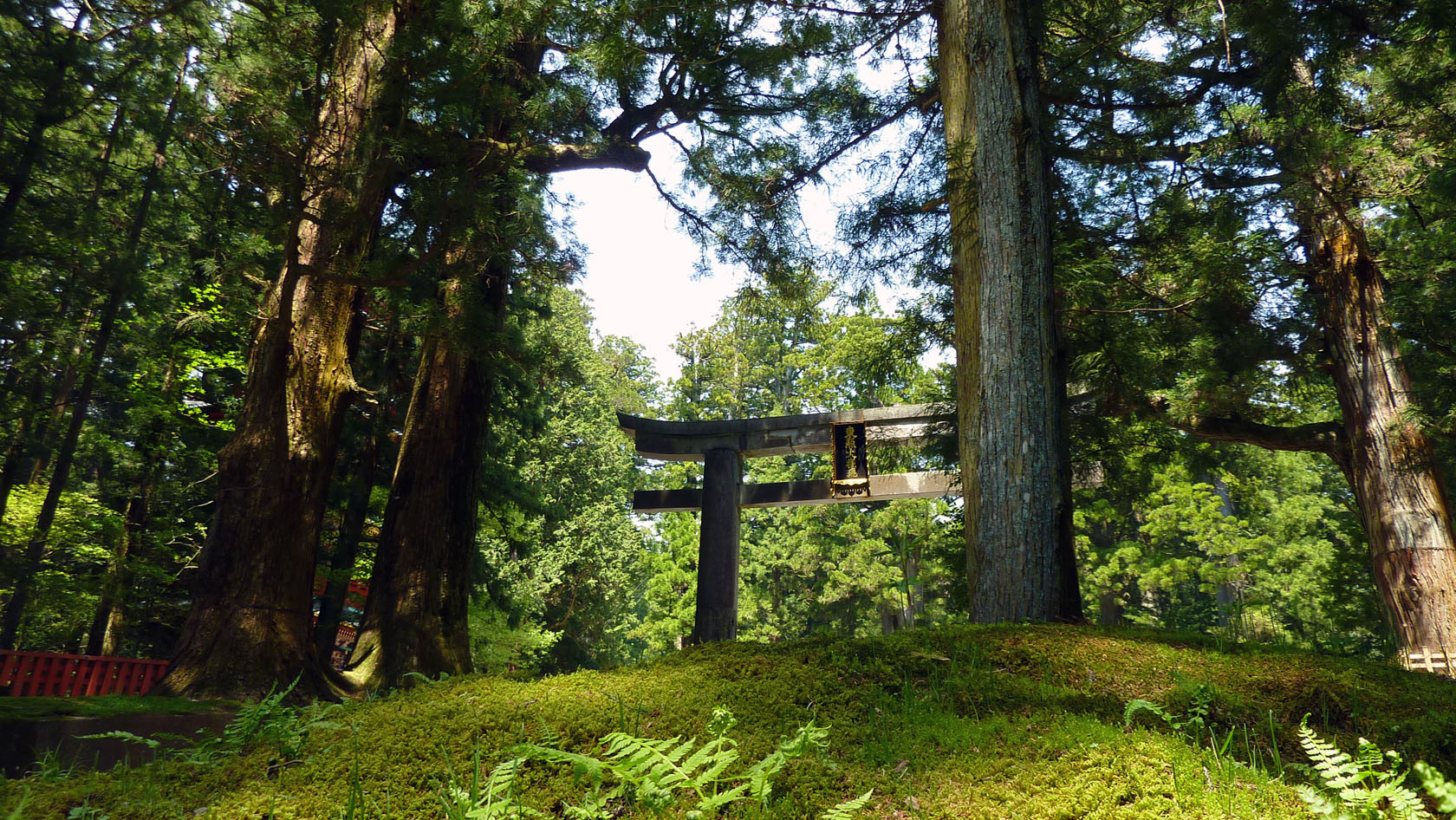
Approaching Toshogu in May

nikko japan

The approach to Toshogu in May is quite a contrast to how it looked in February on a snowy day–lush, lush, lush green as opposed to the frozen, white winter. Even though they are polar opposites, it’s hard not to like them both.

Mitsukejima (見附島)

noto hanto battleship island japan

Mitsukejima (also known as Battleship Island for its shape) lies off the coast of the Noto Peninsula in Ishikawa Prefecture. Ryan and Ellie’s dear Ojiisan took us there. To the left you can see a small torii in the Sea of Japan.

Kishimojin in Ikebukuro 池袋の鬼子母神

hyomoji buddhist temple

On Kenpo Kinenbi (憲法記念日 or Constitution Day) I went on a bike ride to Oji (王子) via Otsuka (大塚), Ikebukuro (池袋), and a few other places. Along the way I stopped at Kishimojin in Ikebukuro. The name of this place is interesting I think.

鬼子母神

The characters (read right to left) mean devil/demon, child, mother, god.

鬼子母神 ikebukuro japan

There is an inari shrine on the same grounds which can’t be adequately captured in a photo. The highlight between the torii gates is an enormous tree which is loaded with fresh, green leaves in May even though the tree itself is anything but fresh.

shinto inari jinja torii

According to the sign, this tree has been around for more than 600 years.

Suwa Jinja (諏訪神社)

I have yet to get past part one in my Suwa Jinja Matsuri series. Someday I’ll return to those pics. Fast forward six months to a neat-sky Sunday in February. I was out for a walk with my camera and decided to visit this Shinto shrine again to see if there were any plum blossoms on the grounds. There weren’t, but the sky made for some good photos anyway.

Normally you approach a shrine from the front, passing under the torii. I came from a park in the back (which is the order of today’s pictures). The kids’ park has been overrun with homeless men. There wasn’t a kid in the place, but there were about a half dozen homeless men hanging out or sleeping in their makeshift, blue-tarp, tent homes.

Ironically, there were boy scouts putting away their own tents on the shrine grounds when I arrived. A chain-link fence was the only thing between the homeless campers and the boy scout campers who were about to head home. I thought it was a strange scene. I wonder if the boy scouts or the homeless dudes felt the same way.

At last I exited, through the normal entrance.

Shrine steps at night

Near Waseda University, Anahachimangu (穴八幡宮) can be found. The place was being refurbished when we arrived in August, but they finished in time for New Years. Loads of lucky charms could be, and were, purchased during January. You should also bring back your talisman from the prior year and pay the shrine (again, this time) to destroy it for you. How is that for clever marketing?