TravelJapanBlog.com - Japan (07, 09-10, 13), Denmark (08, 11, 16-19, 21, 24), Korea (13), Poland (21), Mexico (14, 15, 19, 26), Iceland (17, 19), Hawaii (14, 17, 22), Czech Republic (16, 17, 19, 21)
The above will search Traveljapanblog.com.
Concerts - Landscapes - Sports


Archive for Japan

The Street of a Thousand Blossoms
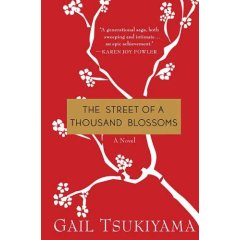
The Street of a Thousand BlossomsLess than a week after starting The Street of a Thousand Blossoms by Gail Tsukiyama I have finished reading it. The book isn’t short at over 400 pages, but I found it hard to put down. That, coupled with having to wait for breakfast in bed on father’s day for three hours 😉 , allowed me to finish The Street of a Thousand Blossoms in little time.

As mentioned in my prior blog entry on the subject, I really enjoyed the Yanaka setting. I felt like I could connect with more than just Yanaka though. For instance, I spent a day in the late 80s watching Sumo at Ryogoku Kokugikan. The highlight of the day was witnessing the great Chiyonofuji’s bout in person. So all of the Sumo dialogue in this book brought back pleasant memories. I’ve always been fascinated with Japanese masks (check out this blog daily for some outstanding photography and discussion) so Kenji’s story held my interest. And, of course, there is the trip to Hakone which I have also made. Basically everything felt familiar and resonated well.

The story is compelling, drawing on the themes of renewal and hope. I don’t want to give away too many details for those of you who haven’t yet read The Street of a Thousand Blossoms.

The occasional errors in Japanese are my main criticism. Although Tsukiyama has a Japanese name, she doesn’t understand Japanese. This won’t be noticed by readers who are in her same shoes, but those who can speak the language will cringe at times. One example is her use of hai. She uses it far more frequently and in situations in which Japanese would not. Another is her use of the unconjugated verb hairu (to enter) as a command. She should have said something like haitte kudasai or o hairi kudasai instead of just hairu. A final one (there are others) that I’ll offer as an example is the Hakone Lake which she calls Ashino. In English it should be called Lake Ashi. In Japanese it is called ashinoko (芦ノ湖). The “no” indicates it is the Lake (ko) called (no–shows possession like ‘s in English) Ashi. Put another way, one could translate Lake Tahoe as “tahoe no ko” in Japanese but you would never call it “tahoeno” in English or Japanese.

She gets Japanese culture and customs wrong on some counts as well. For example, she has the school year starting in September like it does in the U.S. In Japan, though, school years, company fiscal years, etc. start in April–not September.

These minor critiques aside, this book is very enjoyable even if you haven’t been to Yanaka, Sumo, Hakone, Nara, or even Japan.

Here are a couple more pictures I took last year from areas mentioned in The Street of a Thousand Blossoms.

ashinoko Lake Ashi hakone japan mt. fuji

This is Lake Ashi with Mt. Fuji, mostly shrouded in clouds, in the background. The place on the right may be where Tsukiyama envisions Hiroshi and Aki staying.

hakone jinja 箱根神社

This is another picture from the ferry on Lake Ashi. The kanji say 箱根神社 or Hakone Jinja. “Jinja” means Shinto Shrine or Temple.

Yanaka 谷中 Tokyo

The Street of a Thousand BlossomsI just started reading a book called The Street of a Thousand Blossoms by Gail Tsukiyama. I say “just started,” but I’m actually more than half done with it in just two days. It is conjuring up all sorts of memories of my time in Japan.

Even though we only spent a few nights in Yanaka last year, it became a magical place in my head. This probably has more to do with the fact that it was the first place I’d been to in Japan in 20 years than anything else. But maybe, just maybe, Yanaka is a magical place.

Tsukiyama’s book is set mostly in Yanaka (for the first half of the book anyway), and I really feel like I’m there again as I read it. When she speaks of the temple bell (or gong) being stuck 108 times on the New Year (joya no kane) I think back to visiting Zenshoan (全生庵寺院‎) in the Yanaka neighborhood with its gold Buddha and beautiful Zen Buddhist bell pictured below.

Yanaka Zenshoan Bell

The title of the book refers to the path through Yanaka Cemetery (谷中霊園) between Tennoji and Jomyoin (loads of jizo here and all over the streets and temples in the Yanaka area).

I’ll post more once I finish the book in a few days.

Yanaka Zenshoan Jizo

The above photo shows some Yanaka jizo.

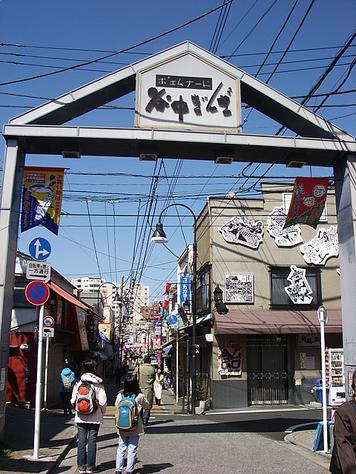
Yanaka Ginza

The above picture is of the Yanaka Ginza (谷中銀座) frequently mentioned in the book.

Tennoji Yanaka Buddah Statue

We got lost one time coming out of the wrong exit at Nippori Station and ended up at the large Buddah statue in Tennoji pictured above. We then walked through the Yanaka Cemetery, the “street of a thousand blossoms,” purchased and ate yakiimo (baked sweet potato) from an old man selling them out of the cart he cooked them in, and chatted with some people who were enjoying the evening hanami (the cherry blossom viewing parties; there weren’t yet really many blossoms in Tokyo though).

That experience was, by far, the best time I’ve ever had getting lost.

Seibuen Yuenchi (西武園ゆうえんち)

Amusement parks are very popular in Japan, not only with the Japanese locals but also with foreign tourists. I really don’t understand the latter. For instance, why would an American going to Japan want to go to a more crowded, more expensive version of what they can already get at home (while in a country like Japan with so many things that are unique and foreign to normal experiences)?

I’ve never been to Tokyo Disneyland, and I hope it stays that way. I did go to Universal Studios Osaka and regretted it. However, when traveling with kids it can be difficult to avoid the amusement park trap; I mean trip. My suggestion is to avoid the ones everyone knows about and find something a little different.

Flashback to 1989… I was living in Tokorozawa, Japan. Nearly every night during the summer I was treated to a fireworks show from my apartment thanks to a nearby amusement park called Seibuenyuenchi (西武園ゆうえんち). I only went there once and my recollection was that there weren’t many rides. I remember animals there–especially a peacock. Either my memory is bad or things really changed at Seibuen Yuenchi between 1989 and 2007.

While surfing the net before going to Japan in 2007 I told my kids that I once went to an amusement park in Japan that now appears to have a Hello Kitty Marchen Town. They had to see it so we put it on the agenda. Plus, I wanted to check out my old Tokorozawa neighborhood which in my memory looked like scenes from Hayao Miyazaki’s My Neighbor Totoro (となりのトトロ). (Miyazaki lives in Tokorozawa.)

Given that the cost of Seibuen Yuenchi is a small fraction of what you’ll pay at Universal Studios Japan or Tokyo Disneyland I was happy that if we were going to do an amusement park it would be this one.

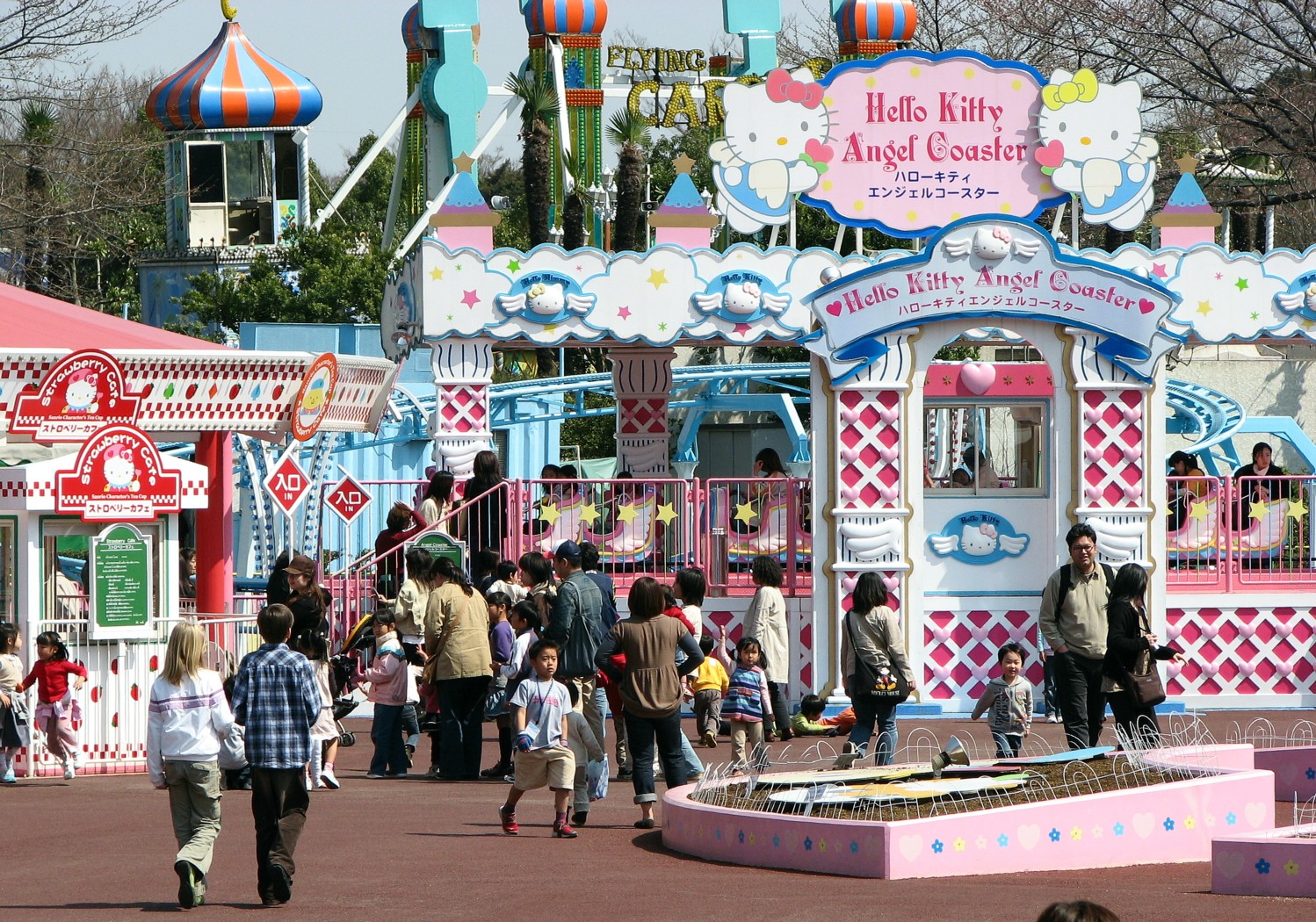
hello kitty angel coaster

Although most of the park consisted of your typical rides, this section of the park, for younger kids, is what I will share with you in pictures. Here my kids are heading off to the Hello Kitty Angel Coaster.

hello kitty

Hello Kitty and her friends were all over the place in this section of the park. I’m guessing that Sanrio Puroland (サンリオピューロランド) is like this on a much larger and much more expensive and crowded scale.

seibuen yuenchi hello kitty cups

The above ride was like the Mad Tea Party ride at Disneyland except that you get to spin in Hello Kitty and her friends.

The above video is of my kids on the Hello Kitty Angel Coaster. We were the only foreigners in the park that day and it wasn’t very crowded, even though it was a holiday week.

If you want an inexpensive amusement park experience in Japan then Seibuen Yuenchi isn’t bad. Nearby is an indoor skiing facility called Sayama Ski Slope. To get there take the applicable Seibu line from Ikebukuro or Shinjuku. Coupons are sometimes available on the website linked above.

Alex Cabrera カブレラ アレックス

If you are a U.S. baseball fan the name Alex Cabrera probably doesn’t ring any bells. Or maybe the first you heard of him was when his name was included in the Mitchell Report late in 2007. (Note that Cabrera has never tested positive for steriods and denies ever having used them.) Most probably don’t know that he could have had the record for most home runs in a season in Japan had he been pitched to in 2002. He hit 154 home runs between 2001 and 2003. Baseball seasons are shorter in Japan so to hit 154 home runs in under 400 games is practically unheard of. That’s Barry Bonds territory.

But because he didn’t play in the states, and he is originally from Venezuela instead of the states, virtually no one in the U.S. knows about him. That isn’t the case in Tokorozawa, Japan.

I wrote a bit about a Seibu Lions game we went to here. I thought I’d also share a video I made of the fans cheering for Cabrera.

Each player had a different cheer (or two). Since it was early in the season (this was only the second home game of the year), the words to the cheer were written on the cards male cheerleaders are holding up in the above video. It didn’t seem like anyone needed the cue cards though.

Fushimi Inari Taisha (伏見稲荷大社), The End

After five posts on the topic I will lay Fushimi Inari to rest and move on to something else tomorrow.

bamboo Fushimi Inari Taisha 伏見稲荷大社

In the above photo you get a glimpse of the bamboo groves. I don’t think they have shown up in any of my pictures so far, but there is lots of bamboo at Fushimi Inari. Although not quite as impressive as the bamboo around Arashiyama and Sagano (which I will show you at some future time), there is something magical about being surrounded by bamboo. I once lived in an apartment in Japan surrounded by bamboo groves, but that’s a story for another day too.

fudoThe banners say 腰神不動明王. 不動 (fudo) is the unmovable Buddhist god and 明王 (meio) means great king. 不動明王 means that this deity is the head of the great kings. He is pretty fearsome looking and usually is well armed. Needless to say, he is a good god to have on your side for protection. Don’t piss him off though.

The 神 character on the banner means god (kami) so there isn’t much mystery there. 腰 is a bit of a puzzle however. 腰 means waist or hips. Given that some of the other characters on the banner mean protection of the lower body, I’m guessing that this is some sort of offering place for those with bad hips and legs?

As you can see, you can get help for just about anything at Fushimi Inari. It’s your one-stop offering center for just about any wishes you need to have fulfilled.

fox statue kitsune Fushimi Inari Taisha 伏見稲荷大社

Along with tons of torii, there are tons of kitsune here. I’ve shown you only a few. The foxes usually have a red bib on. The red bibs are to ward off evil. Why bibs? You’ll see them on all kinds of statues in Japan, not just foxes. The bibs are related to children, particularly in keeping evil, disease, etc. from infants and small kids.

In the background you can also see some frog statues with the red bibs on. This place really covers all the bases.

The foxes usually have something in their mouths. As the symbol of the harvest (grains, rice, cereals, etc.), that something is frequently a key to the grain storehouse.

shinto prayer Fushimi Inari Taisha 伏見稲荷大社

In the above picture my daughter is getting into the Shinto way of things. I asked her what she wished for, and she said, “to come back to Japan.” It looks like that is going to happen so this Shinto stuff seems to work!

You can see some more shimenawa in this shot.

tanuki Fushimi Inari Taisha 伏見稲荷大社

My son immediately became a fan of tanuki (Japanese racoon dog) and now has one sitting on his shelf back home in Oregon. You can find a wide variety of lucky charms at Fushimi Inari. In this picture alone you can see tanuki, maneki neko (beckoning cat with raised paw), kaeru (frog), fukuro (owl), and daruma (達磨, dharma doll).

Fushimi Inari Taisha is about the only major shrine in the Kyoto area that is completely free. Directions are very simple as it is right next to the train station with the same name. Here is a map.

Fushimi Inari Taisha (伏見稲荷大社), Part IV of V

I finished sorting through my Fushimi Inari pictures and, although difficult to do so, cut the remaining pictures I will share with you down to seven. You’ll get three today and the last four tomorrow. (Remember that these pictures look far better if you click on them. Also, if you have a monitor with screen resolution settings of something higher than 1024 x 768 and your browser maximized you’ll have better results.)

restaurant Fushimi Inari Taisha 伏見稲荷大社

After walking (generally upwards) through a few hundred yards worth of torii we came upon an empty restaurant. We hadn’t eaten breakfast yet so this was perfect. The setting for the eating place was spectacular. We could look out over the groves of trees, bamboo, and torii gates while eating in this peaceful setting. We were perched slightly above everything so the views were wonderful.

In the above photograph you can see the tokonoma (床の間 or decorative alcove usually featuring a scroll) with ikebana (生け花 or flower arrangement) and also some reserved tables (予約席). The floor is made of tatami (畳) mats.

eating at Fushimi Inari Taisha 伏見稲荷大社

inarizushiThe lighting in the above picture is not so good, but you can sort of see how marvelous the views are from this restaurant.

What does one eat at the main Inari shrine dedicated to kitsune? We ordered inarizushi and kitsune udon of course.

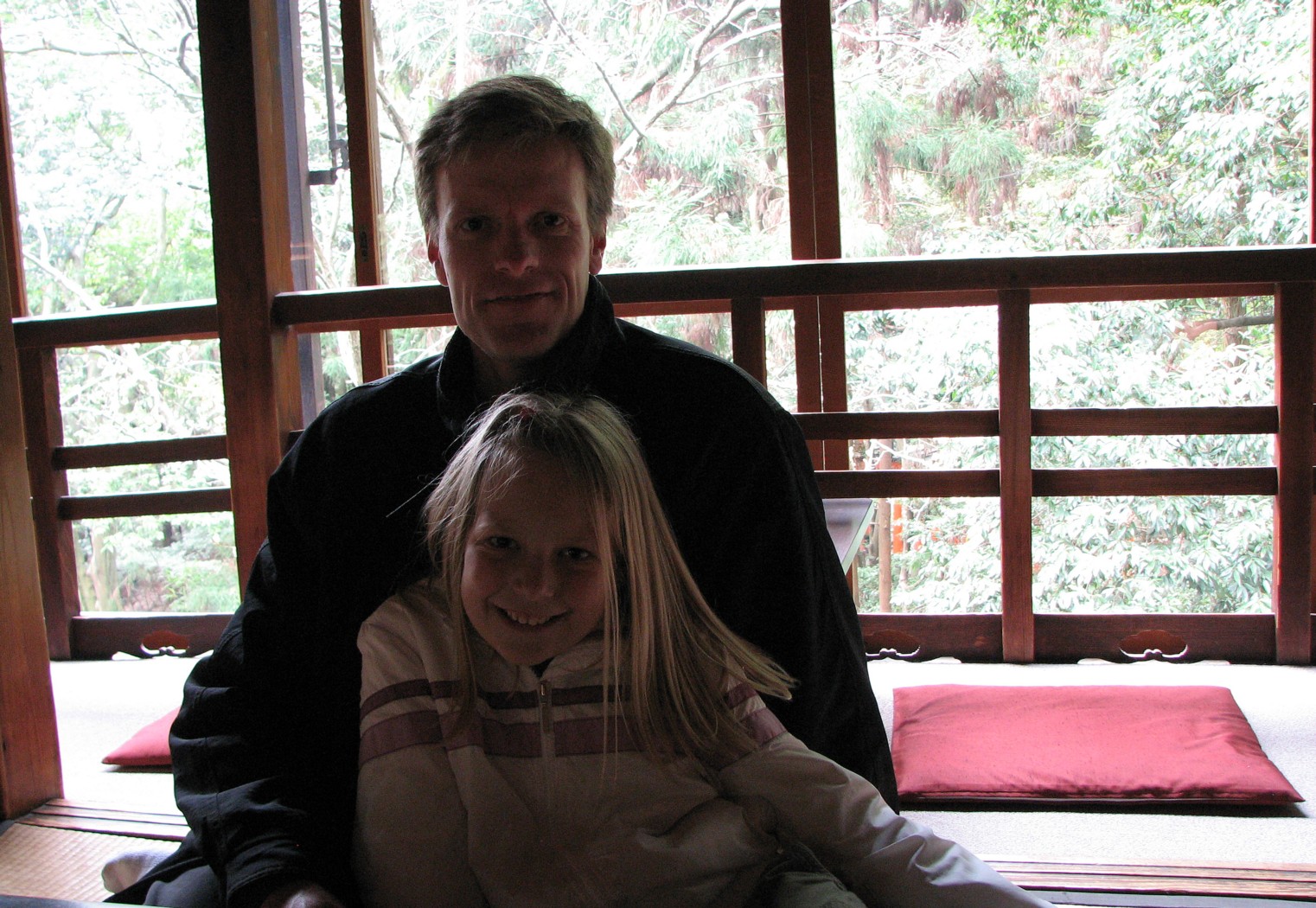
kitsune udonThe food was good and my daughter (pictured above with me) now considers inarizushi to be her favorite food. I enjoyed talking in Japanese with the old lady from across the road. It was from her house that the food came. I said this was a restaurant, but it wasn’t in the typical sense as no food preparations went on there. All of the food was cooked and brought over from the house across the dirt path. This place was simply for eating.

Japanese Lantern Fushimi Inari Taisha 伏見稲荷大社

After eating we headed down the path instead of farther up. We didn’t actually make it to the main shrine at the top of the hill, but that just means we have to go back someday to explore in more detail. 😉 We were departing the country in a few hours so we didn’t have time to take all of the paths.

The way down was a different path than the way up and featured many shrines (even a Buddhist one or two). The Shinto one pictured above has a plaque that says 玉姫大社 (jewel princess big shrine or tamahimetaisha). 玉姫 has to do with wedding places so I’m guessing this shrine has something to do with weddings; perhaps offerings are left here to wish for a successful marriage. Tamahime Taisha featured the first of the many Japanese lanterns we were about to see along this exit path.