Best view of Mt. Fuji from Tokyo area
Today’s title is a bit misleading as I wasn’t actually able to partake of the best view of Mt. Fuji from the east. But I did get to imagine it while standing in the correct location.
Let me back up a bit and explain. There are some great views of Mt. Fuji from Shizuoka and Yamanashi. Unfortunately, getting there from the Tokyo area can take hours and cost thousands of yen. The best views of Mt. Fuji from Tokyo, Kanagawa, Saitama, and even most parts of Shizuoka and Yamanashi are usually obstructed, if not by buildings then by wires or most often by a mountain range that only allows for a partial, cap view.
I have found, however, a nearly complete view of Mt. Fuji a mere 90 minutes and 940 yen from Shinjuku (80 minutes and 850 yen from Yokohama). There are also some added bonuses of this location like rice paddies,

mountain-side tea fields,

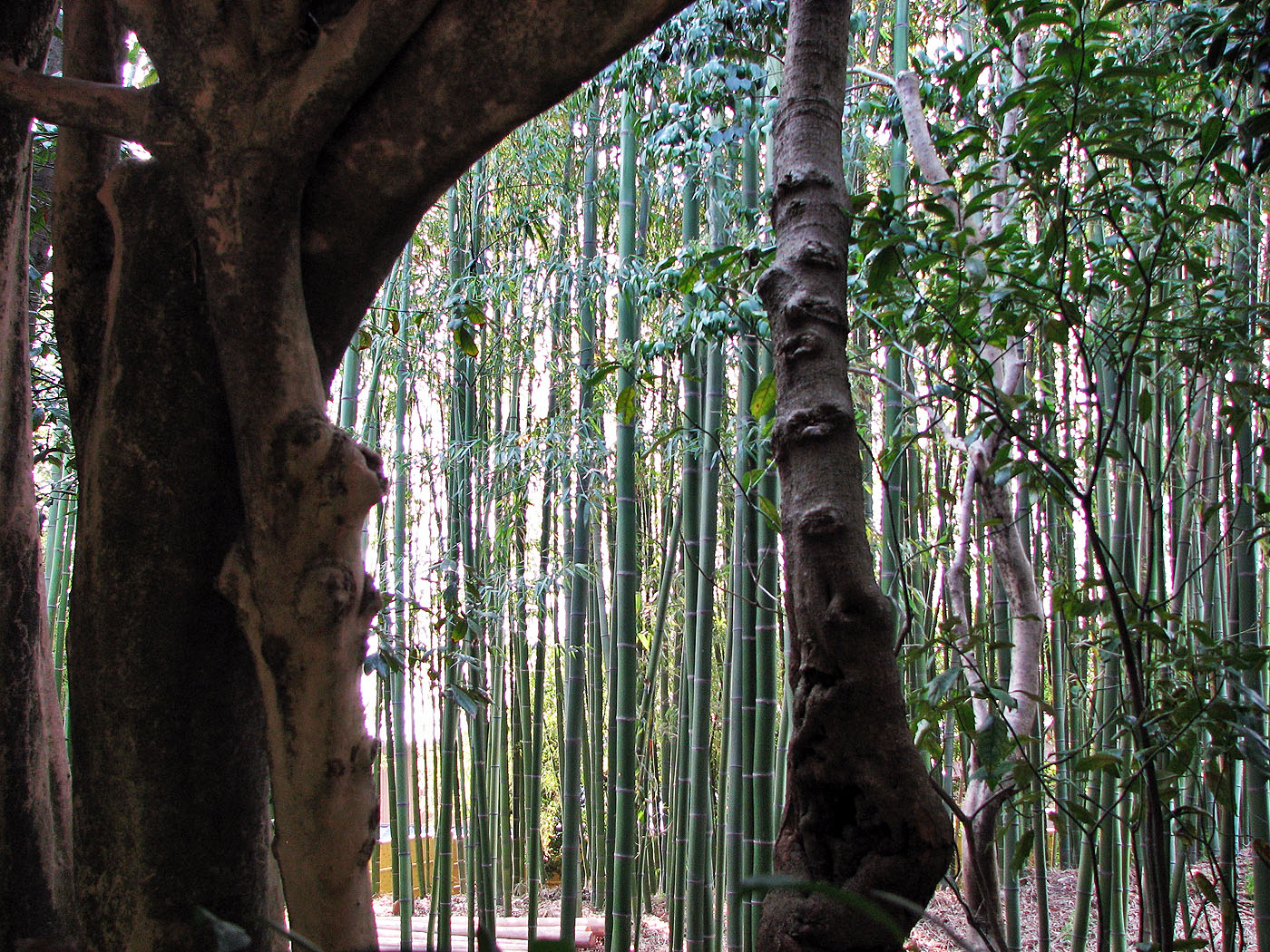
bamboo,

a river,

the ocean, a lake, and even cows at the top of the mountain!

So where is this place? Mt. Ono or Onoyama (大野山). To get there, follow the signs from Yaga Station (谷峨駅). For best results, check this site first. If the forecast is for 晴れのち曇 (as it frequently is) then you want to be sure to be on the first Express out of Shinjuku in the morning. The view of Mt. Fuji is best in the morning, the earlier the better for photography purposes. The hike from the station to the top of the mountain takes between 1.5 and 2 hours. Don’t stop for pictures on the way up. Hightail it up the mountain and try to get to the views of Mt. Fuji before 9 a.m. You can take pictures of the rice paddies, tea fields, bamboo, river, etc. on your way down.
This is a great hike with the above forecast if you are jet lagged in Tokyo and waking up before 5 a.m. anyway. I chuckle when I go through Shinjuku in the morning and see foreign tourists waiting hours for the stores to open at 10 a.m. Don’t be one of them. If you did Tsukiji to pass your wide-awake, early-morning hours on day one of your trip (or if you simply want to do something in the morning and don’t want to be part of a tourist crowd) then, weather permitting, this could be on your agenda for morning two (Odakyu Line train out of Shinjuku leaves at 5:31 a.m.).
If the forecast is for 曇りのち晴れ then time your arrival at the top to be an hour or so before sunset. Don’t forget to bring a headlamp for the way down. The trail is well marked so there is little worry about getting lost. Follow signs pointing to 大野山 on the way up and to 谷峨駅 on the way down. Here are some examples:


大野山ハイキングコース入口 = Onoyama Hiking Course Entrance

Above is a very poorly reconstructed scene of what it would look like were Mt. Fuji not covered in clouds. My camera was on wide angle and the sun was high overhead. A little zoom, a lower sun, and fewer clouds and this has to be one fantastic scene to behold. The entire left outline of Fuji San is visible and the right side reveals more from here than most Fuji views from the east. The scene in front of Mt. Fuji is also very nice, although the above photo doesn’t do it justice. Onoyama is covered not in trees but in grass. The name 大野山 literally means the mountain with a giant field on top, and that is what you will find. Hence the cows enjoying the view in the most unlikely of places.

I actually did see Mt. Fuji on this day. When I arrived at Shinmatsuda Station, I took the above pic from the station.