Kongobuji dragon

Kongobuji (金剛峰寺) decorative eaves
|
The above will search Traveljapanblog.com. Concerts - Landscapes - Sports |
Kongobuji (金剛峰寺) decorative eaves

Morning prayer service in a Buddhist temple (Fudoin on Koyasan)
I have witnessed many Shinto and Buddhist rituals, but my night on Koyasan was my first experience actually participating in one (other than carrying the omikoshi during a Shinto procession). The night I was there the shukubo had two other parties of gaijin and three or four parties of native Japanese. We all attended the prayer service led by the young Buddhist monks in the morning. Although you didn’t need to speak or understand Japanese to participate, I was the only one of the gaijin who did more than watch. Maybe the others were Christian and felt like they would be betraying their faith. In any event, it felt good to do more than just watch for once.
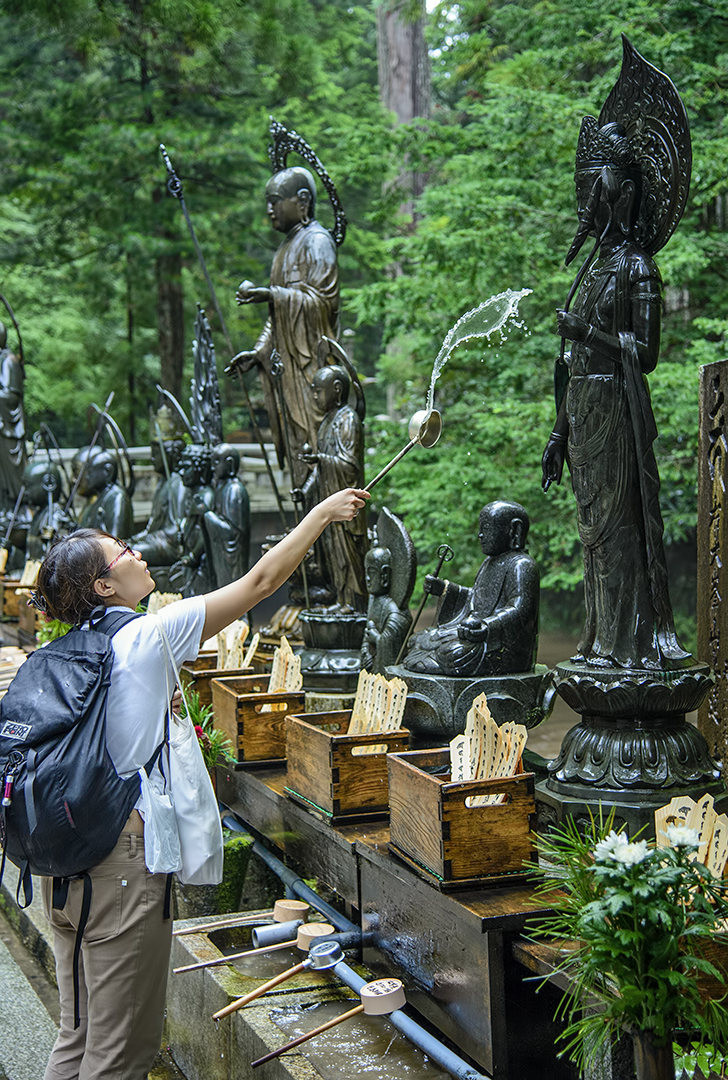
Never mind that it had just been pouring rain or that the skies were about to open up again, these Buddhist gods needed more water, and this visitor to Okunoin was happy to oblige before crossing the bridge to Kobo Daishi’s mausoleum.

清浄心院
Some people make a day trip to Koyasan. Big mistake. Sure the temple lodgings aren’t cheap, but the temple lodging experience (shukubo or 宿坊) is fabulous and Koyasan transforms into a different kind of magical place when the sun goes down.

jpg version
I was going through and deleting some photos from last summer when I came upon the photo above. I almost hit delete, but I was curious what the photo was even of so I decided to take a peek at the RAW file before deleting.
This was the same photo in RAW format:

RAW version of same photo
At first I thought I had opened the wrong photo, but then I checked the file name and sure enough they were the same.
I took this while walking through the Okunoin Cemetery just after sunset. I didn’t have a tripod so I just set my camera on rocks or headstones to take long exposures. Obviously, this one @ 30 seconds wasn’t long enough for a jpg photo, but in RAW it almost looks properly exposed.
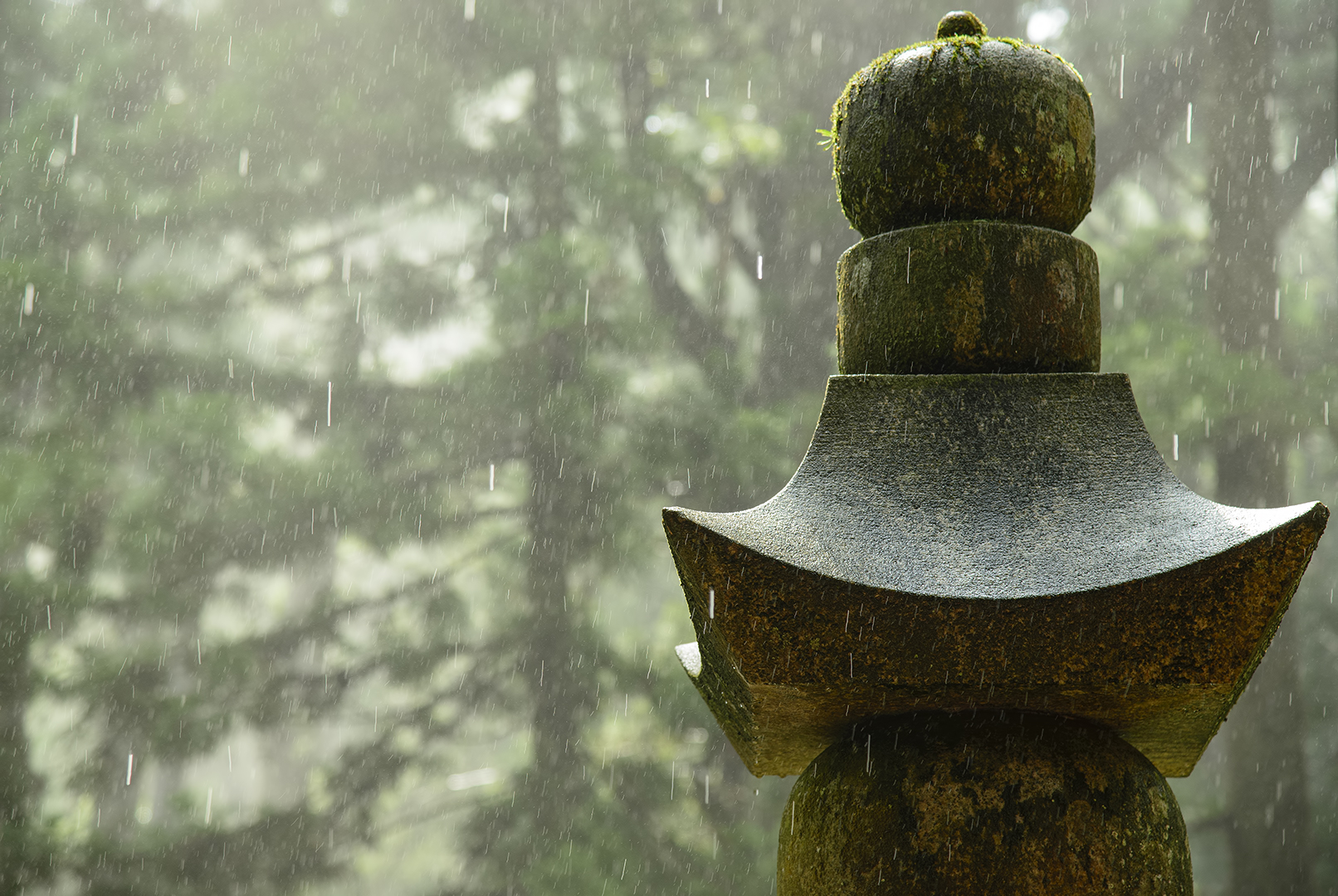
Okunoin (奥の院)
While exploring the wonders of Okunoin I was caught in several downpours. During this one I took refuge under the roof of a small shrine and killed time by taking photos of my wet surroundings.