Fudoin Japanese garden (日本庭園)
The reviews and recommendations of the temples you can lodge in on Mount Koya are vague, to say the least. I looked in guidebooks and all over the internet and couldn’t find many details like you can when choosing to stay in a hotel, ryokan, or minshuku in most parts of Japan. While my review of Fudoin isn’t going to tell you which temple on Koyasan offers the best value or which temple to avoid, I can tell you about Fudoin.
The first thing to note is that if you plan to go to Koyasan (and you should), don’t make it a day trip. The best part (similar to Shirakawago) is the overnight stay. To make your overnight stay in a Buddhist temple as relaxing as possible, don’t bring all of your luggage with you. The people on the trains, cable car, and buses with a suitcase and large backpack are not happy campers. Instead, stay in the same place in Osaka or Kyoto the night before you go to Koyasan as you do on your night after visiting Koyasan. Most places will allow you to leave your luggage there if you are coming back after being away for just one night. Then you only have to bring a small backpack or camera bag for your one night on Koyasan.
There is no place to stay on Koyasan that isn’t a temple. There are many temples to choose from, but the thing that struck me when I was there is how similar they all appear to be. I somewhat randomly decided on Fudoin. The price was a bit higher than average, but there really aren’t any cheap or inexpensive places. Everything about Fudoin exceeded my expectations. The food was outstanding. The view from my room (pics here) was incredible. The morning prayers were wonderful. There really was nothing to complain about, and I felt the price was very worth every last yen.
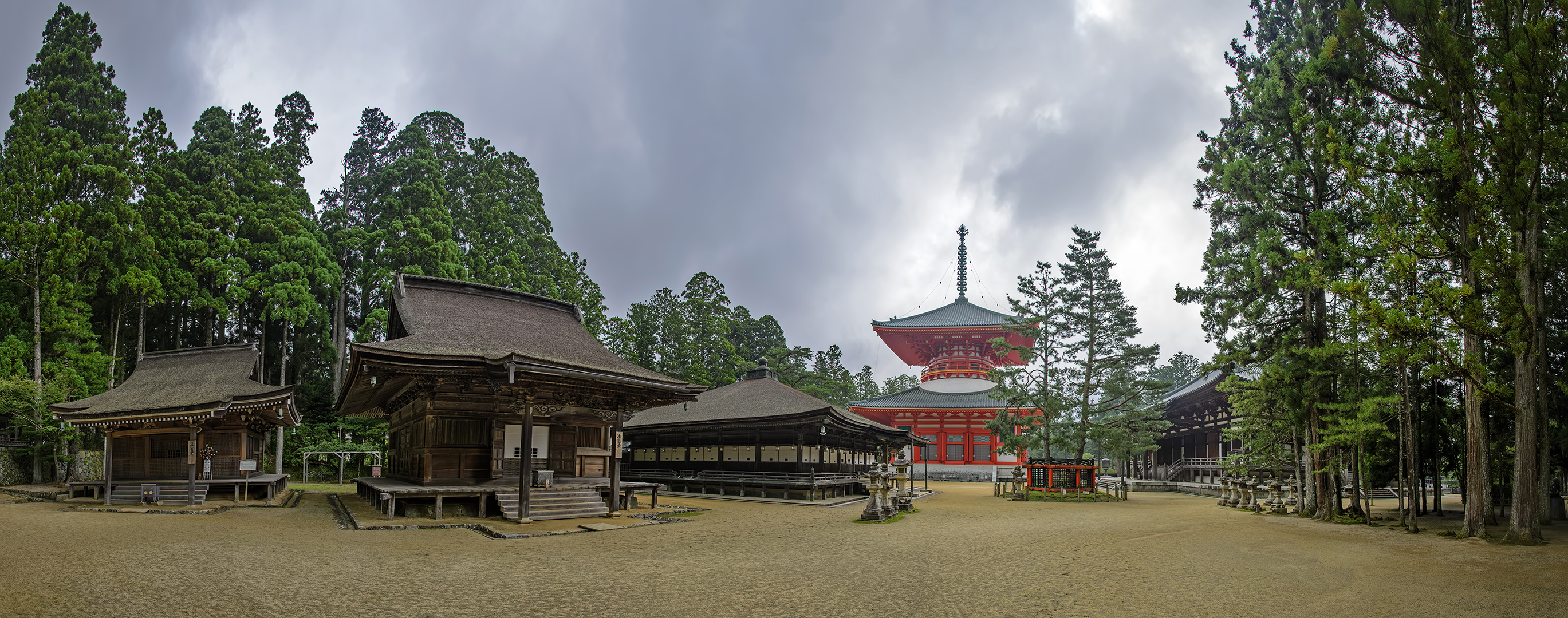
Today’s photo, by the way, is a 180 degree panorama from the room where I ate my vegetarian monks’ cuisine (shojin ryori or 精進料理). I assumed that the meal would be served in my room or in a hall with everyone else. Instead, I was ushered into a room overlooking this lovely Japanese garden and ate by myself as the sky darkened.
Posted on September 5th, 2013 under Japan. Tags: fudoin, garden, koyasan 高野山, Nikon 24-120mm f/4 VR G lens, Nikon D600, panorama, photomerge, reviews. Comments: 2